- Home
- Service Areas
- Gilroy
Commercial Roofing in Gilroy, CA
Regional rain history gives ownership a reason to review the roof file before another prolonged wet period. The Bay Area storms across late December 2022 and January 2023 supply that context for a Santa Clara, CA manager arranging service in Gilroy, CA. Which reported opening needs correction, and which concealed layer needs examination before a quantity is priced? Commercial Roofing Santa Clara distinguishes those decisions. We inspect the assigned roof rather than use a regional storm account to diagnose it.
Gilroy Library is identified by the Santa Clara County Library District is a local reference in Gilroy. That civic reference puts a local occupied-building setting into the planning discussion. The library's identity does not establish the roof at another commercial premises. For the subject project, available records, accessible layers and the responsible building contact establish the work inputs. Ownership receives an explained scope with protected access and unanswered construction questions kept visible.
Gilroy: What the Work Covers
Water on top of a roof and water within its insulation need separate assessment. The first may reveal an outlet or slope question. The second can affect the receiver for a repair or new assembly. We identify the question before proposing investigation. An infrared survey with appropriate confirmation can help choose positions under suitable conditions. Thermal indications require interpretation; they cannot independently establish every wet layer or its complete removal boundary.
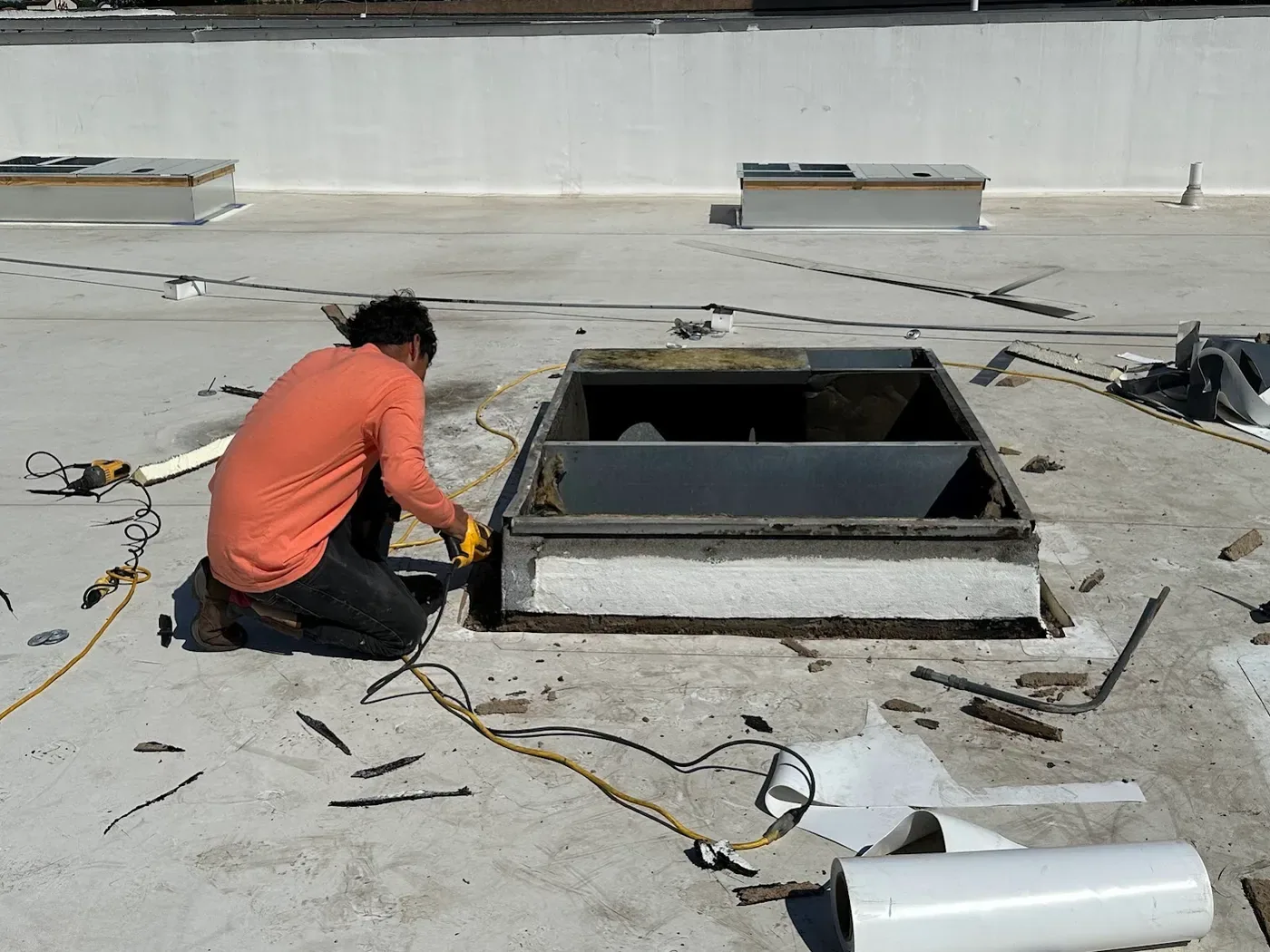
A selective opening needs the building representative's authorization and a restoration method. Record the examined position, layer arrangement and condition supporting the proposed next step. Samples represent the positions assessed. A wider removal recommendation needs evidence appropriate to that extent. The manager should see where findings are confirmed and where additional investigation remains necessary. Do not turn a ceiling stain or an unconfirmed thermal pattern into a complete roof-replacement quantity on the ownership bid.
The reported interior position helps direct investigation without settling the exterior source. Review timing, equipment activity and recent alterations with the building contact. Examine roof transitions and the accessible water route. Condensate, piping or wall construction may require their responsible trades to assess the issue. A leak correction supported by examination should explain the evidence linking the proposed roof task with the report, including any limits on that conclusion.
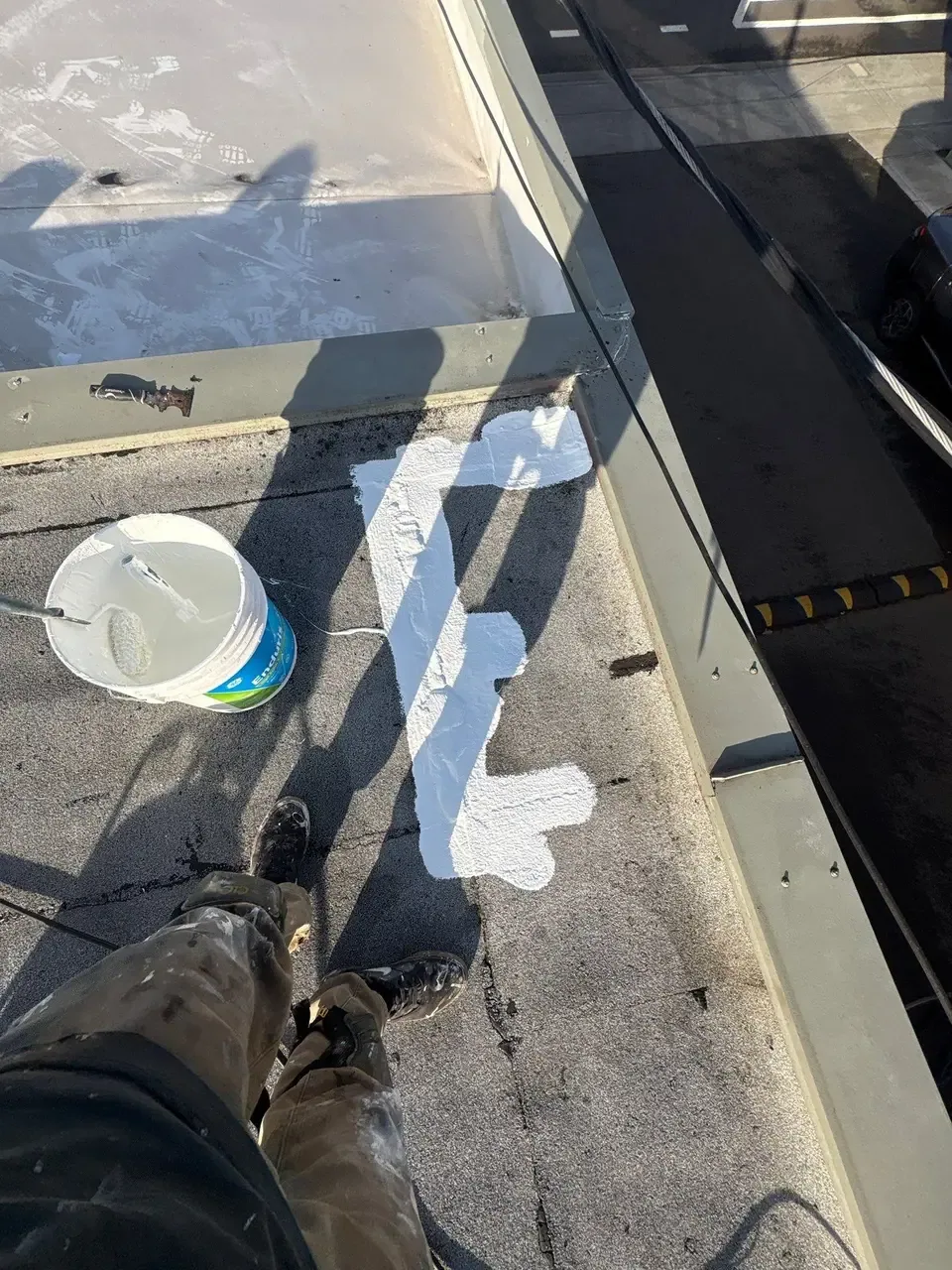
For a separated membrane seam, identify the sheet condition and adjoining bond before specifying preparation. A compatible new connection needs usable material, not merely enough surface to cover the visible gap. Where a wall termination is loose, rebuild its restraint and receiver as needed. Sealant can finish a specified connection; it cannot supply missing support. Keep nearby independent defects separately located so completing one patch does not conceal an outstanding task.
The library district's Sixth Street address is a local reference for coordinating an occupied civic project. At any assigned property nearby, ask who controls access to the roof and the space below the proposed opening. Visitors, stored materials or ongoing room use can affect the work area where present. Those actual conditions must come from the operator and site discussion. A public-building label cannot establish a permitted shutdown, vacant room or unrestricted receiving entrance.
Roofing for a public facility should retain its actual approval and procurement process. For another commercial owner, identify that owner's decision route instead. Material delivery, lifting and disposal need the assigned receiving position established. Keep protective measures beside the operation they serve. If access requires several shorter phases, explain the additional setup in the price. The manager can compare the sequence without assuming that a lower total includes the same protection for occupied rooms.
Planning and Completing the Work
Recovery retains construction that must be suitable for the proposed assembly. Replacement removes its defined layers and brings supporting preparation into the task. Establish moisture, condition, attachment and applicable layer limits before choosing between them. A PVC roofing option needs its complete selected assembly and compatible details described. Product family alone does not settle what insulation, cover board or fastening belongs on the assigned deck.
Conditional receiving repairs should identify how their extent is measured and who authorizes additional work. An allowance can help ownership plan for unresolved construction without making that deterioration a confirmed finding. Keep the proposed removal quantity and any investigation-dependent extension distinct. Price outlets, perimeter transitions and equipment connections alongside the field membrane. A renewal comparison that leaves those tasks undefined does not give the manager a reliable basis for assessing the apparent saving.
The project needs its Gilroy reviewing authority, accepted application basis and proposed work classification established. Scope and applicable exceptions govern requirements, including relevant energy review. Santa Clara's adopted modifications cannot automatically be assigned to another jurisdiction. Requests involving a property in Morgan Hill or Union City require their own building inputs and review route. A common reporting format should preserve those differences rather than obscure them.
Equipment movement, service isolation and interior release can also require separate approvals. The roofer's work plan should name the related participants before the task depends on their access or intervention. A completed roof connection is not approval for another trade's service return. Clarify what each participant needs to inspect or document. That keeps the ownership approval for construction separate from the operating permission necessary to carry it out at the assigned building.
A roof report with located findings should retain the inspection boundary and the actual corrected details. Save useful receiving photographs before new layers hide them. Installed material information and applicable care obligations help the next manager coordinate alterations. Leave outstanding related work assigned rather than call the building fully accepted because one roof task is complete. A later leak report gets its own comparison with the recorded construction. For gilroy, define the work boundary. Immediate work follows safe access and the exposure found; temporary protection needs an explained permanent follow-up. For planned maintenance, arrange the examination before rain season and provide the address, building contact and reported concern. Ownership should receive a practical bid sheet connecting measured preparation, protected room access and the actual approval needs to the supported correction.
Before assigning a larger Gilroy repair, distinguish a confirmed wet area from a location that only needs further testing. We mark the boundary examined, describe the method used and connect each finding to the layer it actually establishes. A moisture indication alone does not set removal depth. The bid should price the agreed investigation and explain how confirmed conditions would change the quantity. That keeps the owner from authorizing an open-ended area while still allowing a suitable repair once the supporting material is visible and understood.
Price any follow-up opening separately from the confirmed repair.
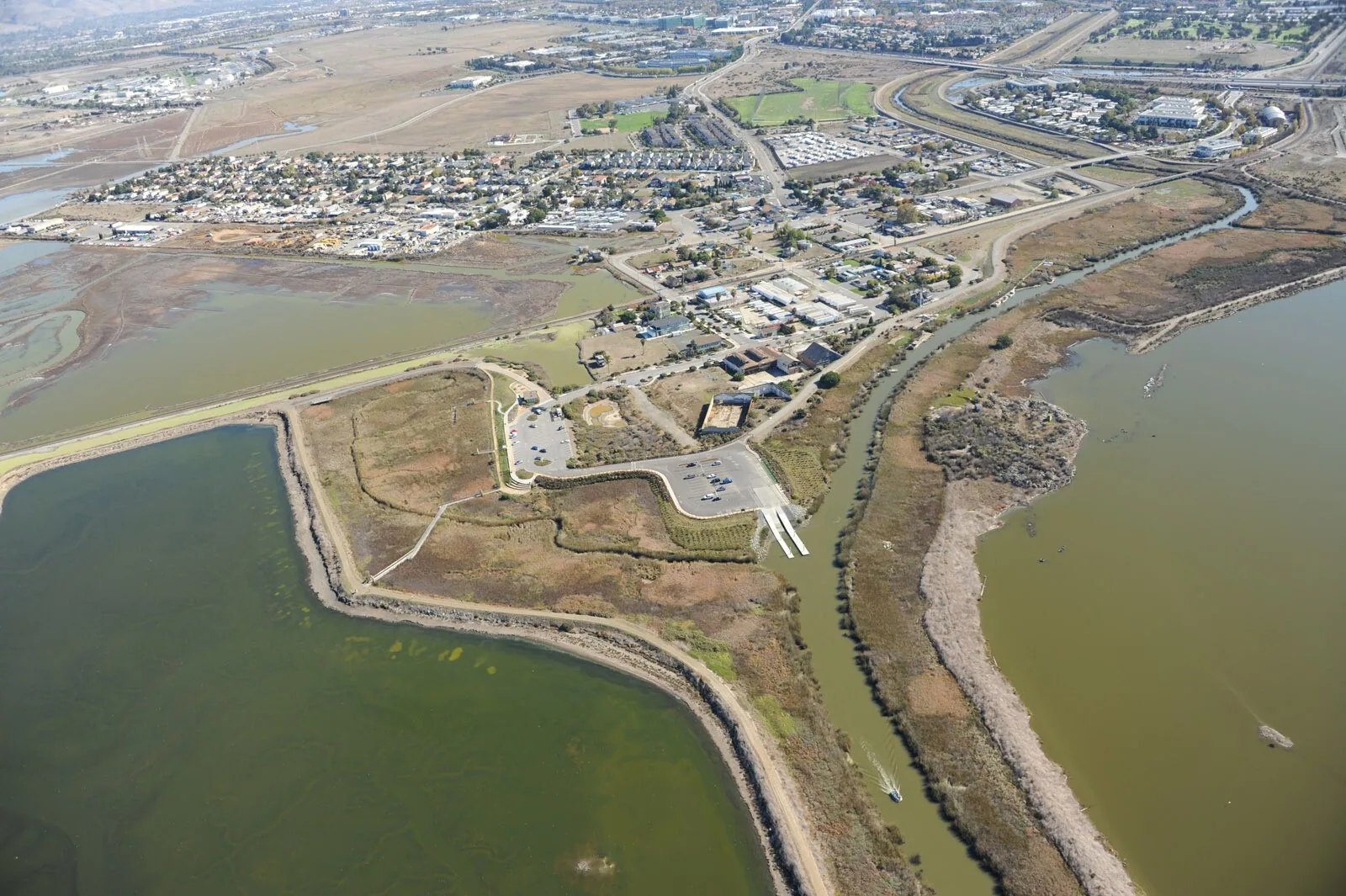
Gilroy planning: confirm the property before dispatch and pricing. Gilroy lies south of San Jose along U. S. 101 and is also served by State Route 152. Those routes provide regional orientation, but a roofing plan depends on the individual building's approach, site rules, access and material staging. Confirm the property location and authorizing facilities contact before dispatch, then record the inspected roof assembly and condition. Distinguish work on roof drainage from any ground-water or site-drainage question that needs another contractor. The final scope should identify its specific boundary, protection plan and exclusions. This keeps a broad Gilroy service promise grounded in a verified commercial project rather than an assumption about every property in the city.

Gilroy review: explain the examination boundary
Request a pre-season roof visit with the building contact. We will put supported preparation and occupied-area protection beside the ownership decision.
Frequently Asked Questions
Interpret the indication and confirm the layer question with a suitable method. The evidence must support the specific layers and extent proposed for removal.
The stain directs investigation. Compare exterior details, water routes and equipment conditions before selecting the repair location.
It provides a local civic reference. The assigned property still needs its construction, access and approving party identified.
Show a conditional allowance and the measurement and approval process, separate from confirmed work quantities.

Roof Assessments
Santa Clara & the South Bay
Membrane, flashing, drainage and edge details checked and written up before any work is priced.
Request a Roof Assessment