- Home
- Commercial Roofing Services
- Roof Coating and Restoration
Roof Coating and Restoration in Santa Clara, CA
Summer treatment planning can use the regional heat and Flex Alerts recorded in September 2022 as a reason to review the roof's suitability and operating restrictions. Is the proposed coating a sound restoration choice for your Santa Clara, CA building, or just a finish over defects? We examine the existing membrane, attachment, insulation condition, and drainage before proposing a coating system. The coating needs a roof that can support it. Ownership should see the preparation and required repairs before comparing the finish price.
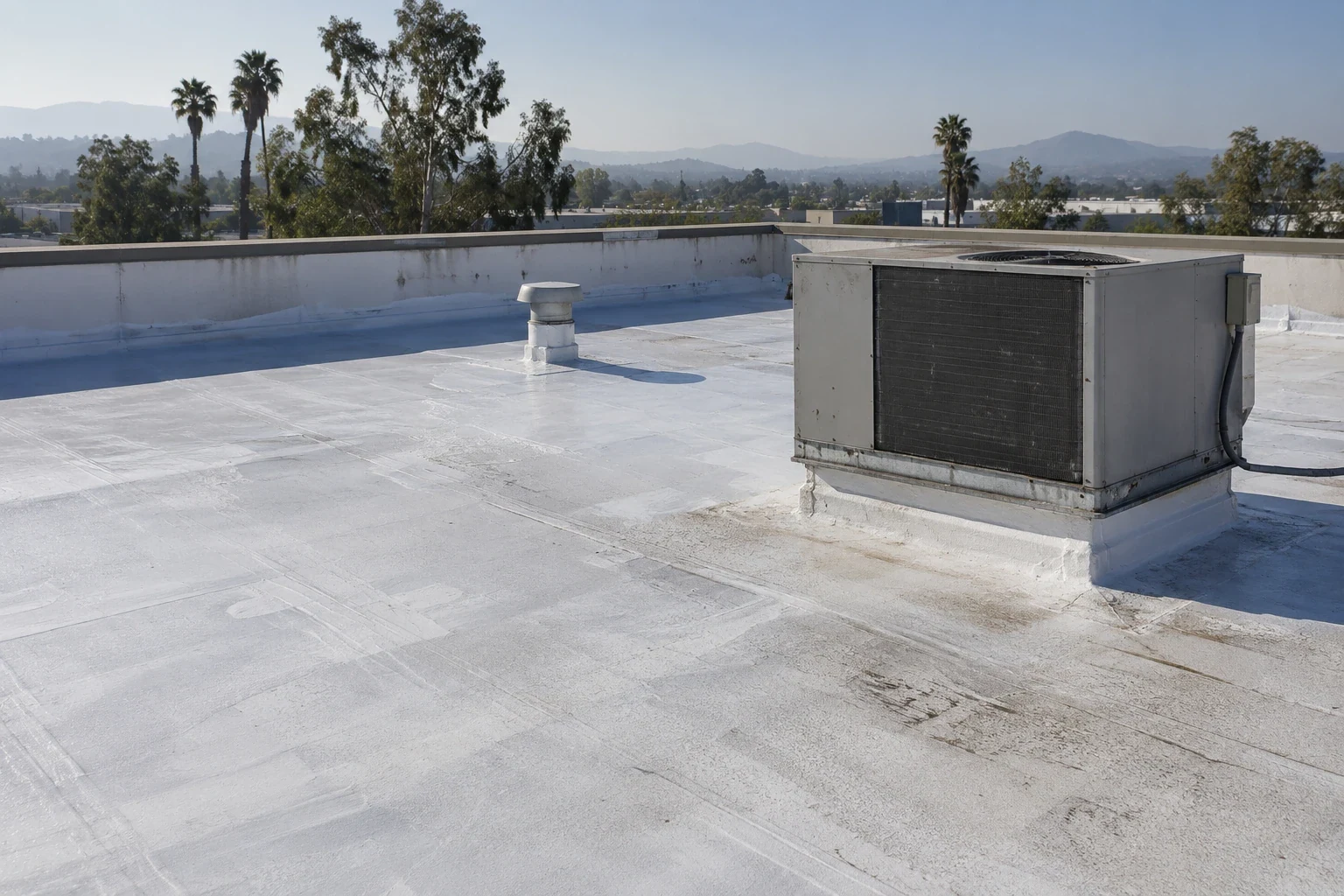
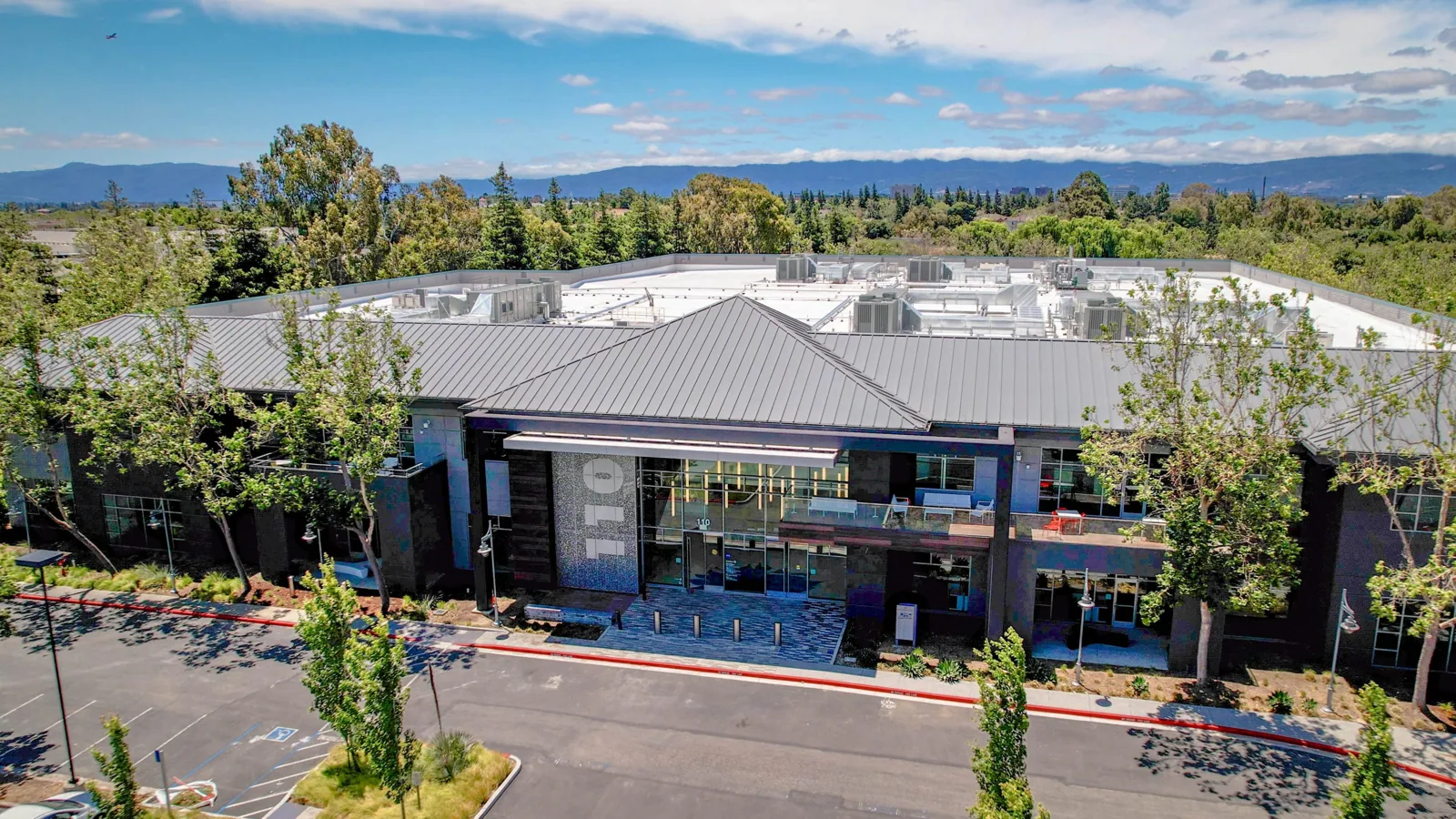
An office and R&D property on Scott Boulevard needs its own compatibility assessment. For that office setting, we establish the present membrane and its moisture condition through examination. We use a physical roof examination to define the candidate area. Adhesion checks and moisture investigation follow where needed. The question is not simply which color goes on top. It is whether the existing assembly can be restored without leaving a concealed problem underneath.
Roof Coating and Restoration: What the Work Covers
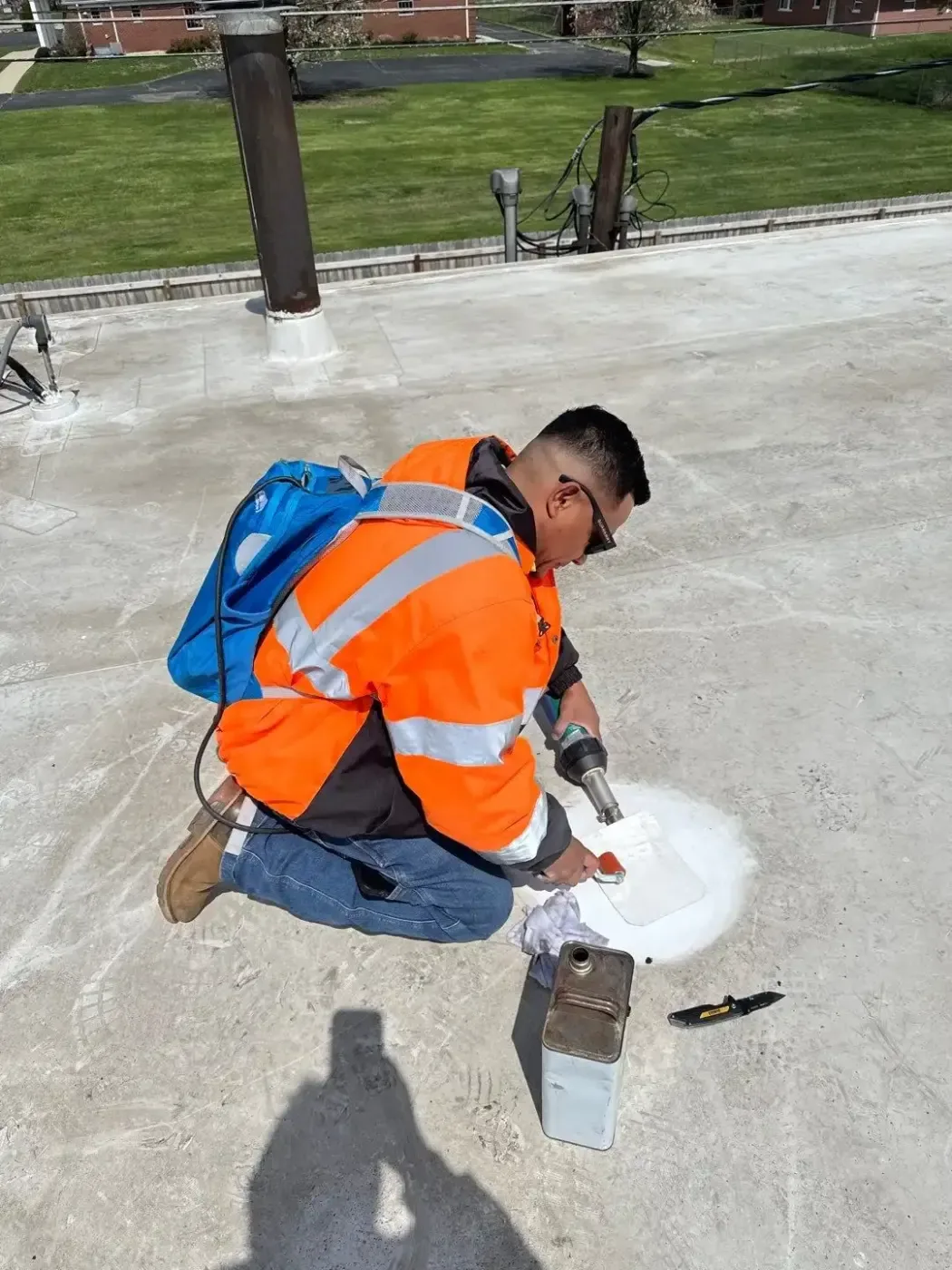
A coating can release where contamination, weathered film, or an unsuitable surface prevents adhesion. We examine the material already present, including previous coatings and repair products. Cleaning and test preparation must represent the surface the full installation will face. A successful test on one clean patch does not establish that every differently treated area will behave the same way. Distinct conditions need their own evaluation.
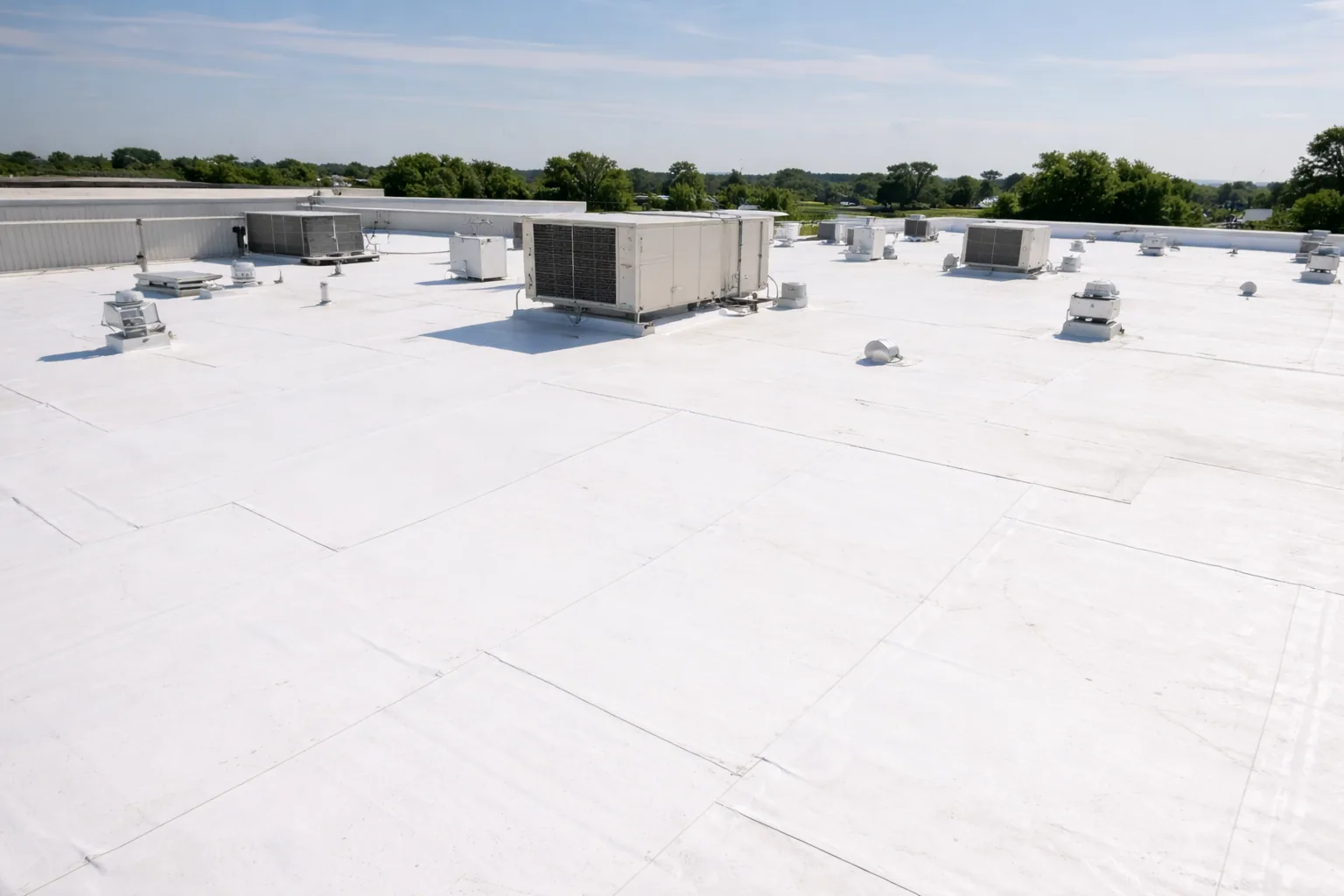
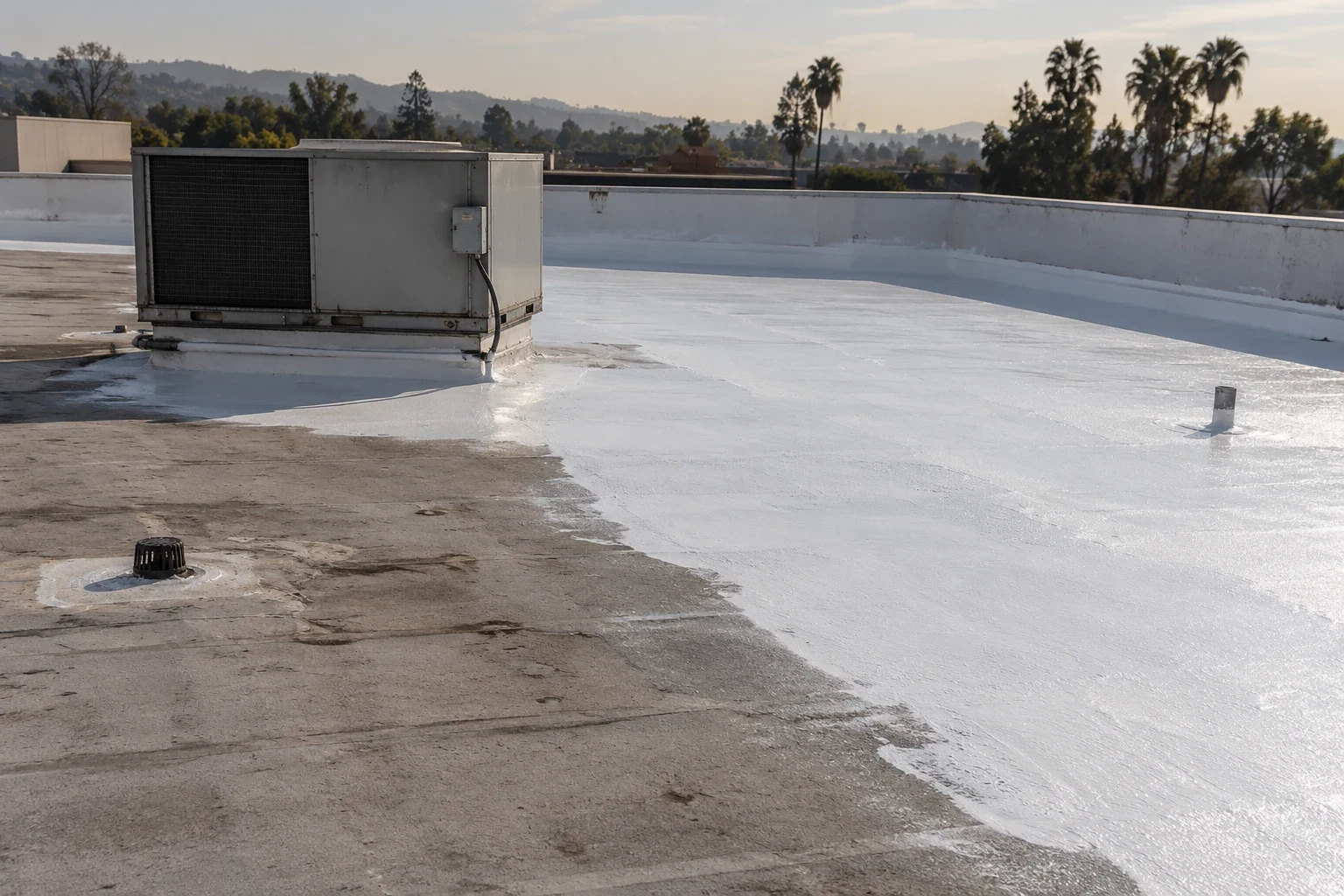
The proposal identifies surface preparation, compatible primer where required, and the coating selected for the roof. Silicone coating systems have different characteristics from acrylic roof coatings. Selection accounts for the substrate, drainage, exposure, and application conditions. Neither material name removes the need to repair splits or loose details. We specify the work those defects need. That gives ownership a restoration decision based on construction, rather than a product label presented as a complete roof solution.
A soft spot or blister can justify further investigation. Concealed moisture may extend beyond the visible defect. We assess whether surveys, selective openings, or other checks are appropriate for the assembly and access available. An infrared image helps locate thermal differences; confirmation determines whether a marked area actually contains wet material. The survey method and its limitations belong with the findings.
Where moisture mapping is warranted, the restoration scope should connect the mapped condition to removal and replacement quantities. Wet insulation is not made dry by applying a new surface film. Deteriorated decking also requires its own evaluation. We distinguish the initial measured quantity from any concealed-work allowance. Coating a sound section may remain viable while another section requires removal. Ownership can authorize those different tasks without assuming the whole building has one uniform condition beneath its membrane.
A split at a curb is a detail repair before it is a coating application. We assess membrane attachment, joint movement, flashing height, and the condition of existing repair layers. The compatible correction may require reinforcement, replacement flashing, or removal of deteriorated material. Smearing coating across a moving gap can leave the underlying connection unresolved. The bid needs to describe the repair beneath the finished surface.
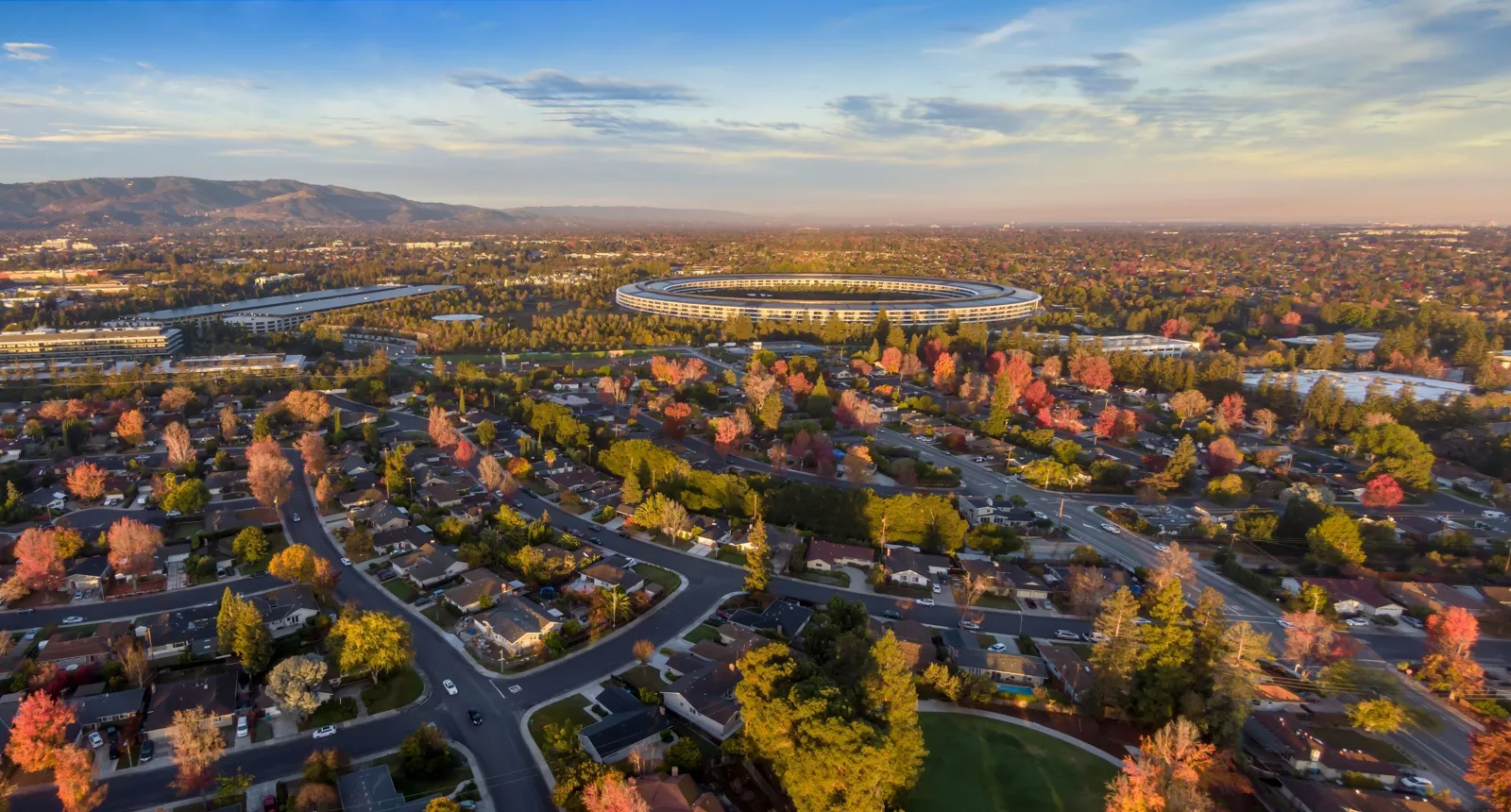
Outlets and perimeter transitions deserve the same treatment. Coating buildup must not interfere with drainage or conceal a loose termination. For a property in the Scott Boulevard and Tasman Drive corridor, the actual roof details decide those quantities. Tasman East has a city development framework; a restoration decision there starts with examination of the installed roof. We inspect the subject assembly and identify its operator. Planned construction, occupied work, and restoration of an existing roof can require different access arrangements and approval routes.
Planning and Completing the Work
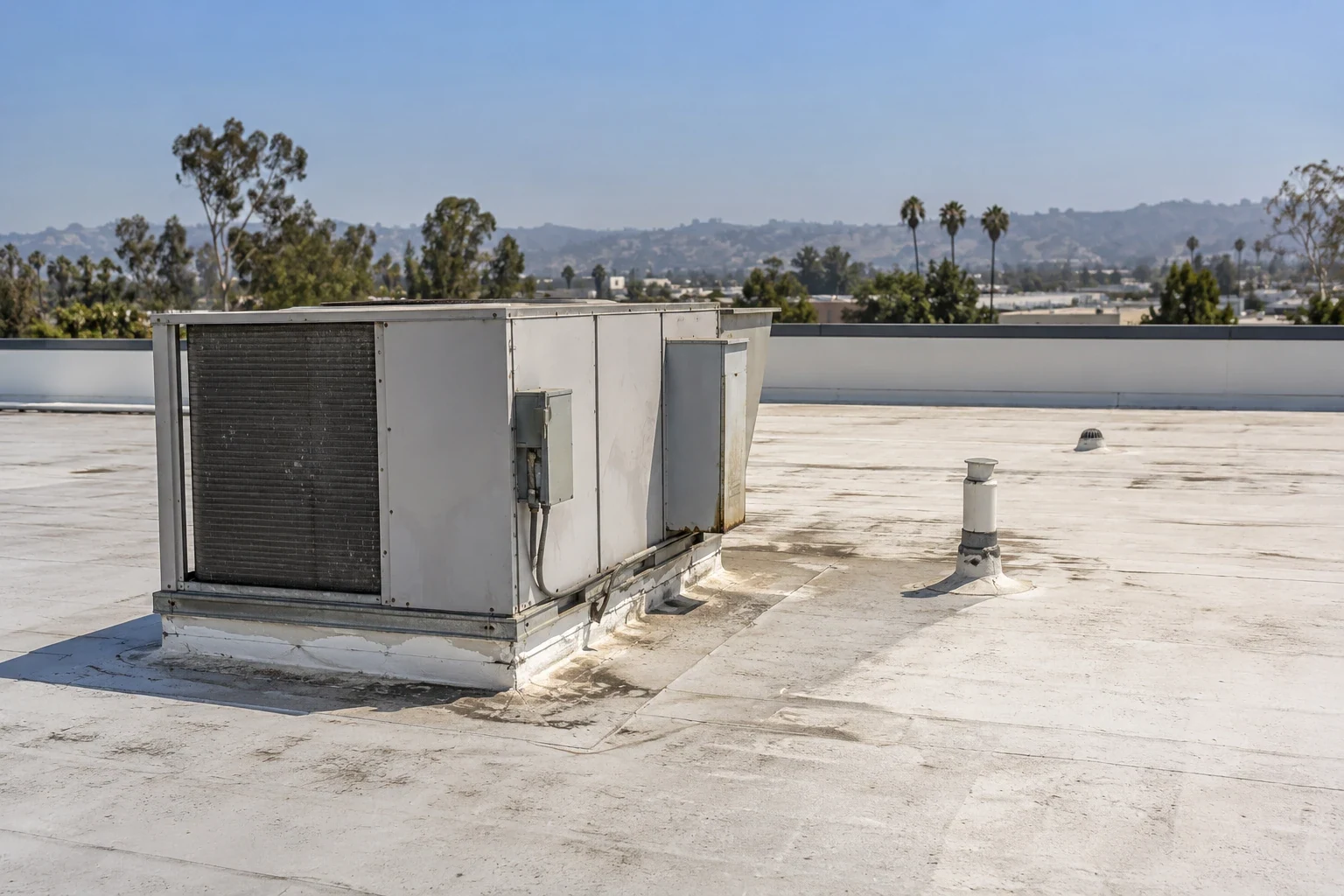
A prepared roof still needs appropriate installation conditions. Surface moisture, temperature, wind, and product curing requirements can affect the work sequence. We divide the installation into manageable areas and protect unfinished transitions. Material staging, cleanup, and roof access should be planned before application begins. A schedule that leaves no room for drying or curing can undermine an otherwise suitable restoration scope.
For office building roof work, the authorized operator helps identify intake locations, tenant access restrictions, and permitted work periods. Application method can influence overspray protection and adjacent-area controls. We account for those requirements in the price and schedule. A coating proposal should also state how traffic routes will be treated after installation. Repeated equipment access can abrade a finish; designated protection needs to be compatible with the assembly. The manager receives a usable operations plan beside the product specification.
A thinly described coating allowance leaves too much to interpretation. We show the candidate area, cleaning method, repairs, primer requirements, reinforcement, and specified application coverage. Material usage records and suitable thickness checks help establish whether the installed work matches the system requirements. Comparing only the overall price can hide omitted preparation or a different finished construction. Ask ownership to approve the described system, not an unexplained coating quantity.
The adopted Santa Clara code framework combines 2025 California standards and local modifications. The actual authority, accepted application basis, alteration scope, and applicable energy path determine what applies to a restoration project. Reflective finish selection does not establish compliance by itself. We assess those requirements for the work proposed, including applicable exceptions. A permit question should be settled before it becomes a late change to the bid. Required roof repairs and optional finish choices stay visible as separate decisions.
Set a test area only when the selected system and substrate permit it, then record preparation, application conditions, cure and bond result. A favorable test does not establish uniform adhesion across another roof zone. If the survey reveals loose coating or incompatible layers, price that preparation separately from finish application. Mark where coating stops at drains, walls, curbs and movement joints. Ownership can compare systems by the receiving surface and completed details, not by coverage rates or a bare product rate.
The finished coating needs a care plan suited to its material. We identify approved cleaning methods, foot-traffic protection, and details that need observation after equipment work. Later repairs should use compatible products. A maintenance crew placing unrelated sealant on the coating can complicate adhesion and future repair. Keep the installation information available to the people who manage the roof and service rooftop equipment. We explain any required follow-up task before closing that work item.
The warranty obligations need examination too. Coverage, exclusions, inspection requirements, and repair authorization can vary with the selected system and existing roof. We identify the terms that affect ongoing operation without promising an unconfirmed coverage period. Restoration should reduce uncertainty about the approved roof work. It should not leave ownership to discover later that wet materials, moving details, or access protection were outside the proposal. Those decisions belong in the scope before the finish is applied.
Restoration: Approve the roof beneath the finish
Book a pre-season assessment for the proposed coating area. We will prepare a bid sheet with preparation, repairs and application requirements ownership can compare.
Frequently Asked Questions
Wet materials need assessment and an appropriate correction. Surface restoration does not remove trapped moisture or restore damaged insulation performance.
Material selection follows substrate compatibility, drainage and application requirements. We evaluate the existing roof before recommending silicone or another coating.
Compare specified coverage, preparation, primer, reinforcement and repairs. The same area can receive materially different constructions under two bids.
Reflectance is one part of the review. The applicable code basis, project scope, selected system and permitted energy path govern the decision.

Roof Assessments
Santa Clara & the South Bay
Membrane, flashing, drainage and edge details checked and written up before any work is priced.
Request a Roof Assessment