- Home
- Commercial Roofing Services
- Commercial Roof Replacement
Commercial Roof Replacement in Santa Clara, CA
Storm-season replacement planning can refer to the Bay Area rain sequence spanning December 2022 and January 2023: what examined finding supports full removal rather than another repair? In Santa Clara, CA, we answer that through the actual assembly. A past regional weather event does not establish that a building needs a new roof. Condition, repair limits, concealed moisture, and the intended construction determine the recommendation.
Replacement removes the defined existing construction and installs an approved new assembly. That can address conditions a local patch cannot, but the scope needs evidence. We identify the areas examined, confirmed removal, and outstanding deck or design questions. The manager receives a plain bid sheet showing what the proposed expenditure accomplishes. Ownership can compare the replacement with a supported repair or recover alternative without choosing solely from a membrane name or an unexplained total.
Commercial Roof Replacement: What the Work Covers
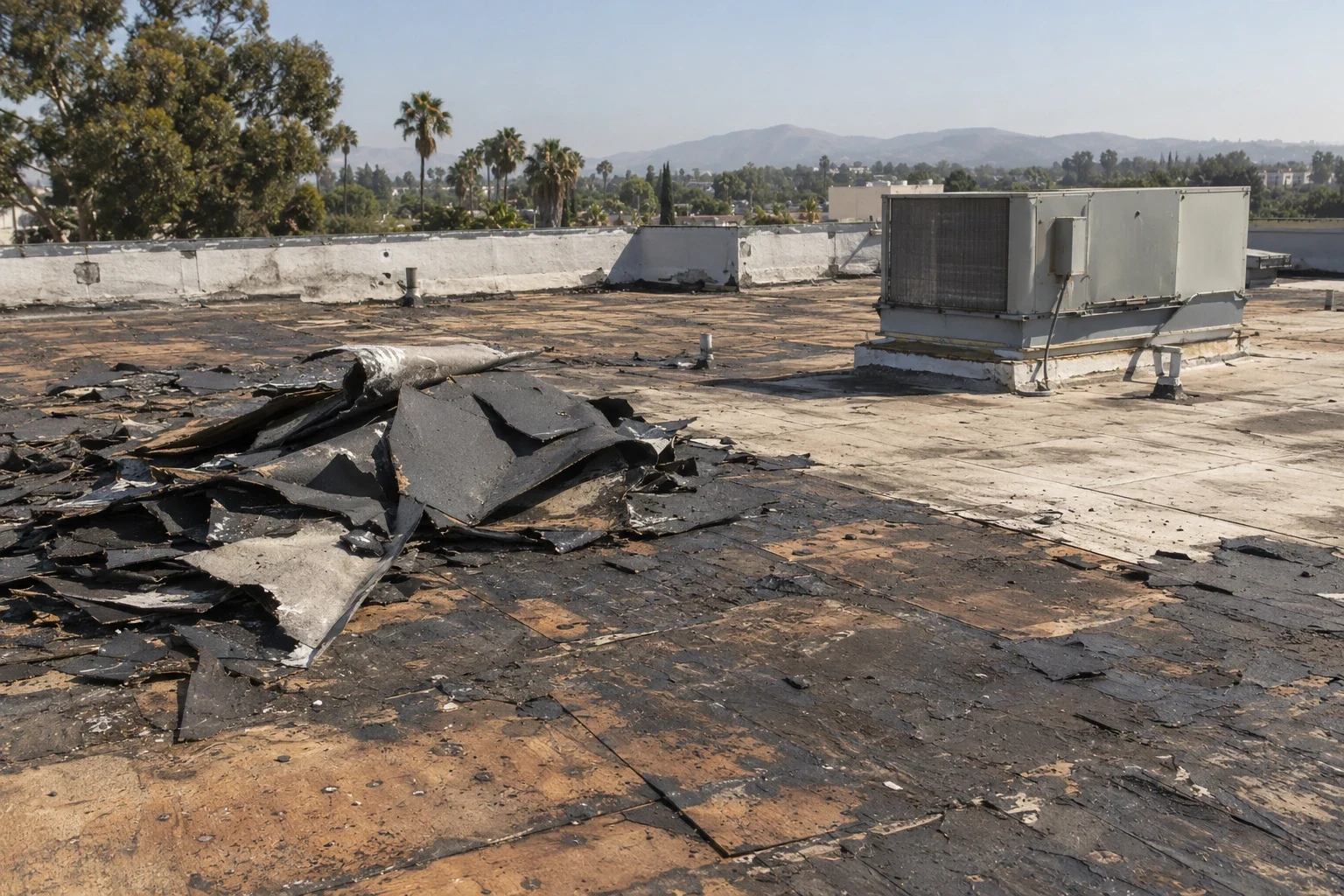
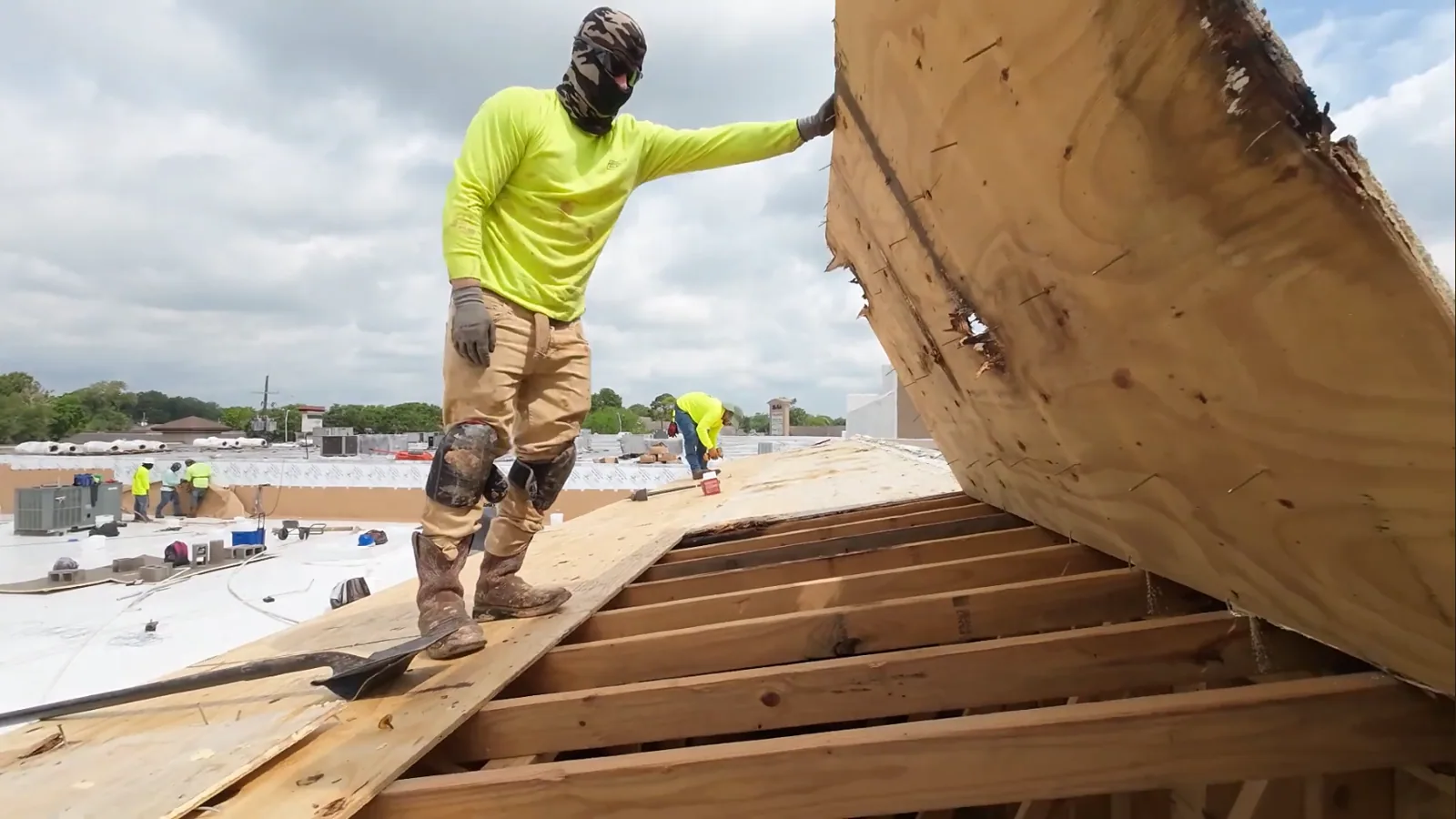
Widespread deterioration, confirmed wet layers, or an unacceptable retained assembly can support a larger removal scope. Each needs its own explanation. We examine accessible sheet, flashing, outlets, and edge details, then decide whether further openings or moisture work are necessary. A ceiling complaint identifies a place to investigate. It does not supply the replacement quantity by itself.
Our thermal-assisted investigation of concealed moisture can guide confirmation where the construction and conditions suit the method. We show its limits. A defined repair option remains a separate choice when supported by the retained material. Ownership should receive the reason a repair boundary can or cannot remain local. We also state how new findings exposed during removal would be reviewed, priced, and approved, keeping known work distinct from concealed conditions.
An opened roof can reveal deck corrosion, damaged support, or other conditions needing qualified review. The replacement bid identifies known preparation and any examination needed before installation. Concealed deck work requires a defined approval route. We do not treat an unknown substrate as sound simply because the new membrane is specified. The accepted support controls what construction can follow.
The bid sheet explains who reviews the finding, how any correction is priced, and who maintains the opening while the decision is made. Temporary protection belongs in that sequence. A delay in design review or another trade's work can change the practical roof stage. Ownership should see that possibility before award. The manager then has a usable process for handling a discovery instead of receiving an urgent change request with no agreed review method while the roof remains exposed.
Before comparing totals, match the replacement limits to the inspection map. Mark each roof plane and edge where existing material ends, where the proposed system begins, and what construction remains outside the contract. Note drains, curbs, skylight transitions, and wall flashings that cross the boundary. If another trade must move equipment or disconnect a line before removal, show that dependency and the person responsible. The owner can then see whether one price includes complete tie-ins or stops at a measured field quantity.
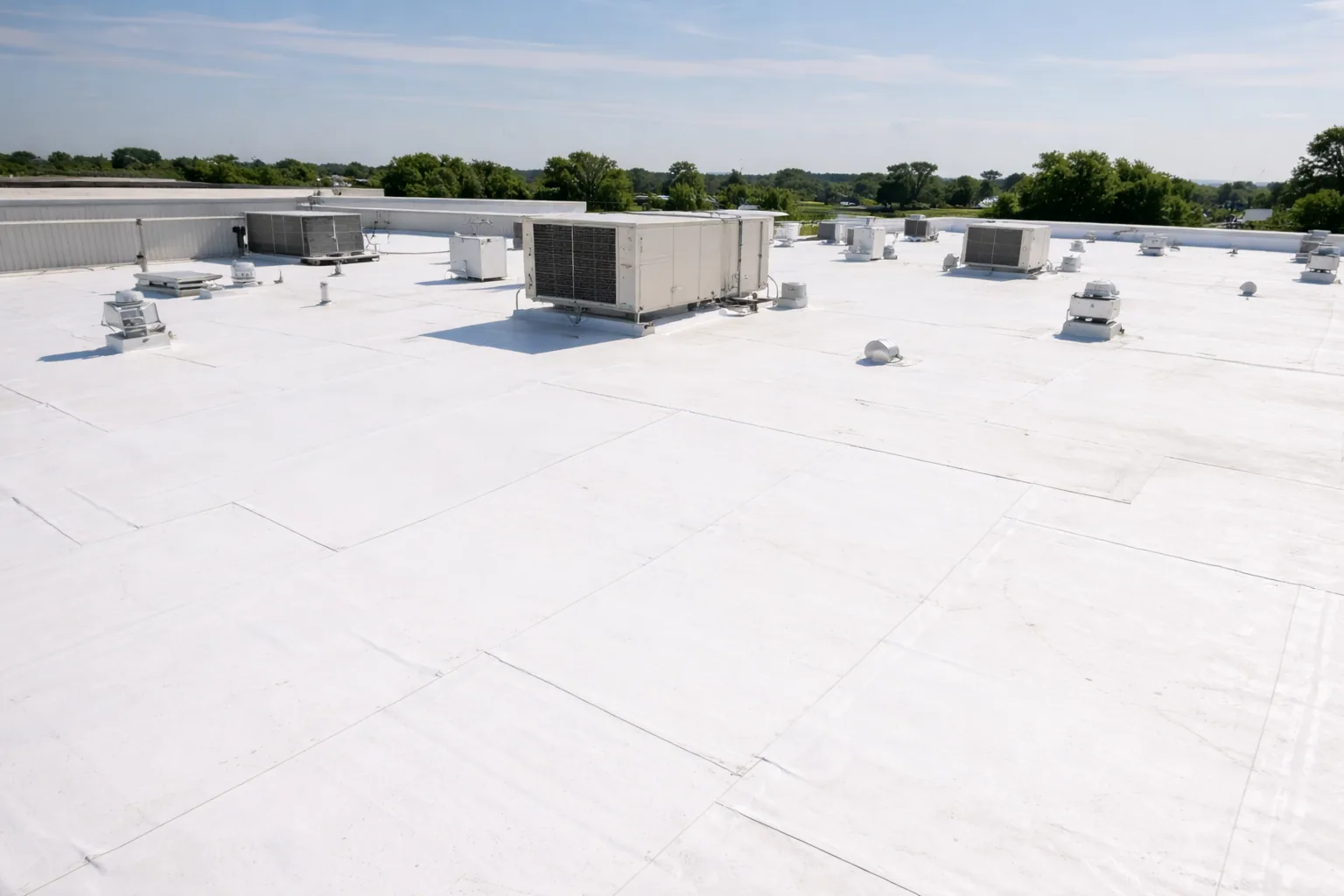
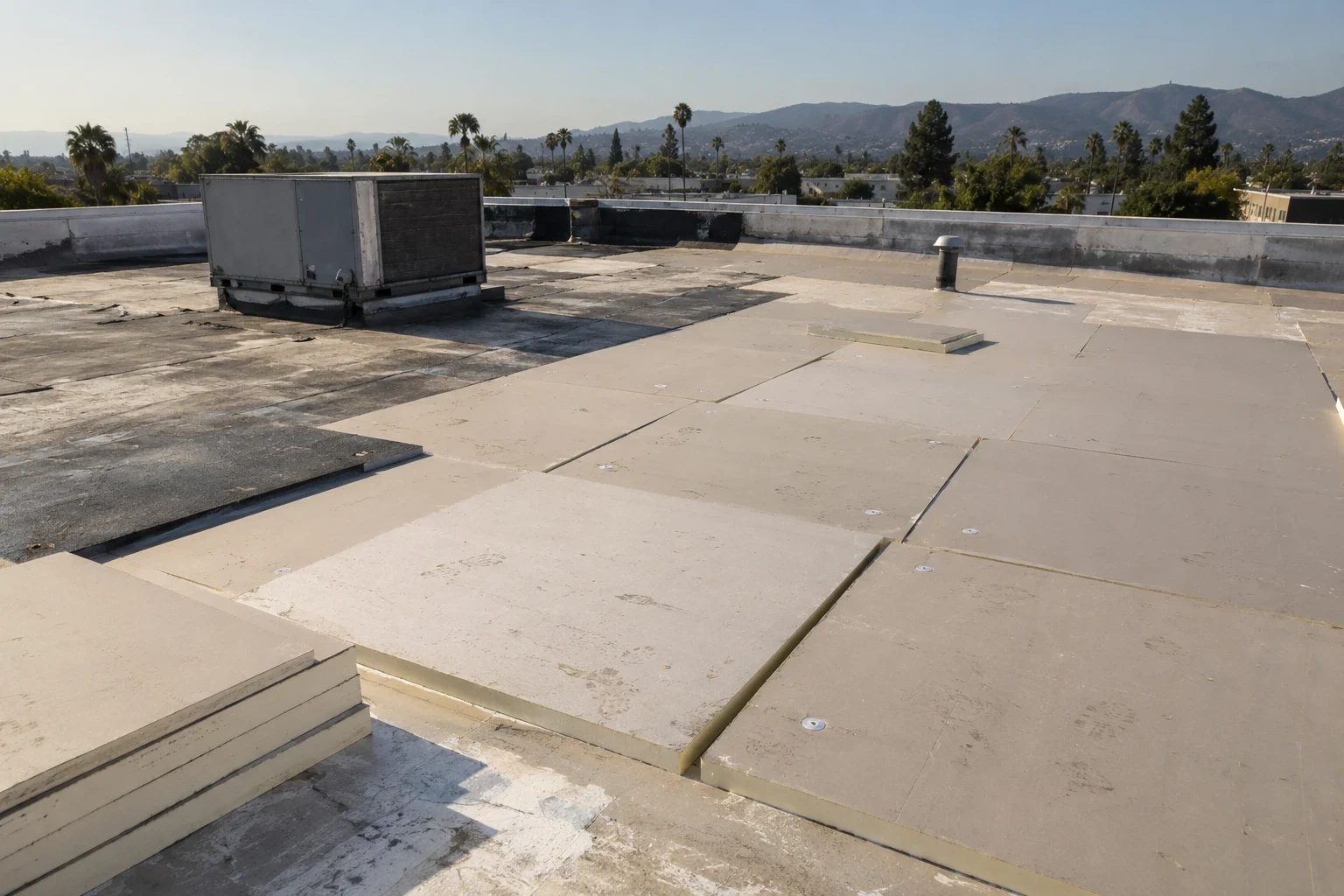
New insulation and protective layers can change the finished roof elevation. We measure curbs, thresholds, walls, and perimeter details affected by that change. The required flashing needs enough clearance. A membrane price cannot settle whether equipment must be raised or a termination redesigned. Structural and mechanical alterations need the appropriate qualified parties and operator approval.
For replacement insulation and cover board, moisture, support, fastening, and the approved assembly remain part of the decision. We identify interface changes with their responsibilities. A roof over occupied offices may also need ventilation and tenant coordination. Those restrictions affect the work sequence, while the measured construction determines the detail. The manager can compare alternatives knowing whether each includes the necessary curb, edge, or threshold work instead of assuming those items are covered by a general reroof description.
Planning and Completing the Work
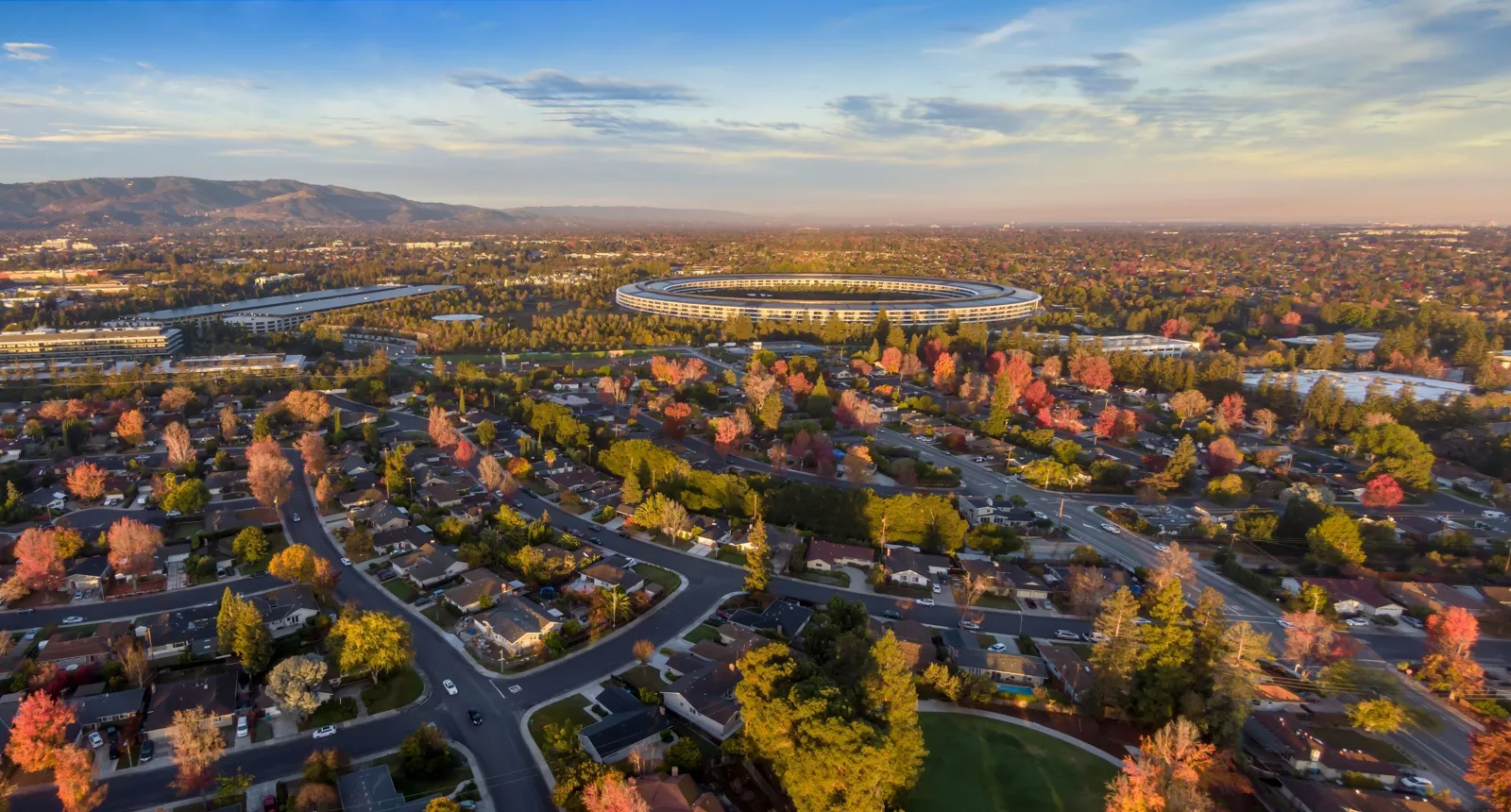
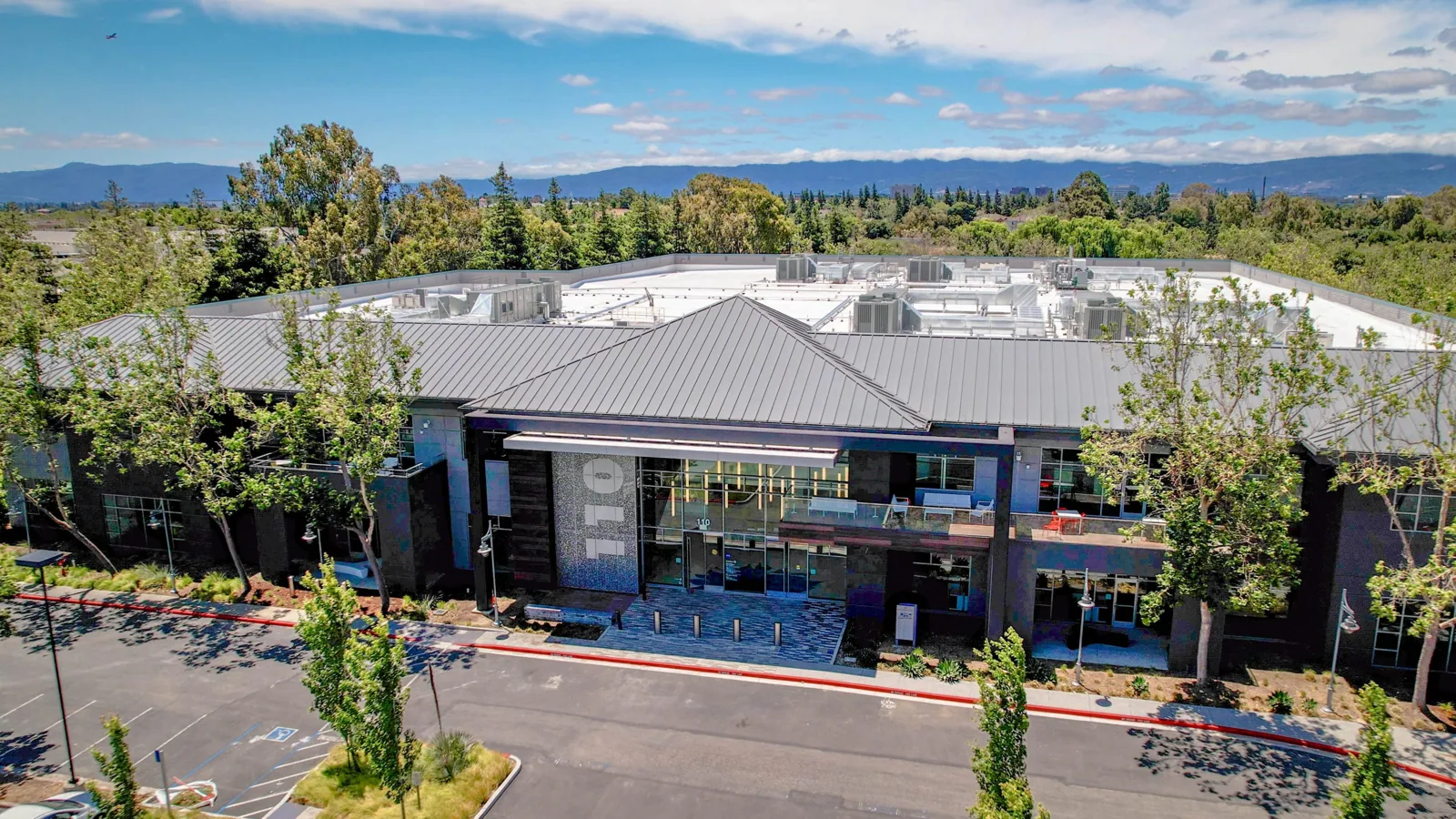
Office and R&D development is part of the Scott Boulevard commercial setting. The Tasman East planning framework identifies another Santa Clara setting near Tasman Drive and Lafayette Street. These local identities support address-specific coordination. They do not establish a roof's materials, condition, or age. We inspect the proposed work address and confirm its operator, access, and ownership requirements.
In the Scott Boulevard and Tasman Drive replacement area, a lift position needs the actual property's approval. Roof loading and permitted storage require review for the intended arrangement. Deliveries, waste handling, and protected staff routes should appear in the scope. Restricted access can require repeated setup or smaller stages. We describe those assumptions so ownership can compare the same handling plan across bids, rather than discovering that a cheaper proposal depends on storage or access the manager cannot provide.
The project team must identify the actual reviewing authority and accepted application basis. Proposed scope determines the applicable building and energy requirements, including available exceptions. A full assembly replacement can need decisions different from a localized maintenance repair. We coordinate the roof information needed for that review rather than applying a universal reflective-surface or insulation rule.
The adopted 2025 standards require scope-specific application. We identify outstanding attachment, insulation, and interface decisions before procurement. The bid should distinguish a preliminary option from construction ready for the required approval. Ownership then sees which choice has sufficient assembly information and which still depends on investigation or design. That helps the manager reserve a working period responsibly. A material delivery or planned start date does not resolve an assembly decision still waiting on the project team.
Removal and installation need an agreed daily protection plan. We size stages against substrate readiness, trade releases, material requirements, operating limits, and current weather. An opening that cannot reach the approved closure condition needs a revised sequence before it begins. A dry day alone does not make an incomplete interface ready for work.
The final record shows replaced construction, retained areas, completed details, and outstanding tasks separately. Roof warranty obligations after replacement follow the installed assembly and issuer requirements. We state remaining issuer actions by their actual status. Maintenance instructions identify service access and upkeep needed to protect the new work. The next season check can compare a known condition with new findings, giving ownership a specific future budget decision rather than another broad roof allowance.
Service access should be reviewed against the completed roof before handover. We identify vulnerable flashing and the routes approved for equipment maintenance. A new service path needs compatibility and drainage attention, not just a loose surface pad placed wherever a technician prefers to walk. The manager receives those restrictions with the completed detail record, keeping later equipment work from creating an unplanned roofing task.
Season check: bring the removal decision to ownership
Reserve a pre-season assembly check before approving replacement. We will set removal evidence, interface work, and protection assumptions on a plain bid sheet for ownership.
Frequently Asked Questions
The assembly condition and repair boundary support the choice. We describe deterioration, confirmed moisture, and retained-material limits, with further examination identified where the initial visit cannot settle them.
Measured clearances decide the interface work. Added layers can affect curbs and thresholds. We identify any design or qualified trade alteration before the construction is finalized.
Known work and discoveries are treated separately. We agree on review, pricing, approval, and temporary protection before removal, then document the condition found.
Where temporary protection is needed before replacement approval, we record its purpose and limits. Permanent work remains a separate ownership decision.

Roof Assessments
Santa Clara & the South Bay
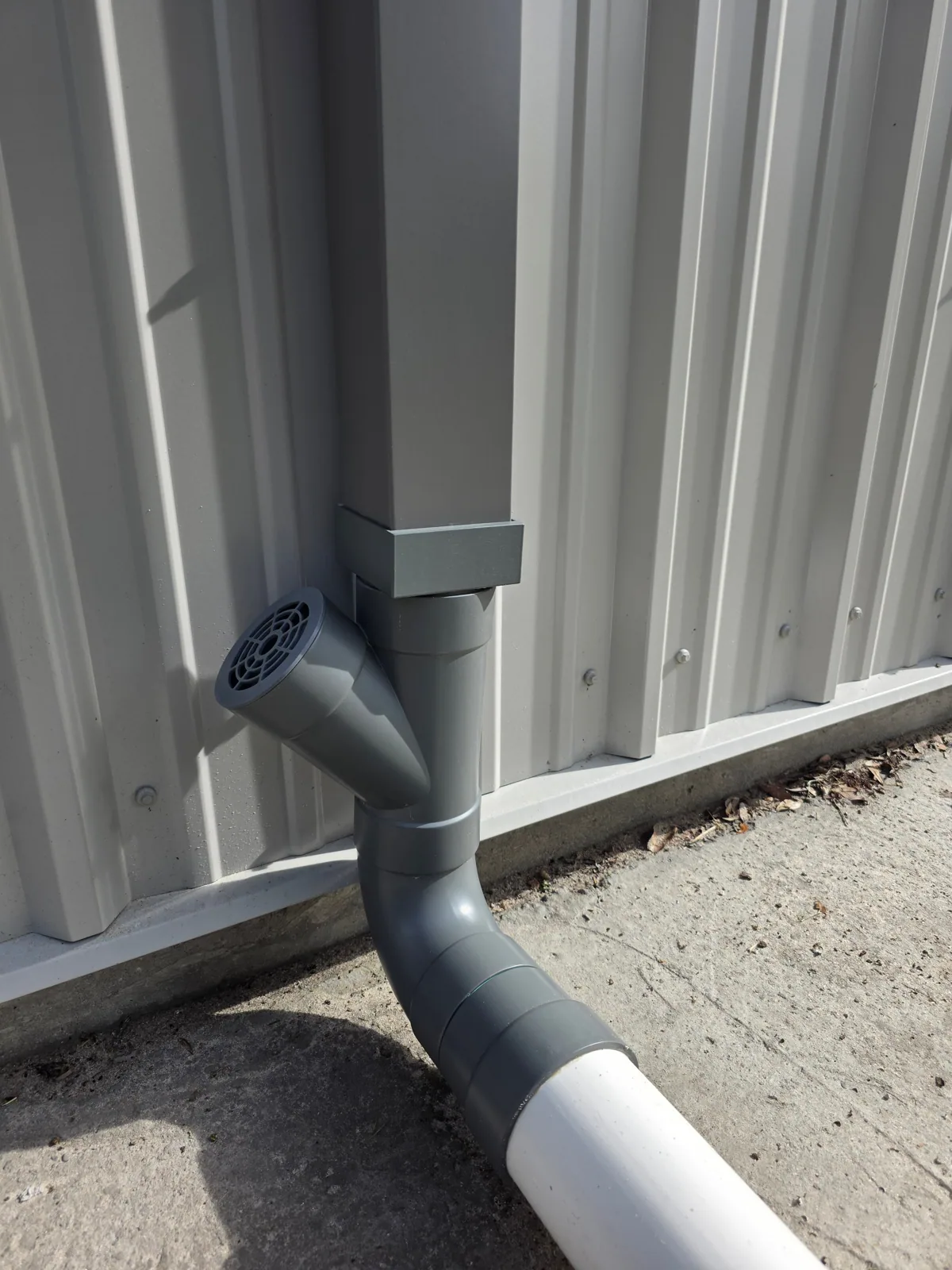
Membrane, flashing, drainage and edge details checked and written up before any work is priced.
Request a Roof Assessment