- Home
- Commercial Roofing Services
- Storm Damage Roof Repair
Storm Damage Roof Repair in Santa Clara, CA
The regional storm sequence spanning late December 2022 to mid-January 2023 raises a practical ownership question. Who can approve protection and permanent repairs at your Santa Clara, CA property during extended wet weather? Put that authority in place before a roof incident. We respond to reported damage, inspect the affected assembly, and distinguish temporary measures from the repair needed afterward. A regional event does not establish damage at an individual address.
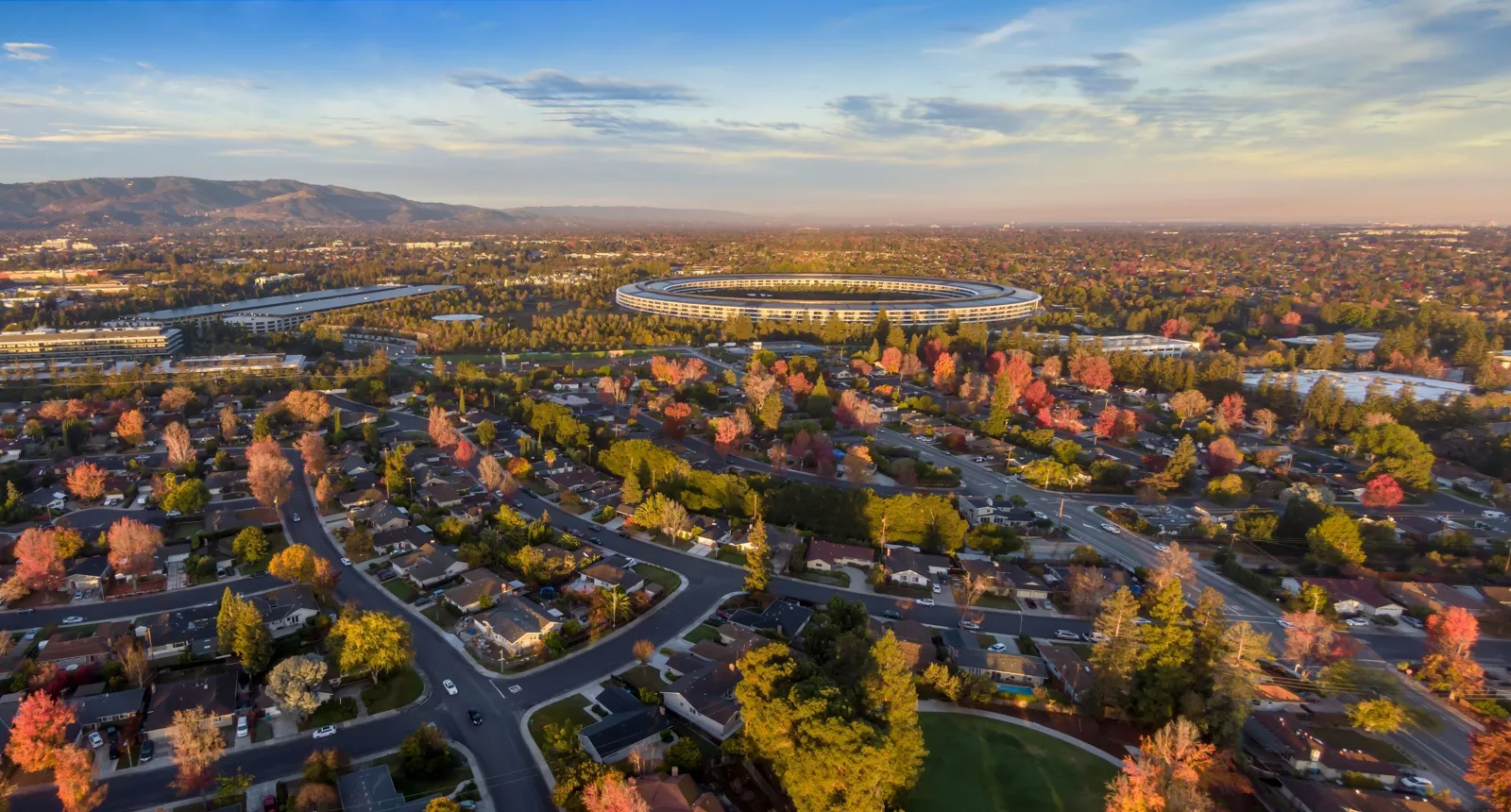
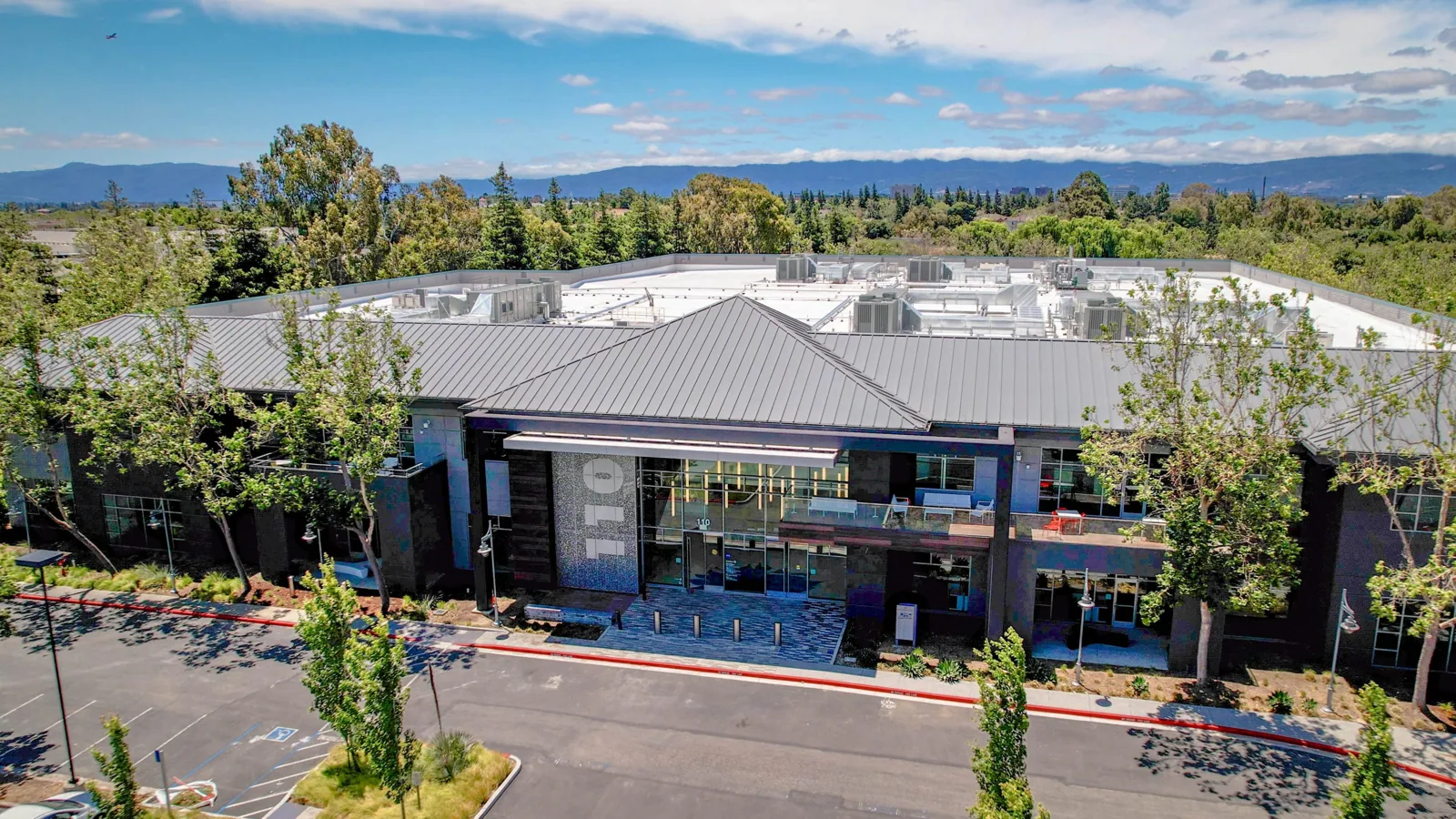
Scott Boulevard office and R&D development provides a local setting for that preparation. A manager needs the subject roof access route, operating contact, and restrictions that affect investigation. We assess urgent roof protection against safe conditions and the damage reported. A storm damage roof repair report does not establish a repair quantity. Document the storm damage roof repair finding and the next approval. An arrival time or complete repair method still requires the actual conditions, access, and suitable materials to be established.
Storm Damage Roof Repair: What the Work Covers
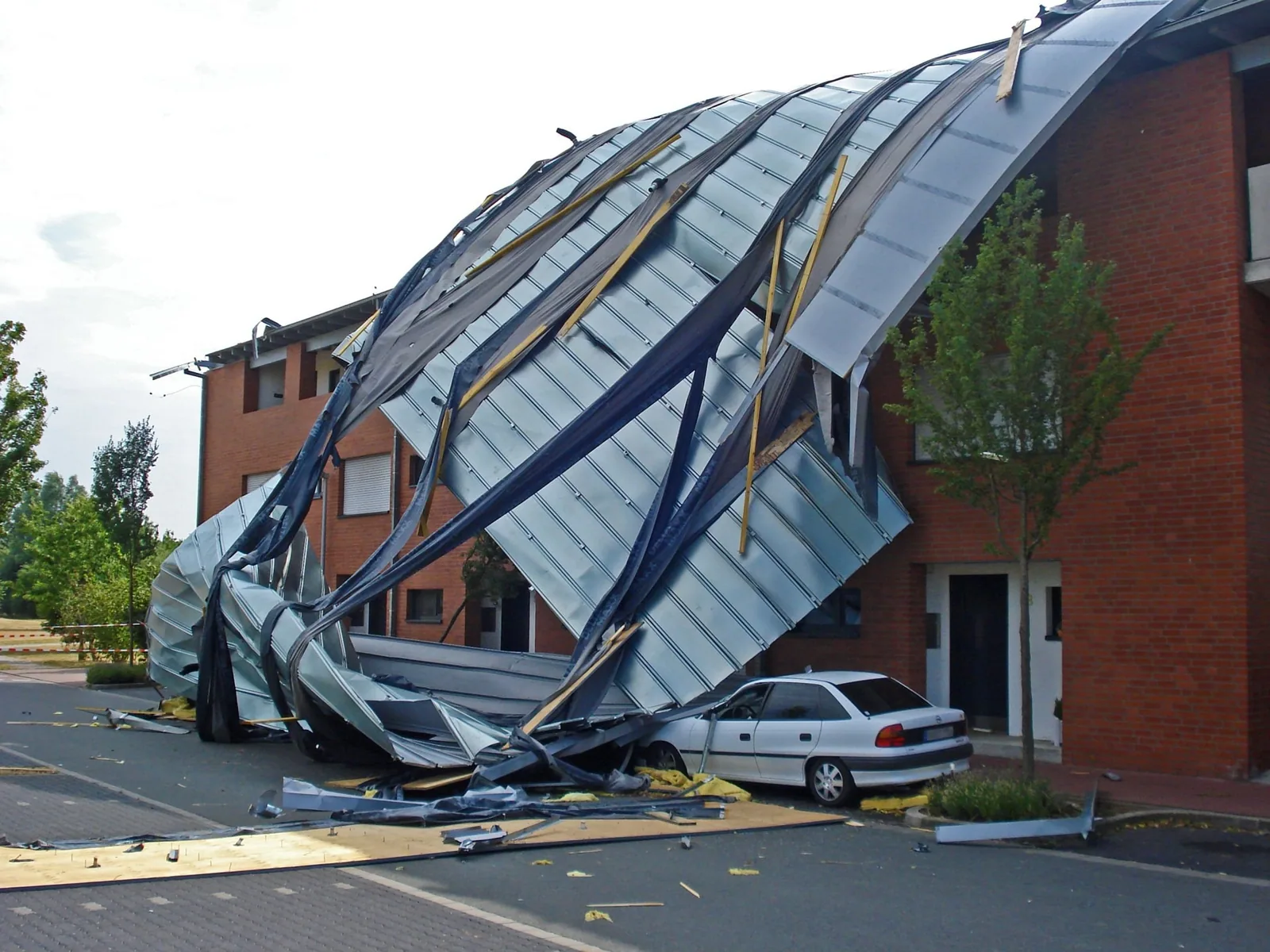
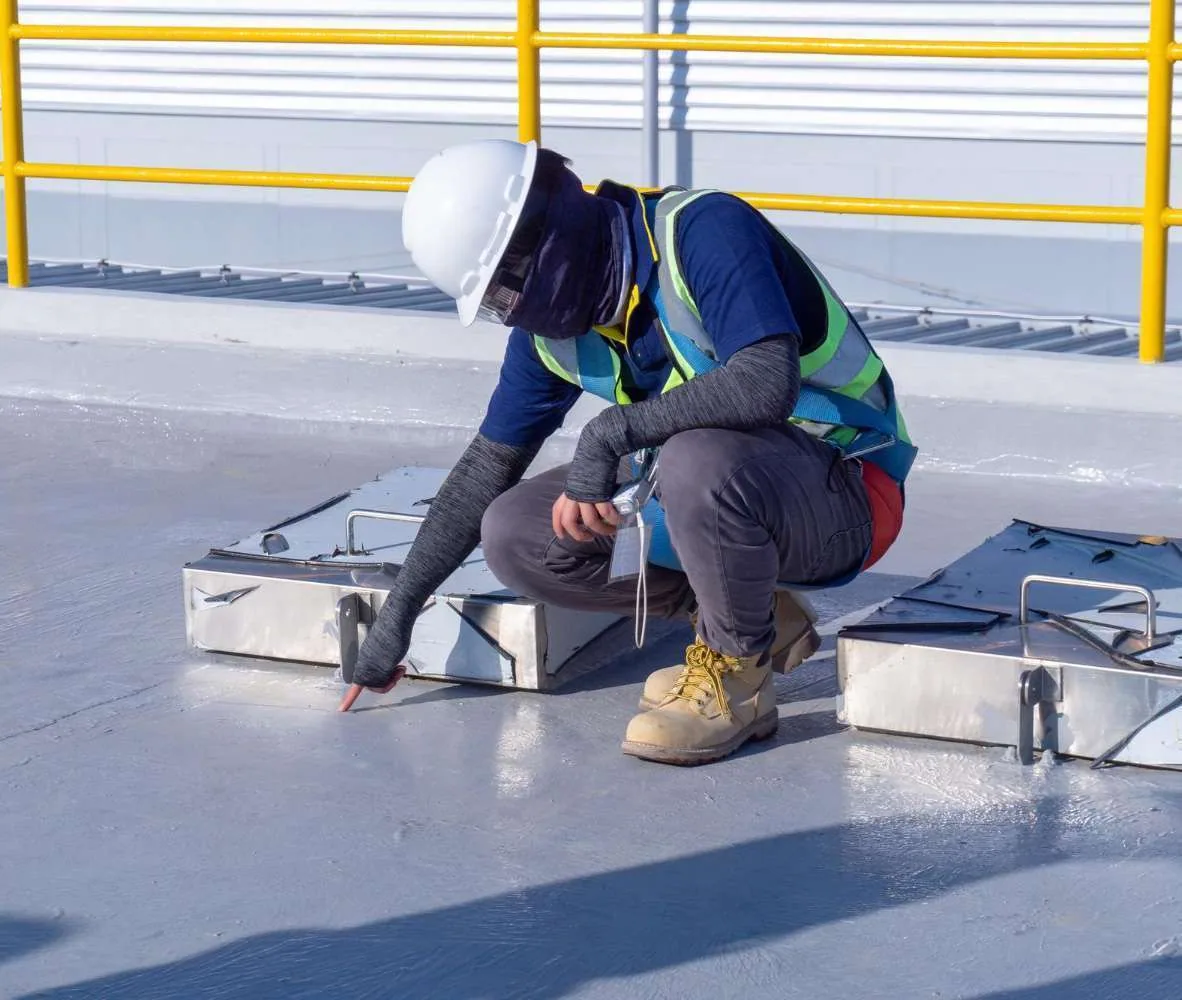
Loose roofing, standing water near electrical equipment, or a damaged overhead surface can require restrictions beyond the roof repair itself. The authorized operator directs interior occupancy and equipment decisions. We establish a safe work area and assess whether roof access is appropriate. Wet surfaces, active wind, and unstable construction can limit immediate inspection. A worker reaching the roof does not mean every damaged area is safe to approach.
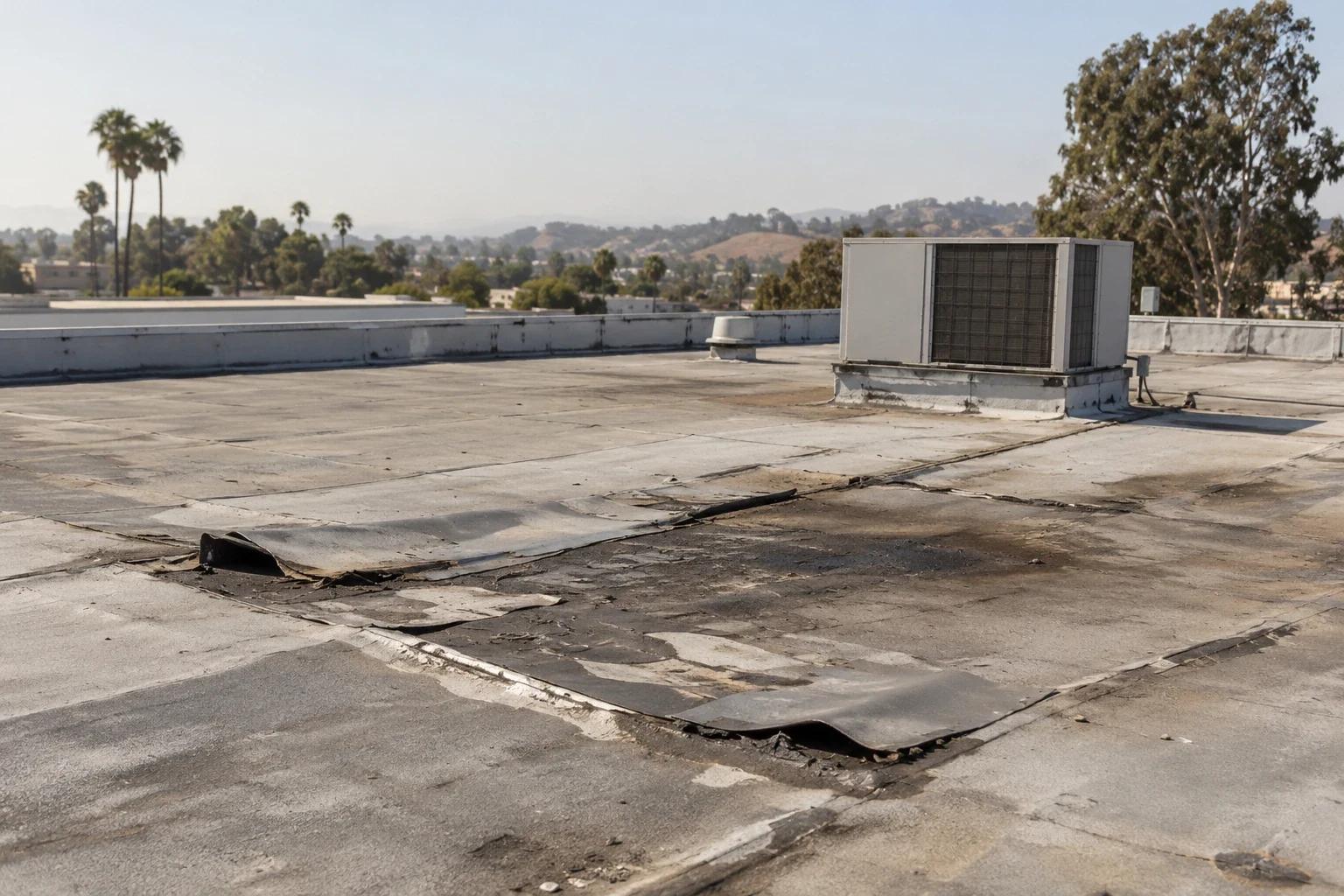
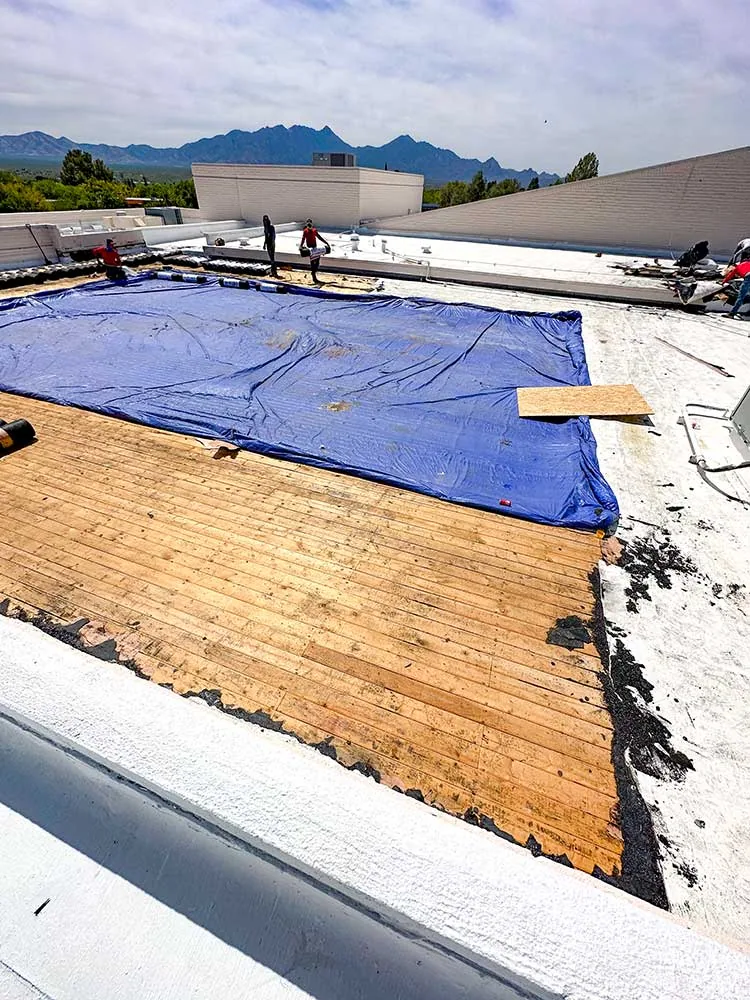
We identify the exposed condition and the protection that can be installed safely. Temporary patches, secured coverings, or other measures depend on the assembly and attachment available. A loose membrane may need more than a surface patch. A damaged deck requires evaluation before workers or materials are placed on it. The emergency scope explains those limits in practical terms. That helps ownership approve immediate work without confusing a temporary control with a finished permanent correction or structural clearance.
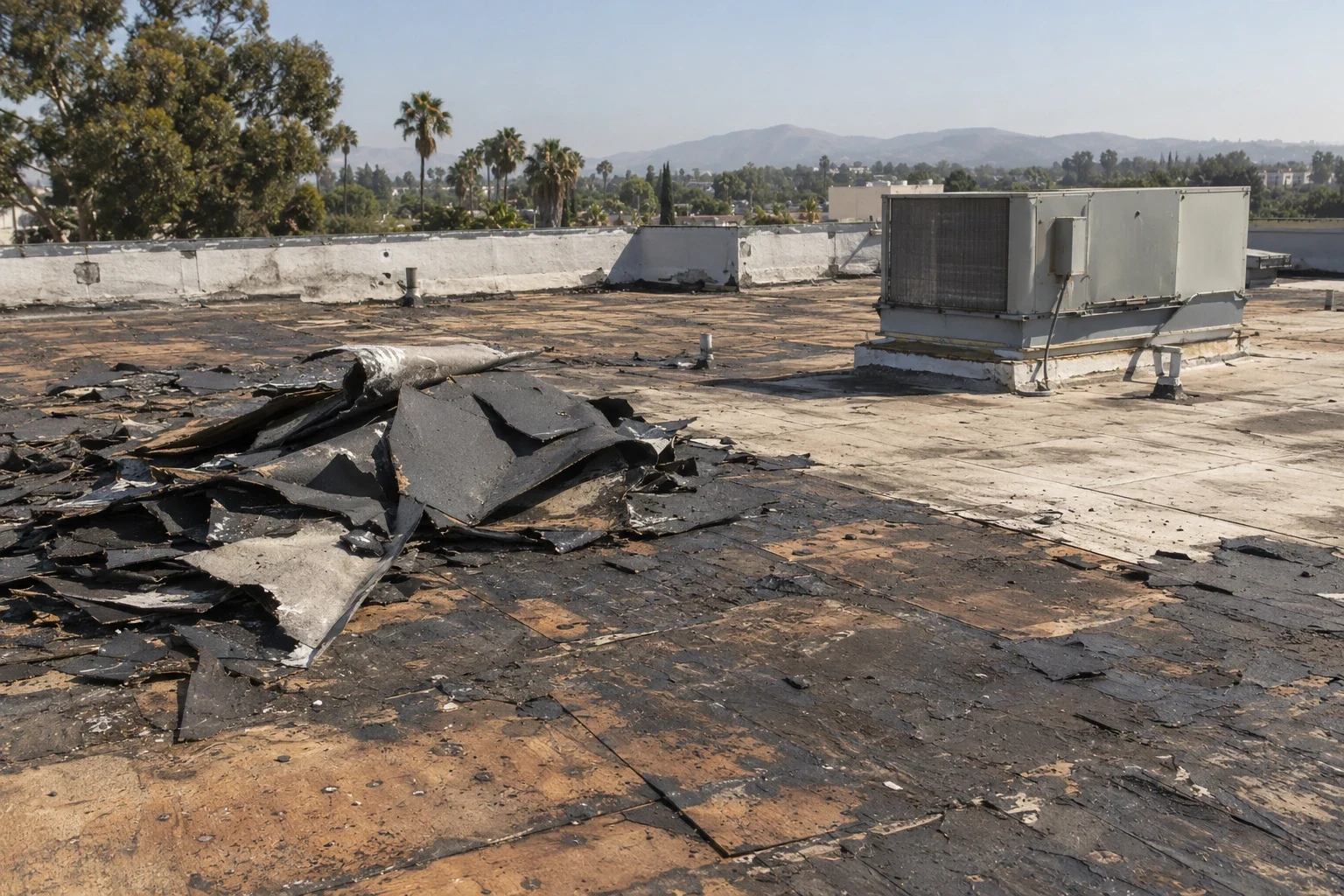
A torn sheet has a visible boundary. Wet insulation beneath it may not stop at that edge. We examine adjoining seams, flashings, terminations, and the support beneath the opening. Damage can involve several connected components. A roof repair should address those connections rather than replace only the most visible piece. We document the affected area and identify where additional examination is needed.
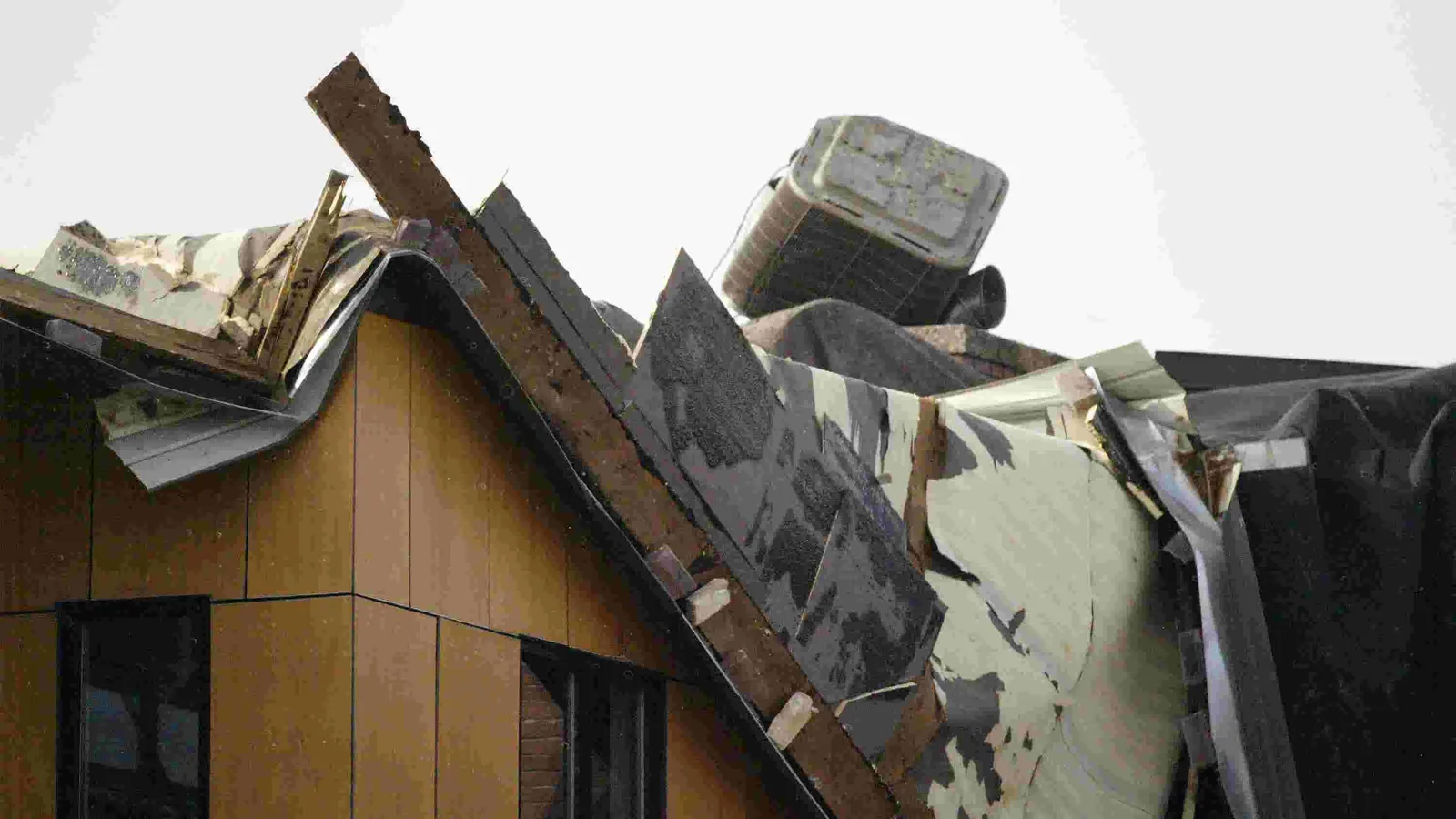
For wind-related roof damage, loose attachment and perimeter movement require close attention. Debris impact can call for membrane puncture repairs with compatible material and proper preparation. Those are different defects. Their quantities should not be hidden in one general storm allowance. Where moisture mapping or selective openings are justified, we explain the purpose before adding them. The manager sees what the examination established and what remains a construction decision requiring further access or authorization.
Dated photographs should show the defect, its location, and surrounding construction. Close-up images alone can leave the affected area difficult to identify later. We pair detail photos with wider views and describe the work performed. Emergency protection and removed material may change what an adjuster can inspect. We record those steps while necessary protection proceeds, subject to safe conditions and the owner instructions.
A roof claim documentation package can support ownership review, but the insurer determines coverage under the policy. Roof condition, storm timing, and observed damage should remain distinct in the record. We do not assign every existing defect to a recent storm. The repair scope describes the physical correction needed. A coverage question receives its own place in the discussion, so a disputed payment item does not become an unclear construction instruction to the roofing crew.
Keep storm evidence tied to the building and the reported date. Compare the current examination with available maintenance records, prior repairs and any accessible pre-event photographs. A torn edge, open seam or displaced flashing may warrant protection, but the event alone does not establish that every aged detail has the same cause. Separate confirmed damage from an unresolved entry point and from deterioration that predates the report. The scope should state what remains exposed, which temporary measure is feasible, and what additional construction still needs an owner decision before permanent work proceeds.
Planning and Completing the Work
An emergency contact without spending authority can slow a repair decision. We ask the manager to identify who approves temporary protection, testing, and permanent work. The authorized operator also supplies tenant restrictions and equipment coordination. An office suite, controlled research space, and shared service area may have different notice needs. Those requirements come from the actual property operation, rather than assumptions about the business district.
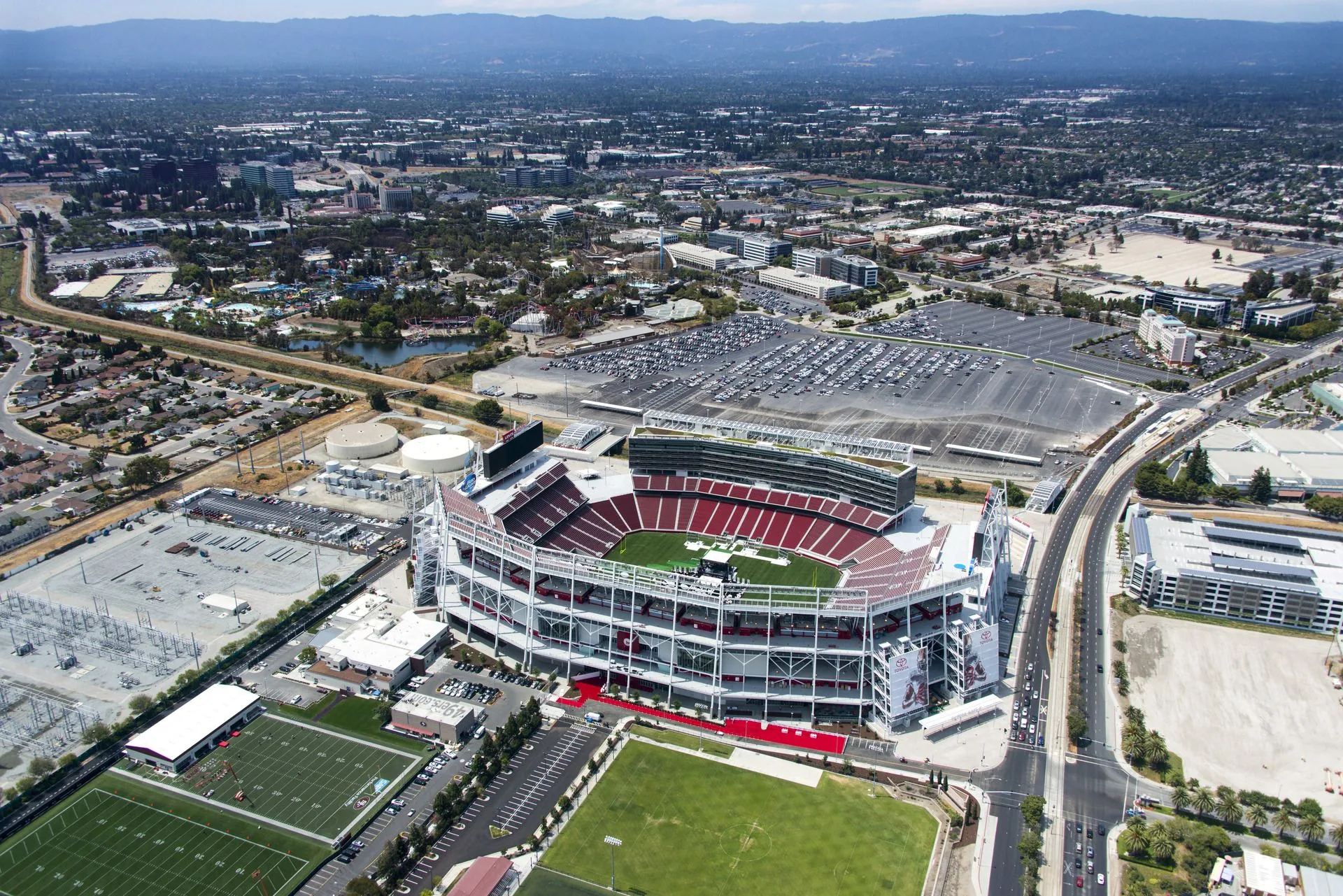
For work in the Tasman Drive and Scott Boulevard corridor, access planning belongs with the damage assessment. Within the Tasman East planning area, the repair assessment begins with the subject roof and its authorized operation. We identify the assembly before selecting a correction. Where occupied office roofing affects entrances or service routes, the proposed sequence specifies the restriction and who coordinates it. Roof work must fit the actual authorized operation.
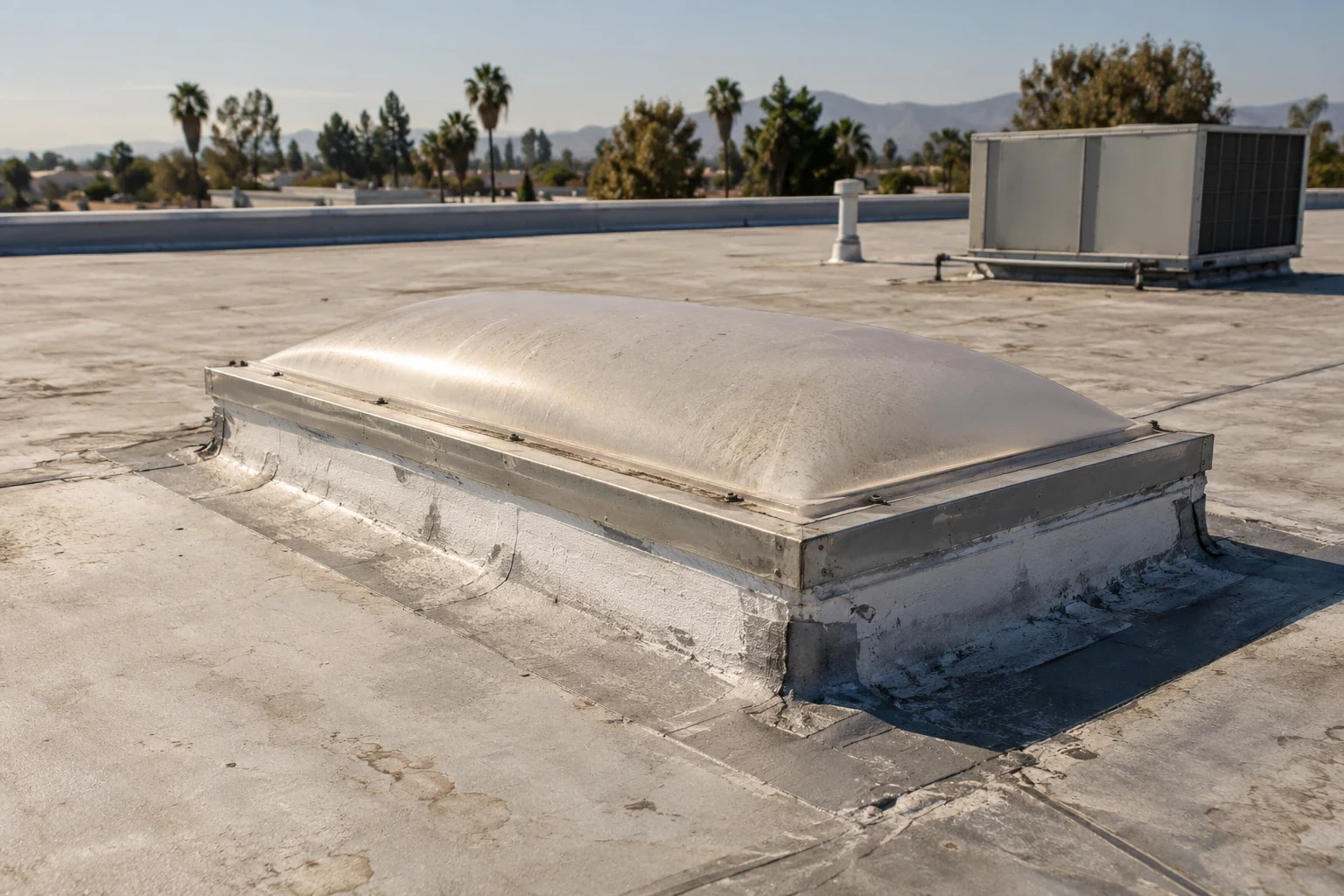
A permanent repair begins with removal limits and preparation. The proposal identifies membrane type, insulation replacement where needed, detail reconstruction, and disposal. Matching the existing material includes compatibility and attachment requirements; appearance alone is not enough. A repair that crosses an expansion joint or changes perimeter construction needs an appropriate detail. We resolve those interfaces before ordering materials for the final correction.
Access equipment, material handling, protected interior areas, and repeat mobilization affect cost. So can concealed deterioration discovered after the damaged covering is opened. We distinguish measured repairs from an allowance that requires further approval. Santa Clara adopted 2025 California building standards with local modifications. The actual authority and application basis determine requirements for the proposed alteration. Applicable energy paths and exceptions receive a scope-specific review. An emergency authorization should not silently become permission for a larger code-sensitive roof replacement.
The completed repair record should identify the work location, materials, and any remaining roof decisions. Temporary protection is removed or addressed as part of the permanent construction. We check repaired seams and transitions with methods appropriate to the system. A repaired storm opening does not establish the condition of every unrelated roof area. The manager needs the repaired boundary and any additional findings clearly separated. Each remaining repair receives its own description and approval requirement in the completion account.
Keep the photos, authorized changes, and repair description together for ownership and insurance review. A post-repair condition account helps the next maintenance visit return to the affected details. Later roof traffic or equipment work can create new damage, so access controls remain useful after the incident closes. We identify ongoing care relevant to the correction. That gives the property manager an actionable record instead of leaving emergency protection, permanent repair, and unrelated capital work blended into one completed invoice.
Storm preparation: Set the approval route
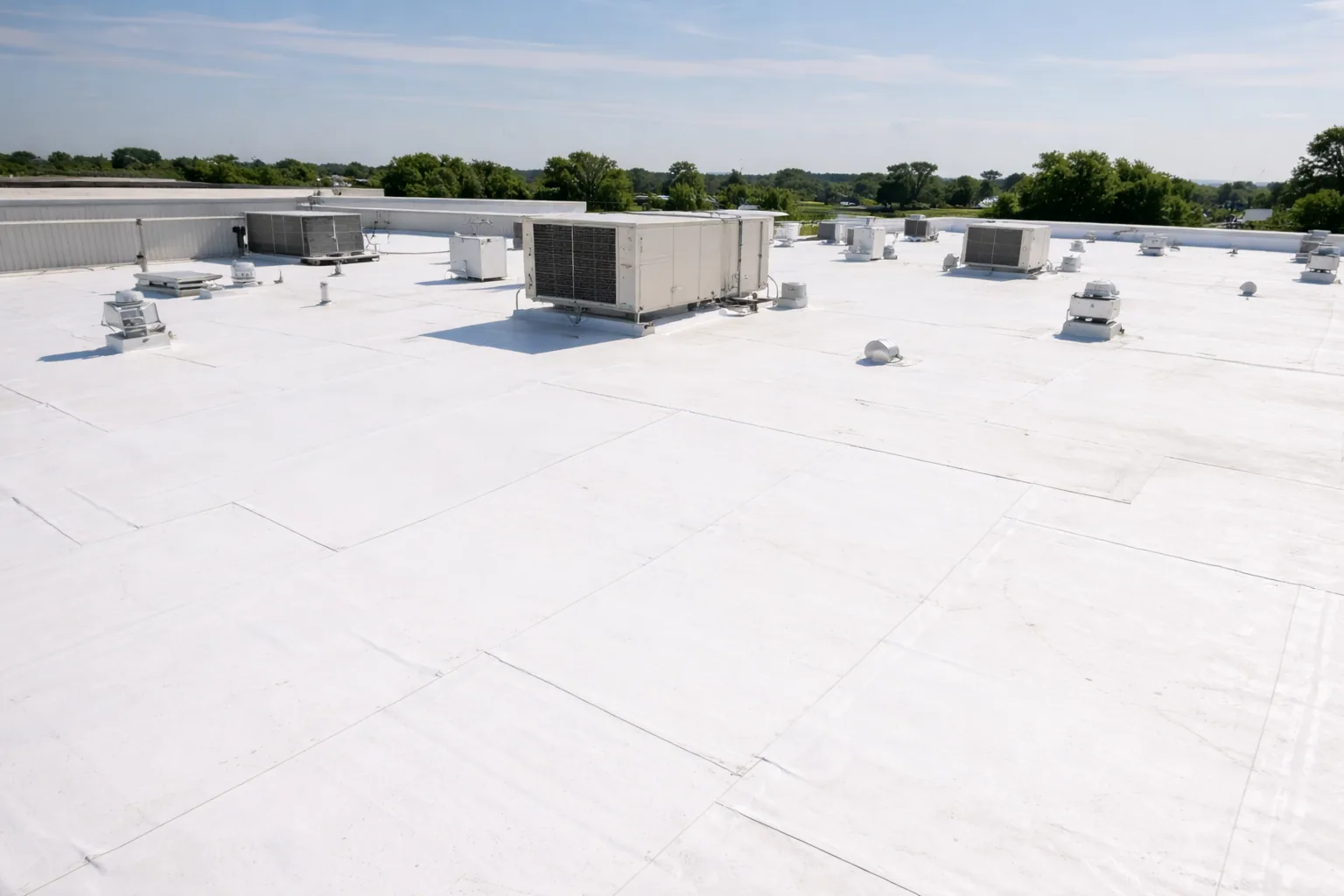
Arrange a pre-season check and an emergency approval plan. We will give ownership a plain repair bid sheet with tenant restrictions and temporary-work boundaries.
Frequently Asked Questions
Necessary protection may proceed under ownership instructions. Photograph the condition and retain repair records; policy requirements and coverage remain matters for the insurer.
Some protective work can remain only if it suits the permanent system. We specify what is retained, removed or reconstructed before final authorization.
Yes. We examine adjoining construction and recommend confirmation where moisture could extend beyond the visible opening.
The authorized operator controls occupancy with any required safety professionals. Roofing completion alone does not clear electrical, structural or interior hazards.
Roof Assessments
Santa Clara & the South Bay
Membrane, flashing, drainage and edge details checked and written up before any work is priced.
Request a Roof Assessment