- Home
- Roof Systems
- Modified Bitumen
Modified Bitumen Roofing in Santa Clara, CA
The regional atmospheric-river sequence from late December 2022 into mid-January 2023 makes a useful scheduling question concrete: can the proposed modified bitumen work reach a watertight stopping point each shift? For property managers in Santa Clara, CA, that belongs beside the installation method and removal limits. Rain history informs scheduling. Inspection establishes the condition of the roof being priced.
Modified bitumen uses reinforced asphalt sheets assembled into a roofing system. The attachment method, layer arrangement and flashing details matter as much as the cap surface. We review existing construction before proposing repairs, recovery or replacement. Scott Boulevard's historical office and R&D development gives the corridor a commercial identity. It does not tell us which roof is installed on a particular address. We examine that roof and make the work understandable to ownership.
Modified Bitumen: What the Work Covers
A sheet can be installed by methods suited to its product and assembly, including self-adhered, cold-applied or heat-based applications. Those methods require different preparation and controls. We check the substrate, temperature limitations and manufacturer's installation requirements. A self-adhered sheet needs the correct surface and pressure. A cold-applied system needs its specified adhesive and curing conditions. A heat-based installation needs a specific fire prevention plan and an appropriate receiver.
The manager should know which application is included before approving the bid. Building ventilation, combustible construction and adjacent activities can change the practical choice. We coordinate work boundaries and protection with the operator. A built-up asphalt alternative may warrant comparison where the owner wants a multi-ply assembly. It still requires its own installation controls. The cheaper bid can lose its apparent advantage if application restrictions or hidden preparation are left for later pricing.
A lifted lap, blister or split deserves an examination of the surrounding construction. We inspect the cap, underlying layers and flashing connection. A surface patch cannot restore a failing receiver underneath. Trapped moisture, separation and movement have different correction paths. We mark the affected areas and establish whether a repair can reconnect sound material or whether removal is necessary. The visual appearance alone should not determine that decision.
For concealed conditions, A moisture survey interpreted with roof openings can help establish removal limits. An indication is not automatically a measured wet area. We select confirmation locations and discuss access to the layers with the property representative. Repairing an open lap includes cleaning, compatible materials and a detail suited to the condition. The regional storm account does not establish the cause of a split on the subject roof. That conclusion needs physical evidence.
A modified bitumen field can look serviceable while a wall flashing has lost its secure termination. We inspect the vertical membrane, support, corners and protection above it. Movement between the roof and wall needs a designed detail. Rigidly bridging an active joint can transfer stress to the sheet. Sealant at the top edge is part of a termination where specified; it does not replace missing restraint or damaged counterflashing.
Outlets need enough exposed receiver for a proper connection. We examine drain components, sumps and adjacent sheet layers before deciding whether the detail can be repaired in place. Drain and scupper corrections should identify the roofing task and any plumbing or structural involvement. A new cap sheet should not leave an outlet stranded behind an added layer. If drainage design must change, the scope includes the review needed to resolve that work before materials are installed.
Planning and Completing the Work
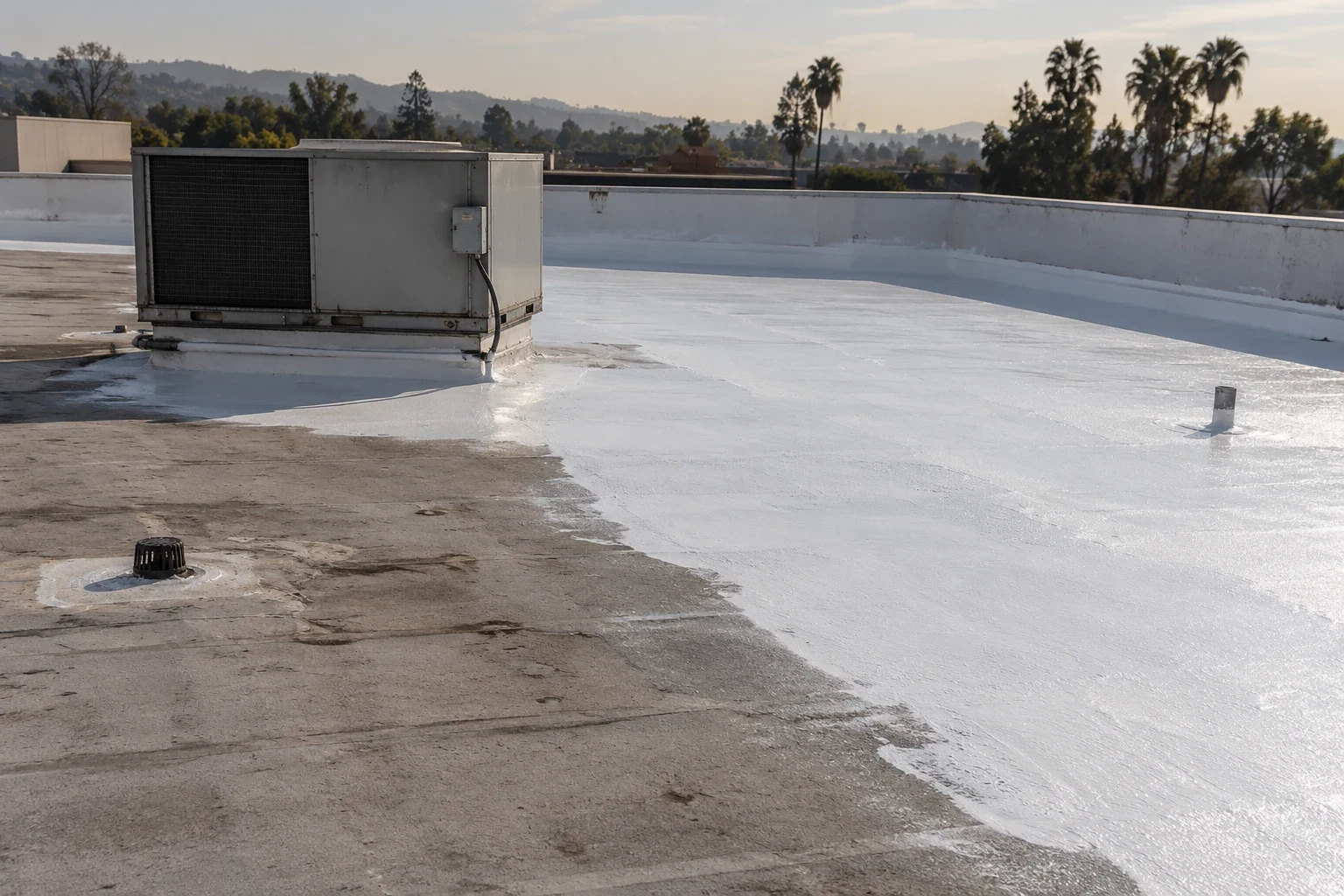
A recover may be reasonable over acceptable existing construction. We evaluate moisture, attachment, layer limits, deck suitability and compatibility before recommending it. A damaged receiver can make tear-off the appropriate path. Silicone restoration for a suitable asphalt surface is another possible comparison, after repairs and adhesion evaluation. It is a different scope from a new multi-ply roof. Ownership should see the retained construction and the limitations beside each alternative.
Santa Clara's adopted standards include local modifications. We confirm the actual reviewing authority, accepted application basis and work classification. Energy compliance is considered through the applicable project route and exceptions, rather than assumed from a light-colored cap. Tasman East's adopted planning framework provides context near Tasman Drive and Lafayette Street. A property in the Scott Boulevard and Tasman area still needs records and field examination to establish its assembly and approval needs.
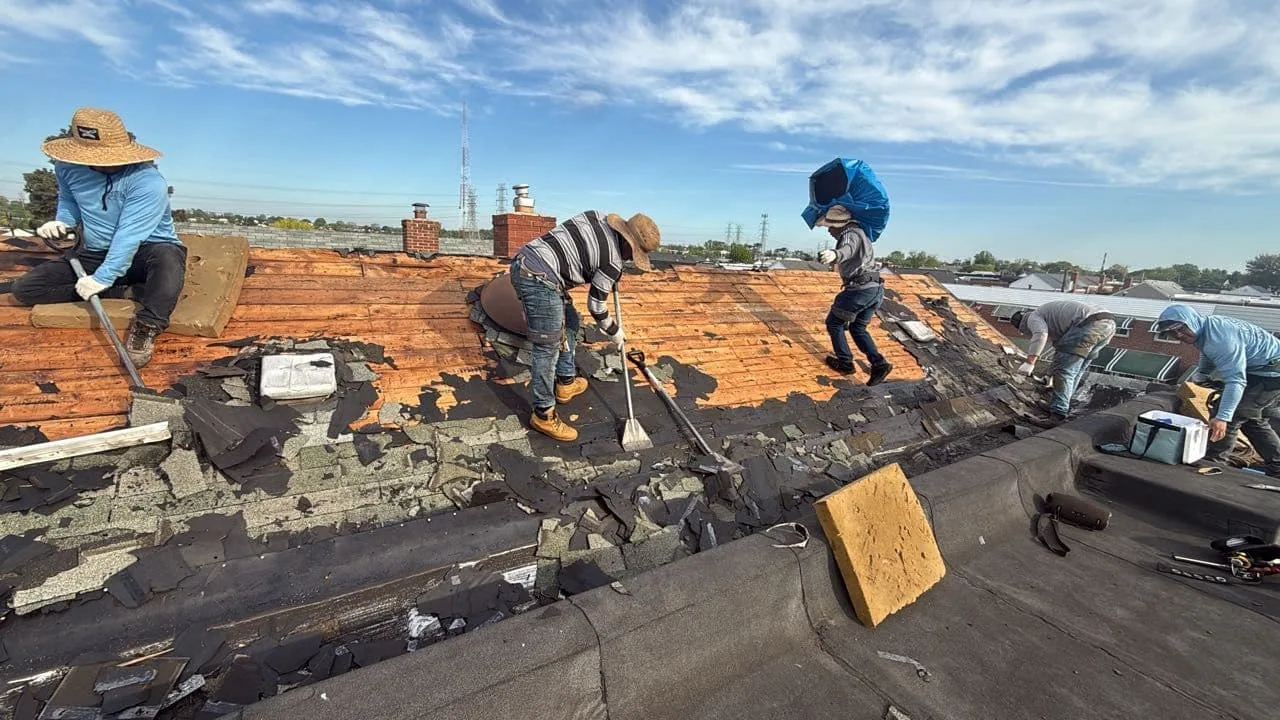
Removal exposes more than the deck. It can expose interior operations to debris, odor and an interruption if temporary protection is inadequate. We identify daily work limits, temporary seals and material storage. The building representative helps establish sensitive areas and tenant notice requirements. Work on a flex industrial property can involve office areas beside process space, so the sequence needs the actual occupant's requirements rather than a standard access assumption.
For ownership approval, the bid separates planned removal from conditional deck repairs. It names cap surface, layer arrangement, attachment and transition work. We record concealed conditions as the work proceeds and explain any necessary scope change before its approval. After completion, maintenance focuses on detail condition, outlets and damage from later service activity. For an urgent roofing condition, safe access and the examined construction determine the appropriate immediate action. We document any temporary measure and scope permanent correction separately.
Layer transitions deserve a closeout check before access equipment is removed. We examine the finished lap edges, corners and terminations for incomplete work. Relevant photographs can show preparation that will no longer be visible after surfacing. The manager receives the installed material description and any restrictions on later alterations. A rooftop equipment replacement should include roofing coordination so the new curb connection does not damage retained sheets. Future repairs also need compatible materials and suitable preparation. Put that requirement in the building's maintenance instructions with the locations of recent work. Ownership can then distinguish the completed scope from unrelated service tasks and conditions intentionally retained outside the roof project.
Modified bitumen scope: identify layers and heat controls. For a modified bitumen project, record the number and type of proposed plies, base attachment, surfacing, insulation and substrate preparation. Clarify whether the installation uses heat, cold adhesive or another approved method, then state the required fire prevention and occupied-building controls for that method. At drains, walls and equipment supports, show how the new work joins retained roofing. Separate concealed deck repairs from the base quantity so ownership can review a change if deterioration appears after removal. A clear assembly schedule helps compare bids that use similar terms but different material layers, fastening or detail assumptions.
Season planning: Clarify the asphalt scope
Schedule a pre-season modified bitumen check. We will prepare a plain bid sheet covering layers, application controls and tenant protection for ownership.
Frequently Asked Questions
They can provide a suitable non-flame method on an approved receiver. Surface preparation, weather limits and the complete selected assembly still govern installation.
A blister needs investigation. Its extent, moisture involvement and surrounding bond determine whether localized correction or broader removal is appropriate.
The specified assembly should identify every retained and new layer. A cap-only description leaves ownership unable to compare preparation and system construction.
Damaged flashing needs repair or replacement first. A coating may restore a suitable surface, but it cannot supply a missing secure termination.
We examine representative construction before bidding and define conditional deck work. Discovery records and approval procedures then address conditions concealed from the initial inspection.

Roof Assessments
Santa Clara & the South Bay
Membrane, flashing, drainage and edge details checked and written up before any work is priced.
Request a Roof Assessment