
- Home
- Roof Damage Repair
- Commercial Roof Seam Repair
Commercial Roof Seam Repair in Santa Clara, CA
The regional heat event of September 2022 included voluntary Flex Alerts. For a property manager in Santa Clara, CA, seam maintenance raises a practical budget question: will the proposed repair reconnect stable membrane or cover an opening over unsuitable material? Regional heat gives planning context. It does not establish that a joint failed from temperature movement on this particular roof. We examine the joint and receiver before defining the task.
A roofing seam needs the connection intended for its assembly. Welding, adhesive work and reinforced asphalt laps have different preparation requirements. We identify the installed material and inspect the defect's extent. Historical office and R&D development on Scott Boulevard supplies local identity without establishing current roof construction. The manager receives a repair description that separates compatible seam work from moisture removals or detail reconstruction that may require a broader ownership decision.
Commercial Roof Seam Repair: What the Work Covers
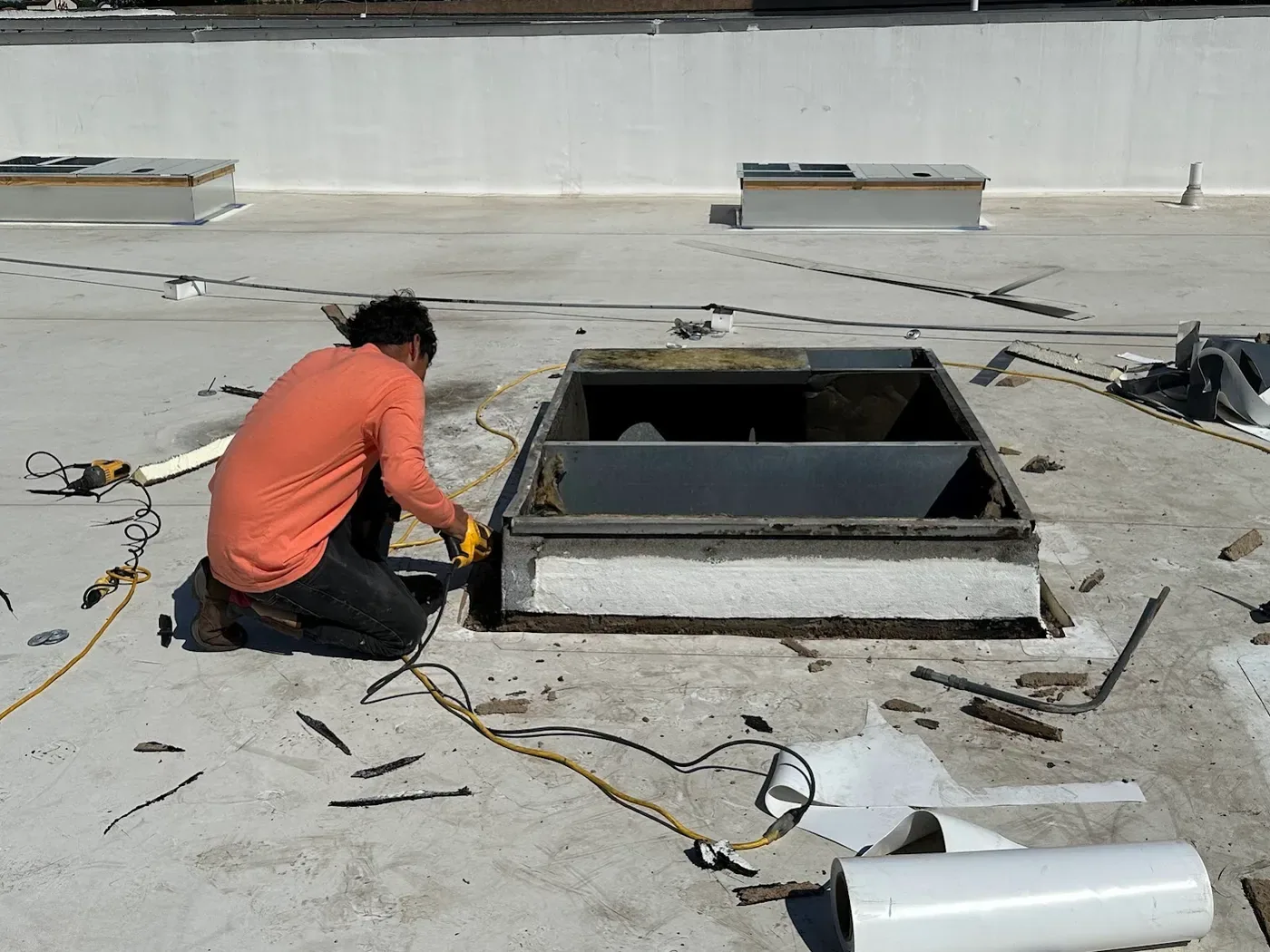
An open edge needs examination of the surrounding sheet and connection. We identify the membrane, previous repairs and the layer receiving the proposed work. A patch material that looks similar can still be incompatible. Dirt, aged surfaces and old compounds can affect the repair method. We review the product requirements and prepare the connection accordingly. The bid should name that work instead of promising a generic seam treatment without stating what is being joined.
Repairing a TPO membrane connection typically requires product-appropriate surface preparation and a welded detail. An asphalt sheet lap repair follows the requirements of its selected assembly and application method. We inspect the surrounding material to establish where a sound connection can be made. Where material is too deteriorated to receive a reliable local repair, removal or broader replacement may be needed. That limitation belongs in the ownership comparison before the patch area is priced.
A short visible opening can lead to a longer area of deficient connection. We examine accessible joint length with methods suited to the installed roof. The inspection should identify the repair boundary and areas needing further investigation. A connection that has separated from its support can need receiver work as well as seam work. The defect's appearance alone does not establish its cause or the extent of concealed deterioration.
A nearby puncture in the field sheet needs a separate location and repair description. It should not disappear into the seam allowance. An adjoining flashing transition may involve a different receiver and secure termination. We explain these boundaries so the manager knows which openings the proposal addresses. A permanent seam repair should not leave unresolved defects beside it simply because they belong to another part of the assembly.
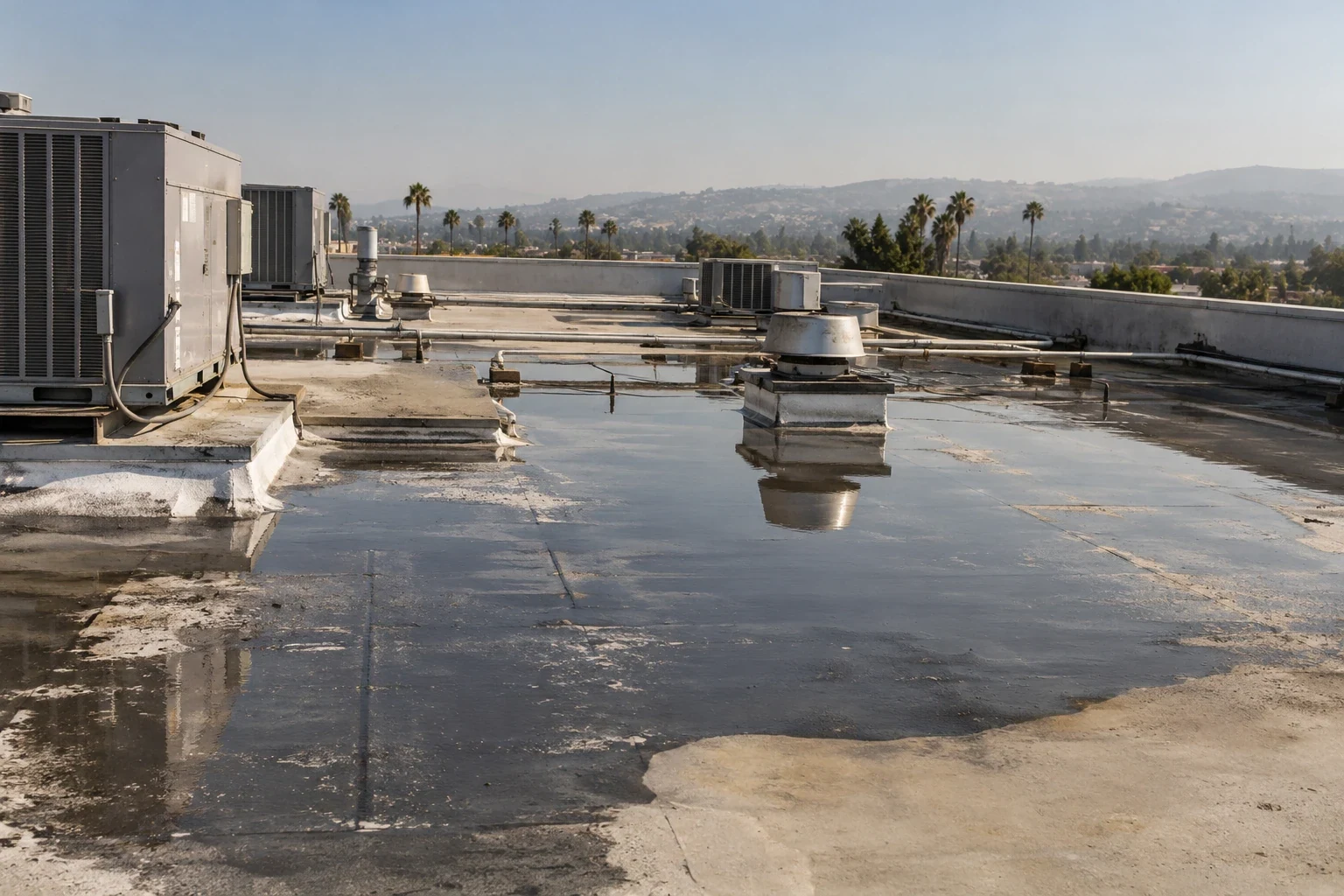
An open joint can admit water, but it does not prove that every surrounding layer is wet. We examine indications and use selective confirmation where concealed condition affects the recommendation. Thermal screening interpreted with roof investigation can help direct that work under suitable conditions. Survey limitations and confirmation methods should be clear. The manager needs findings tied to locations, rather than an unexplained wet-area allowance.
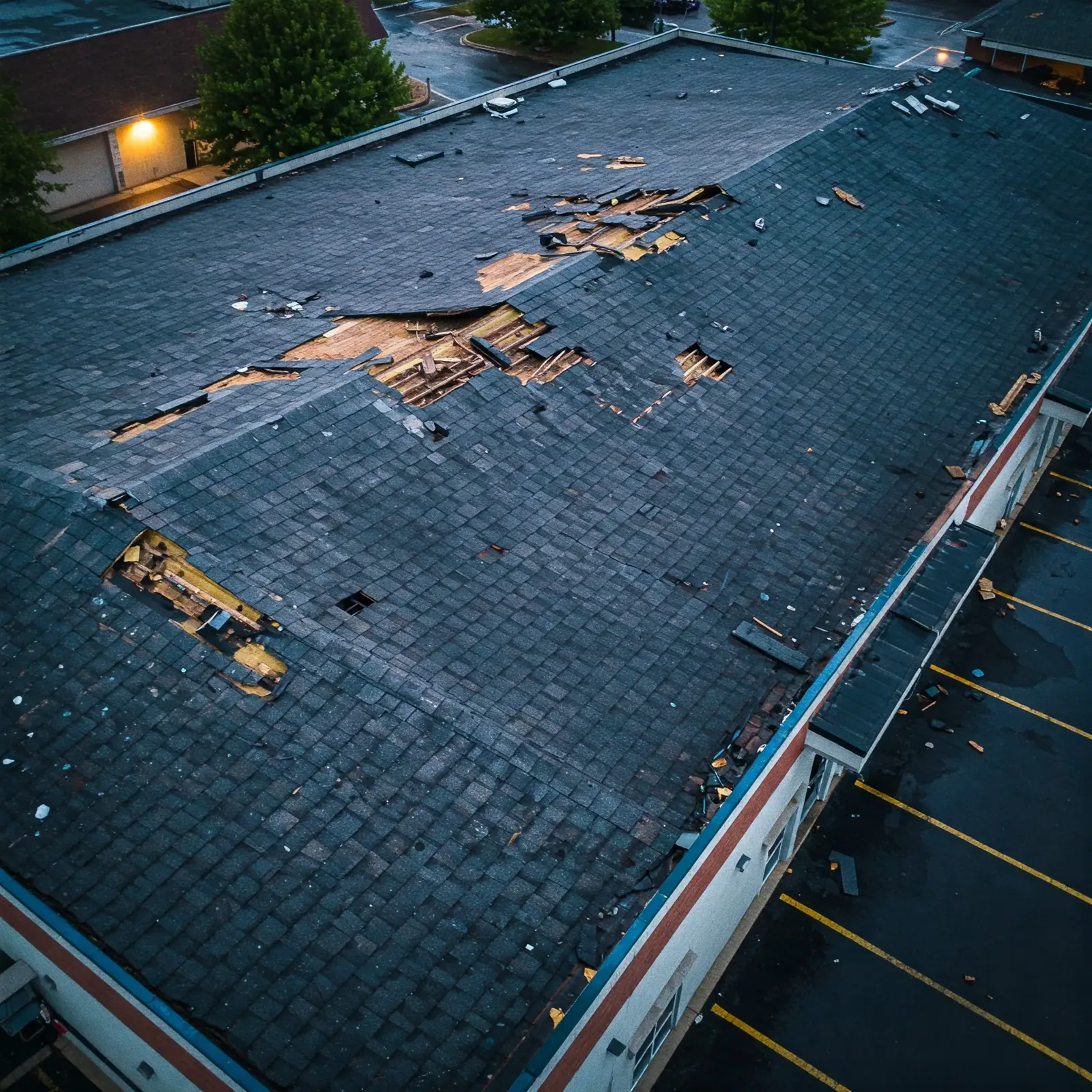
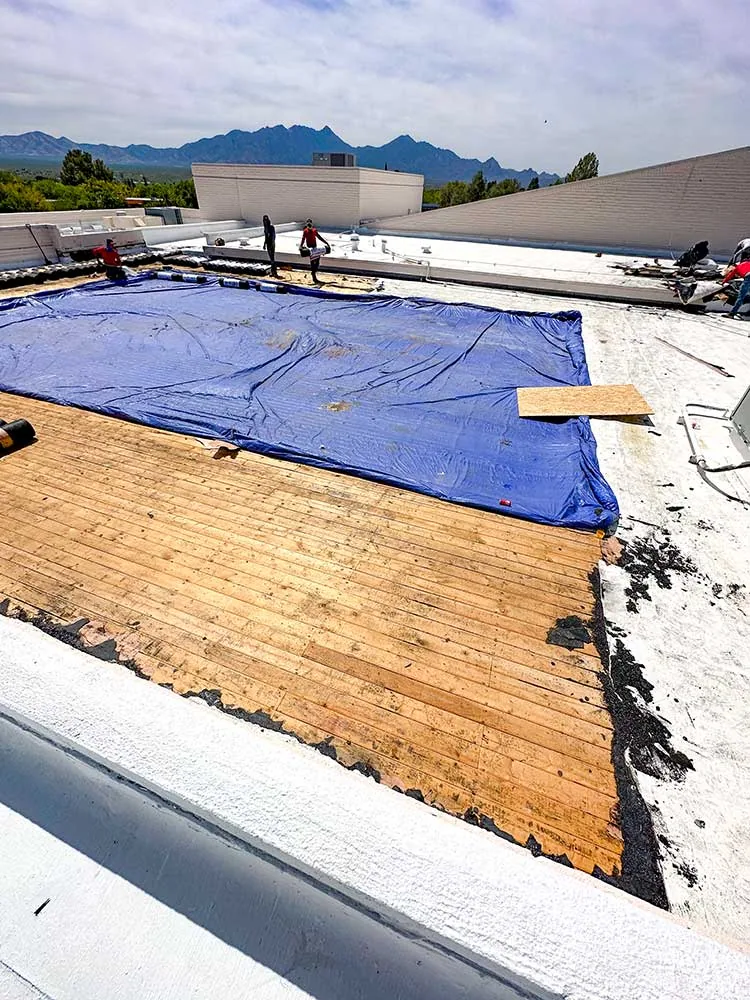
Where wet insulation or damaged backing is confirmed, we identify removal and replacement work before closing the joint. The deck may need further examination once exposed. Temporary protection and conditional deck repairs belong in the proposal. Leaving unsuitable layers beneath new membrane can preserve the condition that makes a local repair unreliable. We compare a defined repair with a larger scope only when the findings justify it, and explain the retained limitations of each option.
Planning and Completing the Work
A joint near a wall, curb or change in deck construction can be affected by its detail and attachment. We inspect those relationships rather than attribute the opening to regional heat alone. A moving joint may need a detail that accommodates the required movement. Additional fasteners or a rigid patch can change restraint. Where the configuration calls for design review, we identify that step before presenting a permanent repair as ready for installation.
Service access also matters. A seam beside a work route can experience damage from later trade activity, but that cause needs actual evidence. We record observed wear or cuts and discuss appropriate access protection. Equipment shutdown or relocation requires the operator's approval and qualified trade involvement. A repair plan should leave the manager able to distinguish membrane work from changes to equipment or building components. That avoids an incomplete roofing task waiting on an unpriced trade requirement.
The California standards adopted locally by Santa Clara carry city modifications. We review seam work through the property's actual authority and the application basis accepted for that work. Its defined repair scope sets the next approval questions. A local membrane repair and a broader alteration can require different review. Applicable energy compliance pathways and exceptions are evaluated for the proposed work where relevant. A white patch or reflective sheet does not settle the approval basis. The manager should know any permit or design tasks required for the scope being recommended.
Tasman East's adopted planning framework identifies local context near Tasman Drive and Lafayette Street. In the Tasman and Scott Boulevard area, records and roof examination establish installed material and condition. Planning does not supply a present roof inventory. A condition report locating seam defects helps ownership compare the defined repairs, investigation limits and any broader alternative. Relevant photographs explain why preparation or layer removal is part of the task.
The finished joint needs examination with the method appropriate to its material and detail. We inspect its connection, edges and adjoining transitions, and address deficiencies before closing the work. Preparation records can be useful where materials will be concealed. The closeout description should identify repaired locations and the compatible materials installed there. Later service personnel can then recognize the work instead of adding an unrelated patch compound to the repaired joint.
Occupied repairs need an access plan and protection beneath exposed areas. We agree tenant communication, staging and daily work limits with the representative. A pre-season check can examine the repaired seam and related drainage without assuming broader replacement is necessary. For seam failure repair, define the work boundary. Immediate action follows the actual defect and safe access. Permanent work then reconnects sound construction and addresses any confirmed concealed deterioration.
Seam repair: locate the failure and verify the repair method. Identify the membrane type, seam location, direction, extent and nearby transitions before defining a repair. Note whether the seam is open, contaminated, aged or affected by movement, and record conditions that could limit inspection or repair. The proposed method should be compatible with the existing system and product requirements. Where a test or opening is needed to confirm the condition below, obtain approval and describe restoration responsibility first. Map completed seam work and take closeout photographs. This lets the owner compare the repair with later inspection findings instead of relying on a broad statement that seams were serviced.
Season review: Define the seam work
Arrange a pre-season seam check. We will prepare a plain ownership bid sheet separating connection repairs, concealed material work and tenant protection.
Frequently Asked Questions
The selected product requirements govern preparation. Contamination, aged material and previous compounds need evaluation before a new connection is made.
A local finding calls for an extent check. We examine adjacent joints and receiver condition before recommending a broader scope.
Confirmed moisture beneath the opening can require removal and replacement. The repair should restore a suitable receiver before the seam is closed.
Its compatibility, bond and shape need examination. Unsuitable compounds may require removal to make the selected permanent detail.
We inspect the finished connection using methods appropriate to the assembly. Locations and installed materials are recorded for later maintenance.


Roof Assessments
Santa Clara & the South Bay
Membrane, flashing, drainage and edge details checked and written up before any work is priced.
Request a Roof Assessment