
- Home
- Roof Damage Repair
- Commercial Roof Flashing Repair
Commercial Roof Flashing Repair in Santa Clara, CA
Regional storms from late December 2022 into mid-January 2023 make a useful pre-season question immediate: does the proposed flashing repair reconnect sound construction on both sides? For property managers in Santa Clara, CA, that belongs ahead of a broad sealant allowance. We examine the membrane, receiving component and secure termination before defining the task. The regional account supports planning, not a conclusion that flashing failed at this building.
A roof detail joins materials that can move or deteriorate differently. Wall flashings, equipment curbs and pipe penetrations therefore need more than a surface appearance check. Scott Boulevard is identified locally through its historical development for office and R&D use. It supplies no present flashing inventory. We identify the actual assembly and provide a repair description the manager can take to ownership with access, preparation and related trade work made explicit.
Commercial Roof Flashing Repair: What the Work Covers
A curb with deteriorated backing cannot hold a reliable roofing transition simply because new membrane covers it. We inspect the accessible receiver, attachment and surrounding construction. Where corrosion is observed in metal, its extent affects whether the component can remain. Surface discoloration and material loss are different findings. A concealed support or connection may need investigation. We identify the physical repair needed before choosing the compatible roofing material.
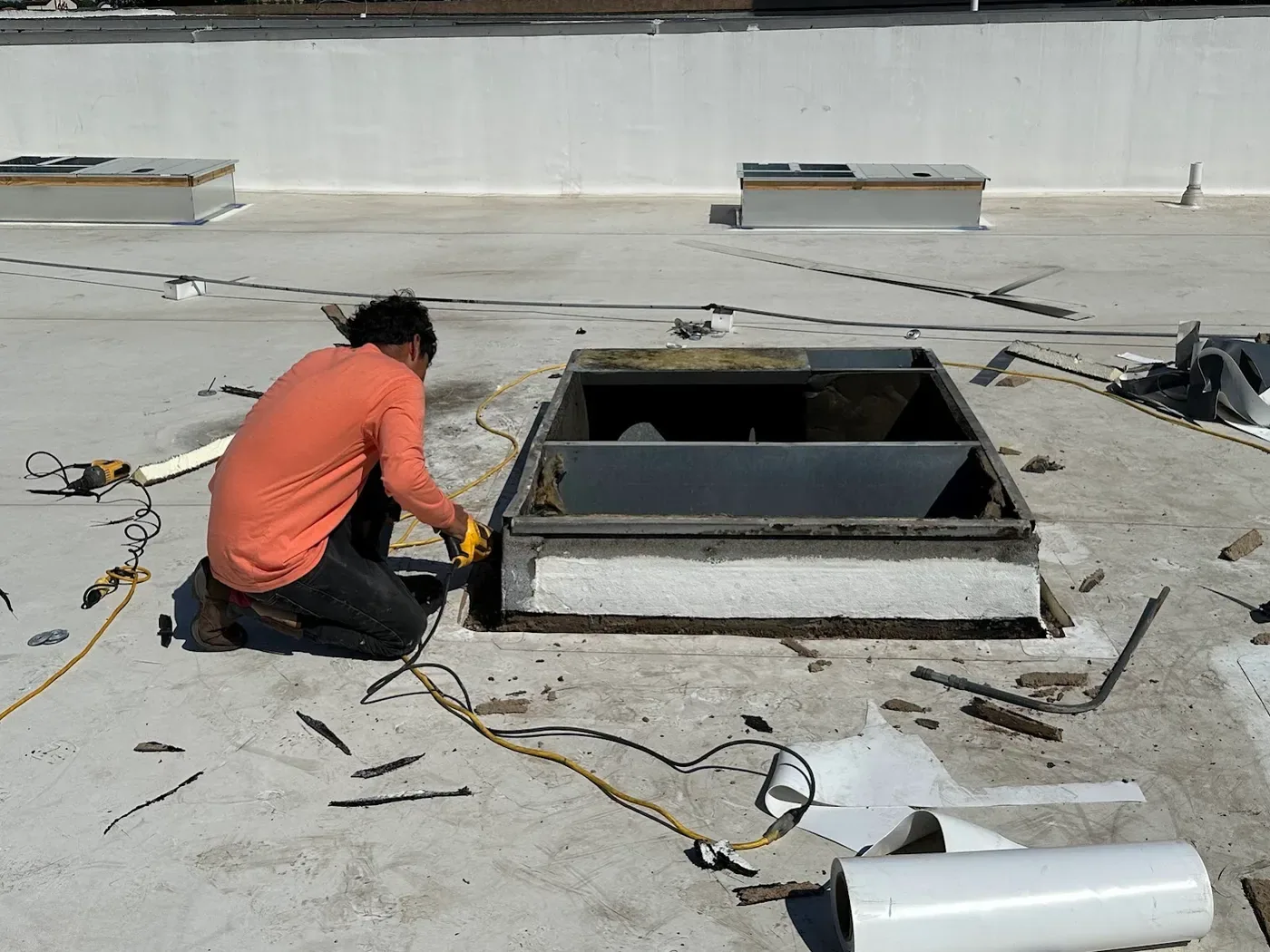
Roofing connections at equipment curbs may involve operator authorization and qualified trade participation. Equipment removal, shutdown and reconnection need a coordinated plan. We establish which roofing work can proceed independently and which depends on another trade. The bid should identify curb replacement or receiver correction separately from membrane installation. Ownership then sees why a complete repair can include both tasks rather than a patch price that omits the component causing the problem.
A vertical flashing needs a suitable upper termination and protection as required by its detail. We examine termination bars, counterflashing, coping and the receiving wall. Loose restraint, damaged fasteners or unsuitable backing can leave the membrane vulnerable even where sealant appears continuous. We correct the physical connection before treating the finishing seal as the entire repair. Wall conditions extending beyond roofing need the appropriate coordination and scope.
Corner geometry also matters. Material needs a connection suited to the actual sheet or asphalt assembly, without unsupported folds or gaps that defeat the intended detail. A KEE flashing assembly requires compatible accessories and connections. Reinforced asphalt flashing work follows a different application and layer arrangement. We identify the installed construction instead of using the same patch on every roof. Previous repair compounds may need removal where they interfere with the new bond or detail shape.
A joint between independently moving parts needs a detail that can accommodate the required movement. Rigidly bridging it with roofing material can create a new stress point. We inspect the joint configuration, available records and surrounding connections. Where its function or design is uncertain, we identify the necessary review before proposing a permanent repair. A crack beside a wall does not by itself establish the movement mechanism or the best correction.
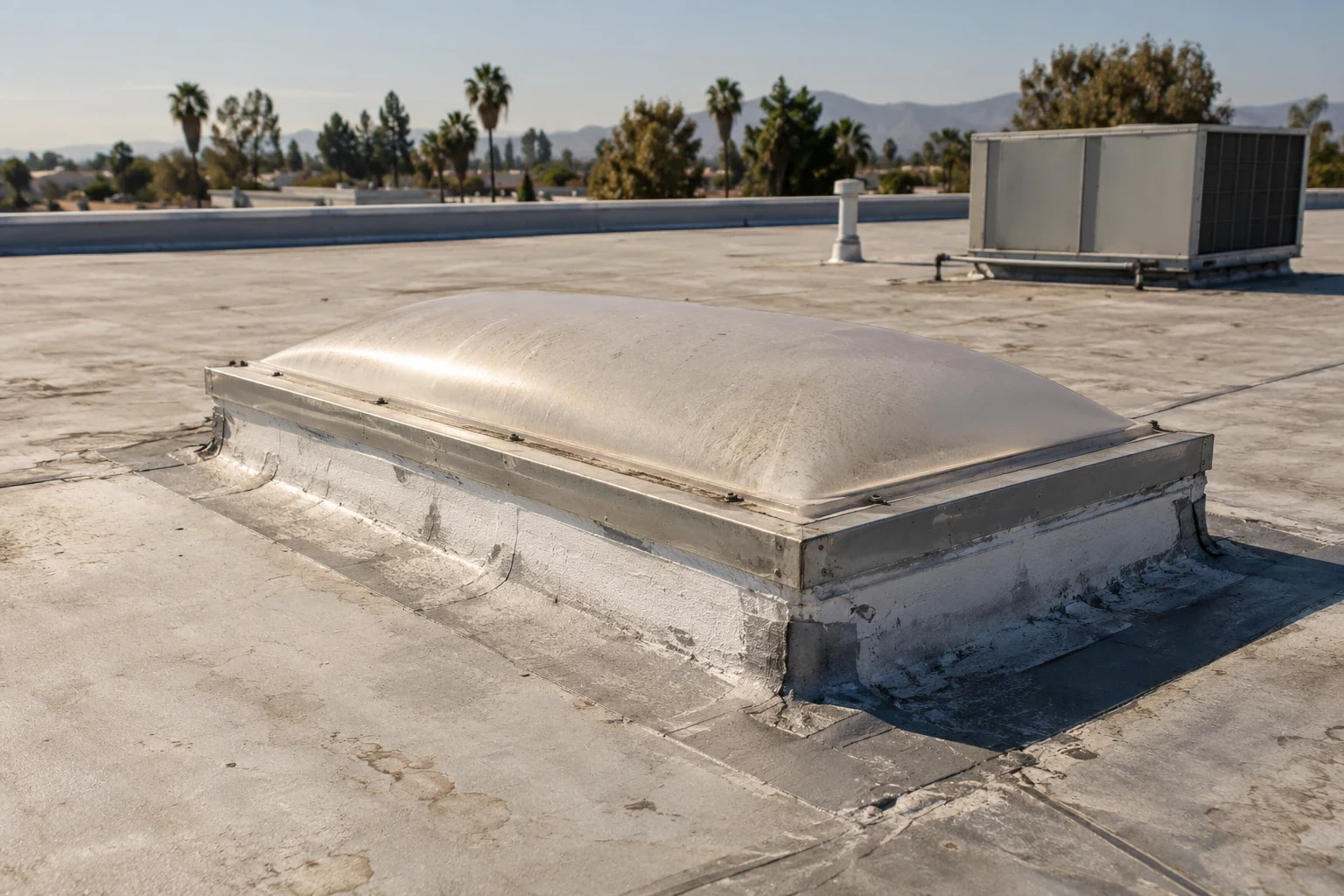
Pipe penetrations also require a suitable receiver and compatible flashing arrangement. We examine boots, clamps and the surrounding field membrane. A pipe that has shifted may need trade attention as well as roofing work. Correction of an adjoining open membrane joint can be a separate task if the defect extends beyond the flashing. The manager should receive each work limit, so a completed penetration repair does not leave a nearby opening hidden inside an undefined general patch allowance.
Planning and Completing the Work
An interior complaint can identify where water appears without establishing where it enters. We examine nearby transitions and the roof's actual water routes, then document evidence supporting the repair location. Where appropriate, further investigation can help distinguish a roofing opening from another building condition. We explain limitations rather than assign every stain to the closest curb. Controlled testing, if proposed, needs a suitable method and the property representative's authorization.
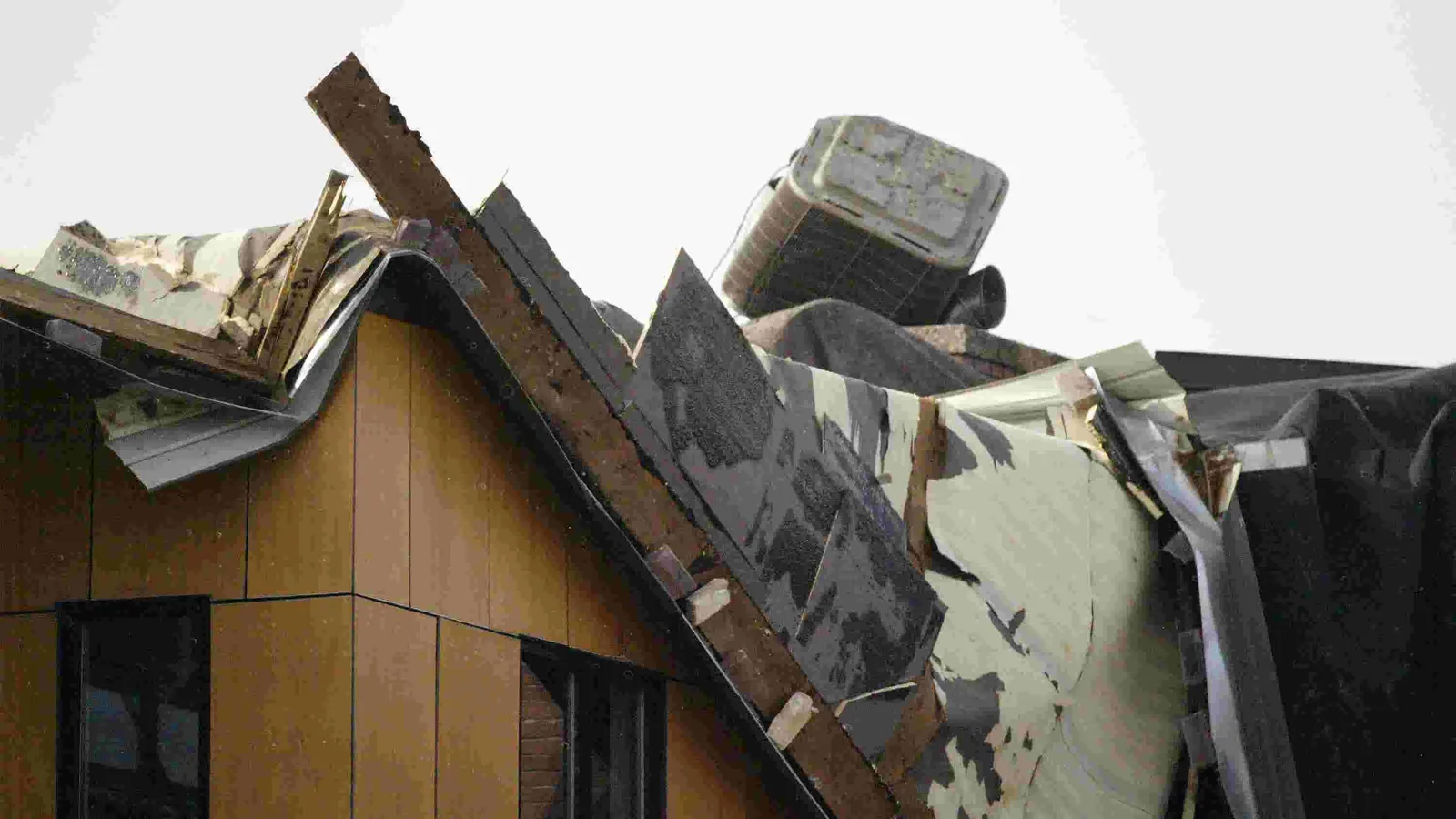
Wet or damaged construction found beneath a failed detail needs its own correction. We also assess water retained beside the transition where that condition is observed. We establish removal limits and inspect the receiving layers before closing the repair. Leak repair tied to an examined entry route should identify temporary and permanent work distinctly. Temporary sealing can protect an exposed connection, but it may not address receiver deterioration or movement. Ownership should understand the retained limitations and the additional work needed to complete the permanent transition.
Santa Clara's adoption of California standards includes local changes. A flashing proposal needs the property's reviewing authority identified first. We confirm the accepted application basis, then determine how the repair or alteration scope affects review. Replacing a flashing component can raise different questions from reconstructing a curb or changing drainage. Applicable energy pathways and exceptions need consideration where the work requires them. The bid should identify design, permit or qualified trade work that is necessary to resolve the proposed detail.
The adopted framework for Tasman East gives planning identity around Lafayette Street and Tasman Drive. Records and examination establish the roof at the particular property in the Tasman corridor near Scott Boulevard. Local planning does not establish a current tenant, roof age or completed assembly. Ownership can compare preparation, component corrections and roofing transitions on a plain bid sheet. The cheaper bid should be assessed against those same work limits, not only the amount of new membrane shown.
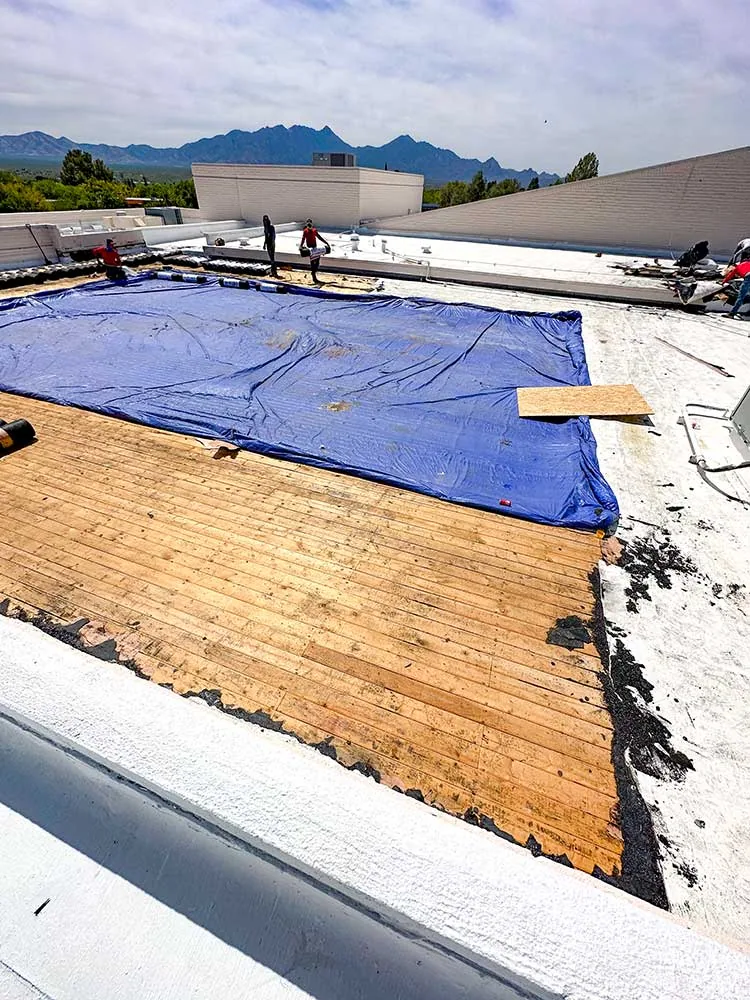
Service traffic can damage a recently repaired flashing if access is not coordinated. We identify work areas and explain how later equipment activity should preserve the connection. Repairs above an occupied office also need tenant notices, access control and protection beneath opened construction. Material staging should avoid placing loads or debris against unfinished details. Daily stopping points need temporary protection appropriate to the exposed area.
We photograph relevant preparation and completed transitions, then provide the material description and maintenance requirements. Warranty responsibilities should identify the covered work and retained conditions. A pre-season check can examine the repaired connection alongside outlet access and adjacent membrane condition. For flashing failure repair, define the work boundary. The immediate action depends on safe access and the defect found, followed by a permanent scope that reconnects suitable construction.
Flashing diagnosis: follow the interface beyond the visible split. At a flashing complaint, map the wall, curb or penetration interface and inspect the termination, counterflashing, sealant and adjoining roof field that are accessible. A visible split may be one part of a wider detail; do not price a surface seal as a complete correction without stating what was examined. Record whether the receiving surface is sound and whether removal is needed to verify concealed conditions. Identify any wall or equipment work assigned to another trade. The closeout should show the corrected interface and retained exclusions so the next inspection can assess the same connection.
Pre-season protection: Define the flashing correction
Request a flashing check and a plain ownership bid sheet. We will identify receiving components, membrane work and tenant access needs before repair.
Frequently Asked Questions
Loose restraint needs physical correction. Sealant may finish a specified detail, but it cannot replace sound backing and the required attachment.
The flashing needs a suitable receiver. Deteriorated backing or metal can require component repair before the roofing connection is rebuilt.
The installed assembly and compatible accessories govern material choice. We examine previous compounds and prepare the receiver for the selected repair.
Access to a damaged curb can require operator-approved equipment work. We coordinate the necessary trades and include those limits in the proposal.
The stain is a starting location for investigation. We examine the actual water route before recommending a particular flashing repair.
Roof Assessments
Santa Clara & the South Bay
Membrane, flashing, drainage and edge details checked and written up before any work is priced.
Request a Roof Assessment