- Home
- Commercial Roofing Services
- Roof Drains and Scuppers
Roof Drains and Scuppers in Santa Clara, CA
Another long rain period is a planning concern after the regional atmospheric-river sequence of late December 2022 through mid-January 2023. Which outlet task does the bid actually include for your Santa Clara, CA roof? Cleaning debris, repairing a connection, and changing drainage geometry are distinct operations. We examine the roof and identify the task before pricing it. Seasonal context supports preparation; the observed assembly determines the correction.
Scott Boulevard office and R&D development gives the property manager a local setting for that decision. For that office setting, drain count, roof slope, and present condition are measured at the subject building. We map the subject outlets and discuss access with the authorized operator. A roof drainage examination begins at the roof surface and follows the accessible discharge route. Ownership should know where roofing work ends and where a plumbing or design review may be required.
Roof Drains and Scuppers: What the Work Covers
An internal drain has a water inlet and a connection to the roof covering. Both need attention. A clear strainer does not prove the membrane is sealed at the drain bowl. We examine the clamping components where present, compatible flashing, surrounding material, and accessible fasteners. Corrosion, missing parts, or deteriorated membrane can change a cleaning task into a defined repair. The bid identifies each affected component.
A scupper passes through the perimeter. Its flange, throat, wall transition, and discharge connection need compatible detailing. Water can enter at the roof-to-metal junction even while the opening remains clear. We look at support and movement as well as surface sealant. For failed outlet flashing, a lasting correction may require removing old layers and reconstructing the connection. Ownership gets the actual repair method rather than a vague instruction to reseal all drains with an unspecified material.
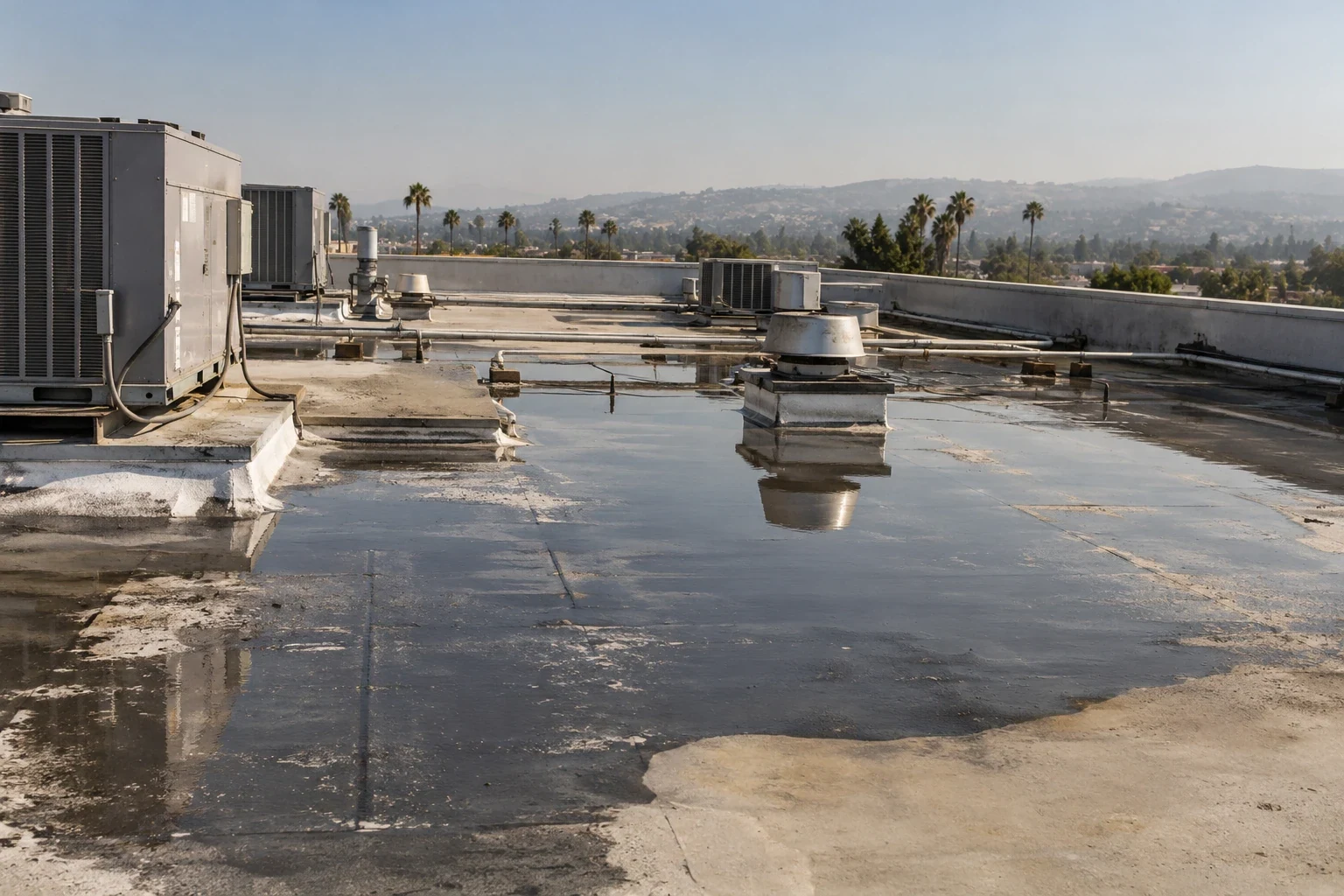
Water remaining around an outlet may involve debris, outlet height, roof slope, deck movement, or a restriction below the roof. Those causes need different corrections. We check accessible surface conditions first and identify where the water is directed. A roof-level examination has limits where piping continues inside a wall or below occupied space. A qualified plumbing assessment may be needed to investigate that part of the route.
For persistent standing-water correction, removing debris may be one task rather than the full solution. Adjusting roof slope or outlet elevation can affect the surrounding assembly. Those changes need measured design and compatible transitions. We do not enlarge openings or alter emergency drainage without the required review. The property manager sees the next investigation and responsible trade before authorizing a construction change. That keeps drainage correction tied to evidence instead of treating every low area as proof of a blocked drain.
After a drainage repair, record the outlet condition, the connection rebuilt and the limits of any flow check. A visible roof-level test cannot establish the condition of an entire concealed storm line. If water remains after the roof detail is corrected, identify the next responsible investigation instead of expanding the roofing scope by assumption. Include debris removal, seal repair and piping work as separate tasks when they are each supported. The owner can then assign routine maintenance and specialist follow-up without treating one completed outlet repair as system-wide clearance.
An overflow provision is intended to give water another route under specified conditions. Its arrangement should be examined against the building design and applicable requirements. A blocked primary outlet and an altered overflow opening can create a combined problem. We identify the components independently. Cleaning one outlet does not establish that the complete primary and secondary system has suitable capacity or placement.
Drainage alterations in Santa Clara receive review under its adopted 2025 California standards and local modifications. The actual authority and accepted application basis determine which requirements govern proposed drainage alterations. Changing an outlet, sump, pipe connection, or overflow arrangement may need a design review and coordination with other trades. Applicable energy considerations depend on associated roof work and any relevant exceptions. We separate routine care from changes to the drainage system. An owner reviewing the bid can then see which items require construction approval beyond the seasonal maintenance visit.
Planning and Completing the Work
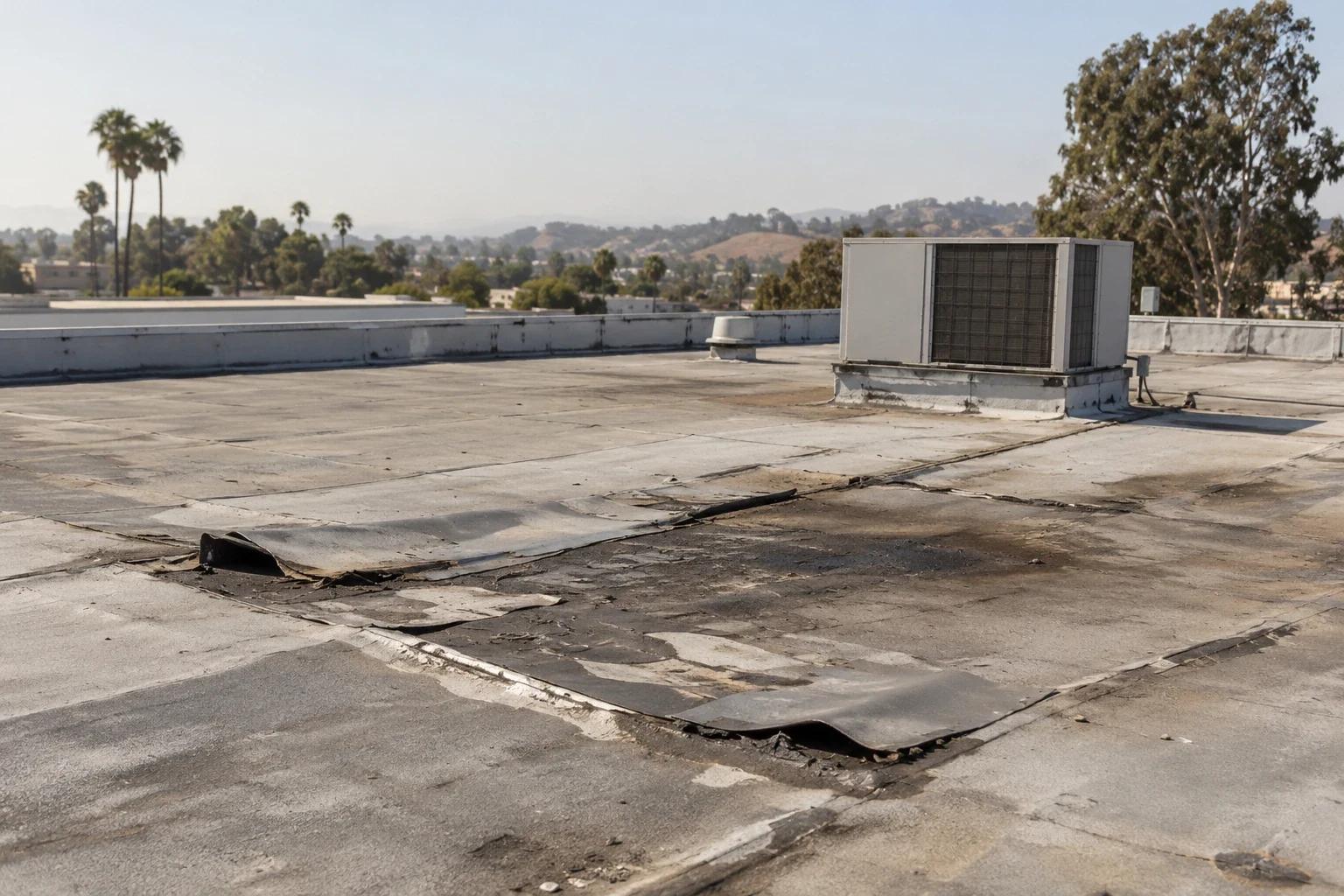
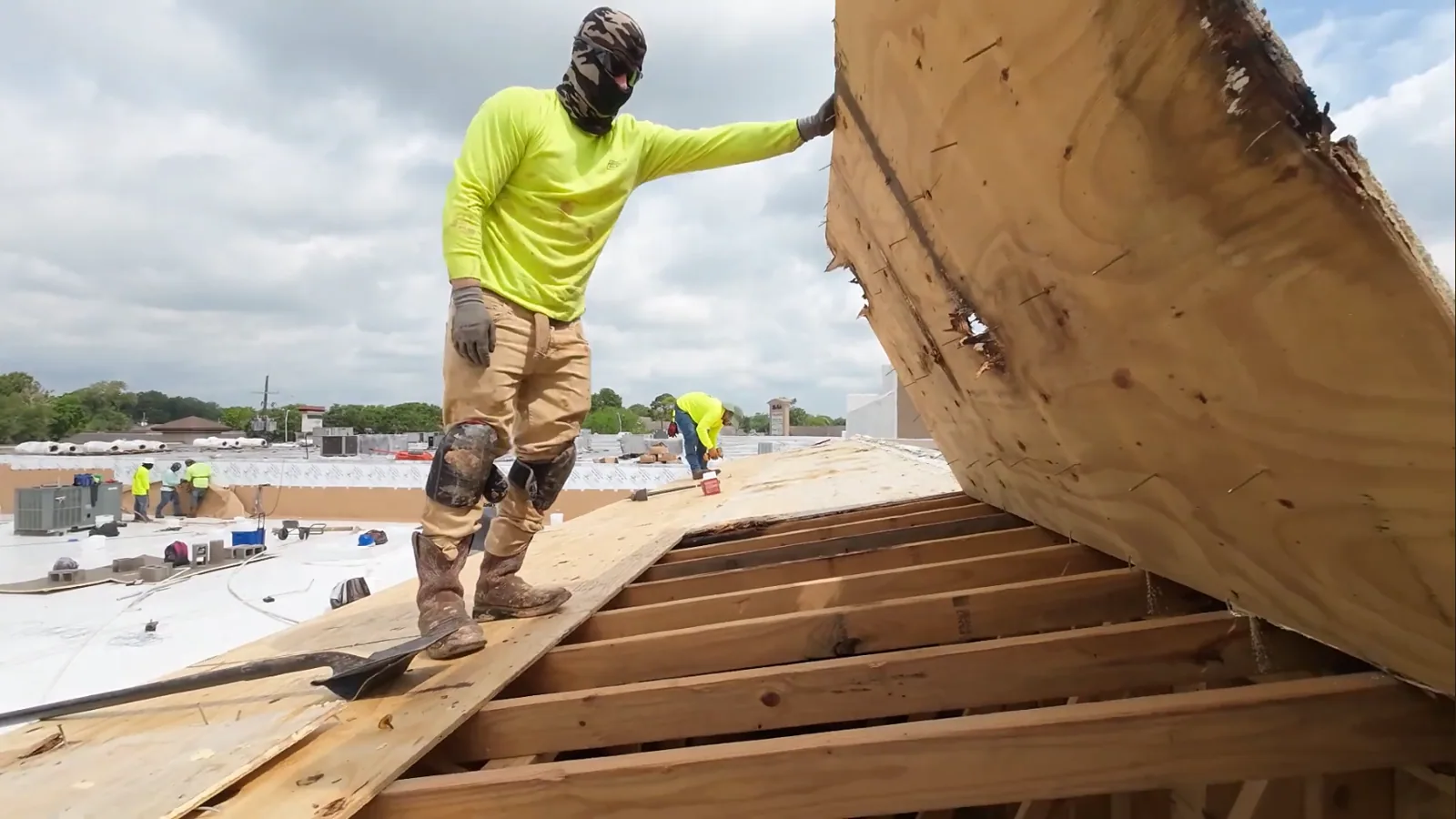
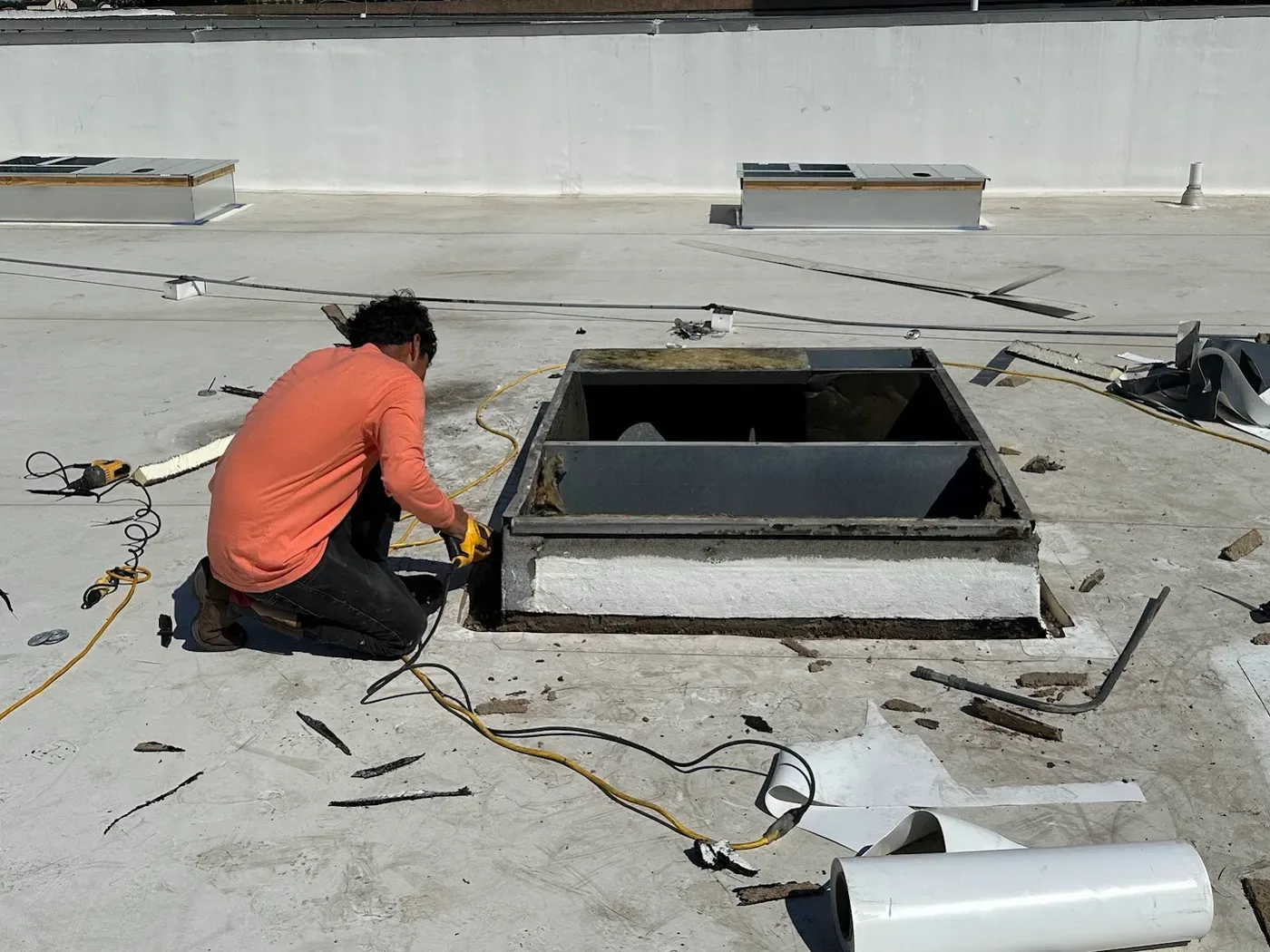
Removing drain flashing can expose an opening through the waterproofing. The work needs appropriate conditions, prepared materials, and a way to protect unfinished construction. We sequence removal and reconnection rather than strip several vulnerable outlets at once without a protection plan. Adjacent insulation condition can affect the repair boundary. Deteriorated or wet material may require replacement before the new flashing is installed.
The operator sets access restrictions, interior coordination, and any permitted interruption to associated building services. For office roof drain repairs, this can include protecting an occupied area near piping or arranging access to an interior connection. Roofing attendance does not authorize changes to plumbing systems. We coordinate the necessary trade where the repair crosses that boundary. Material staging and debris control also belong in the scope. A small outlet detail can still require significant preparation to protect the spaces beneath it.
A cleaning price should identify accessible outlets and the debris-removal task. A repair price should describe components, flashing material, preparation, and replacement quantities. Access equipment, disposal, hidden piping access, and repeat attendance can influence the total. Compare those items before assuming one bid is simply more economical. A narrow cleaning allowance and a reconstructed outlet connection are not equivalent construction.
For a property in the Tasman Drive and Scott Boulevard corridor, the survey establishes outlet locations and safe access. The Tasman East specific-plan area adds a development setting where each building still needs its own drainage measurements. We connect approved repairs to a seasonal roof care plan so cleaned or reconstructed details can be checked again. The actual roof area served, assembly, and authorized operator set the quantity and schedule. Nearby properties do not supply a substitute drainage calculation.
A suitable completion check should examine the repaired connection without creating an uncontrolled water load. Test method, discharge access, and building restrictions matter. Pouring water onto a roof does not by itself establish design capacity, pipe condition, or structural adequacy. We select appropriate checks for the repair performed and record what they establish. Any additional system review remains a separate task.
A drainage condition record identifies outlet locations, repaired details, and follow-up items. Keep it available to maintenance and equipment-service personnel. Roof traffic can displace strainers or damage nearby membrane, and future alterations can change the water route. New interior water entry needs prompt attention rather than waiting for the next scheduled cleaning. For roof drains scuppers, define the work boundary. Track the roof drains scuppers limit and remaining work. Ownership gets a practical record of the corrected outlet and the remaining drainage decisions.
Drain review: Price the outlet task clearly
Arrange a pre-season outlet check. We will show cleaning, connection repairs and any design-dependent changes on a plain bid sheet for ownership and tenant scheduling.
Frequently Asked Questions
No. Slope, outlet elevation, piping restrictions and the designed overflow route can affect flow. We examine the components relevant to the reported condition.
Roof-level cleaning has a defined limit. Interior piping work may require a plumbing trade and operator permission for access or service interruption.
Measure the area first. A slope correction must suit the assembly, drainage design and attachment rather than simply fill the visible depression.
Keep its location, material, connection detail, completion checks and any unresolved discharge issue with the roof maintenance record.

Roof Assessments
Santa Clara & the South Bay
Membrane, flashing, drainage and edge details checked and written up before any work is priced.
Request a Roof Assessment