- Home
- Service Areas
- North First Street
Commercial Roofing along North First Street
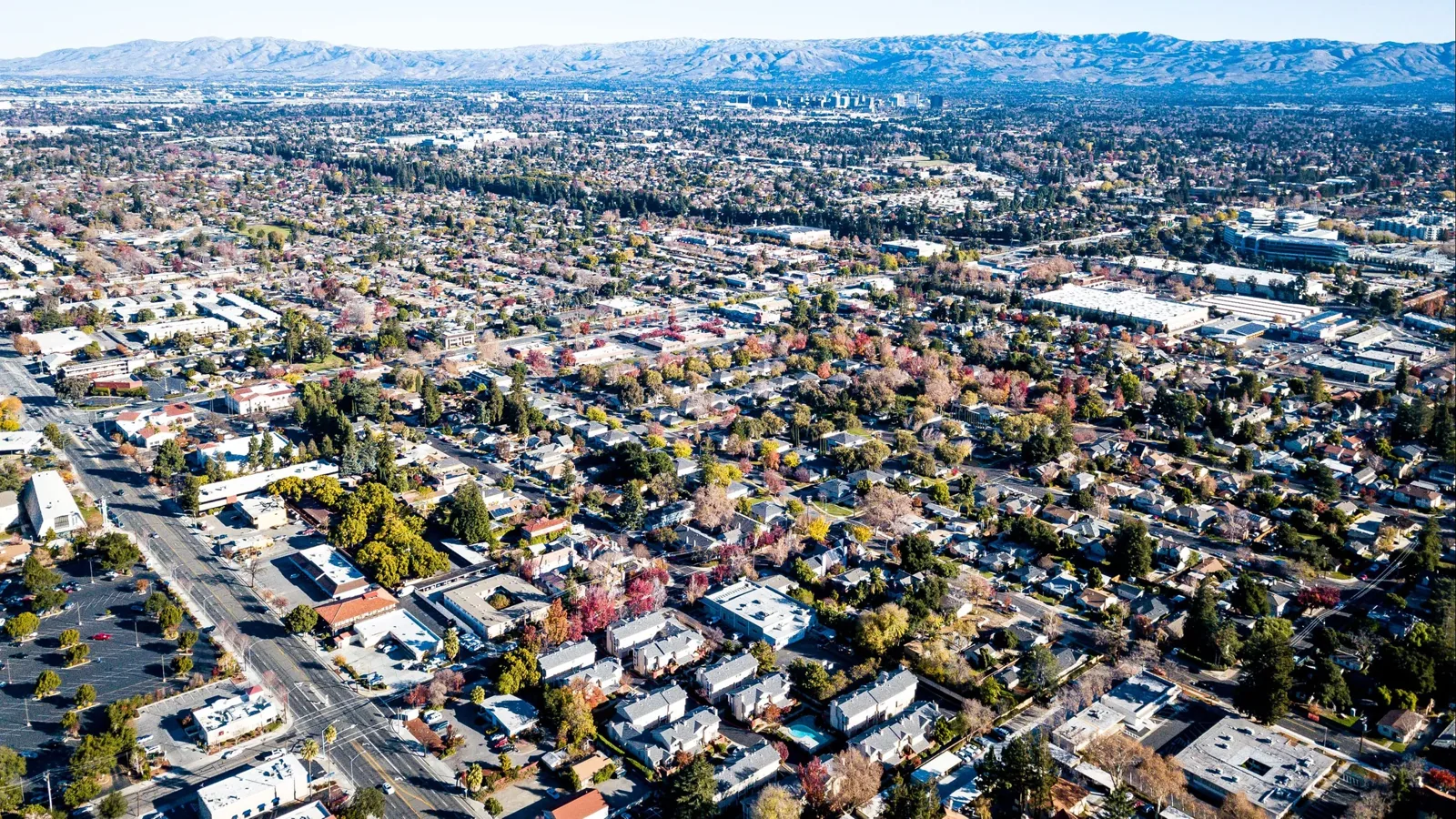
San José’s North First Street planning area covers multiple properties along a commercial and transit corridor. It is a practical service geography for roof work near the airport, while the airport itself is not the project target. We identify the actual building, roof access route and responsible operator before scheduling an inspection. The roof condition determines whether the first scope is drainage maintenance, localized repair or broader investigation. City boundaries and property approvals are confirmed for each project.
We start with that chain of authority, then the building. Obtain the roof plan, existing warranty and leak history if available. Identify a safe entrance and the spaces below the proposed work. A hands-on examination of the assembly records accessible seams, terminations, outlets and penetrations. Weather history supplies urgency for planning; the inspected roof supplies the repair quantities. Ownership receives a bid sheet with exclusions and release conditions, rather than an airport-wide assumption about materials or damage.
North First Street: What the Work Covers
Terminal A and Terminal B are separate airport facilities. A roofing assignment at either terminal needs its own access authorization. For an airport-controlled job, the operator establishes applicable credentials, escorts, delivery procedures and work restrictions. For a commercial building outside those facilities, the manager establishes its loading arrangements and permissions. We do not combine either schedule with the other simply because both addresses are in North First Street corridor.
A roof visit may need equipment carried through occupied space. Record doors, stairs, ladders and any permissible lifting position before dispatch. Confirm whether tools can remain secured on site, whether a service entrance must stay available and who can release the work zone. The airport's Rental Car Center is another distinct facility with its own operating requirements. Actual assignments there require facility-specific direction. Managers coordinating separate properties toward North San Jose should retain separate access records. Proximity can simplify travel, but it cannot transfer a building authorization.
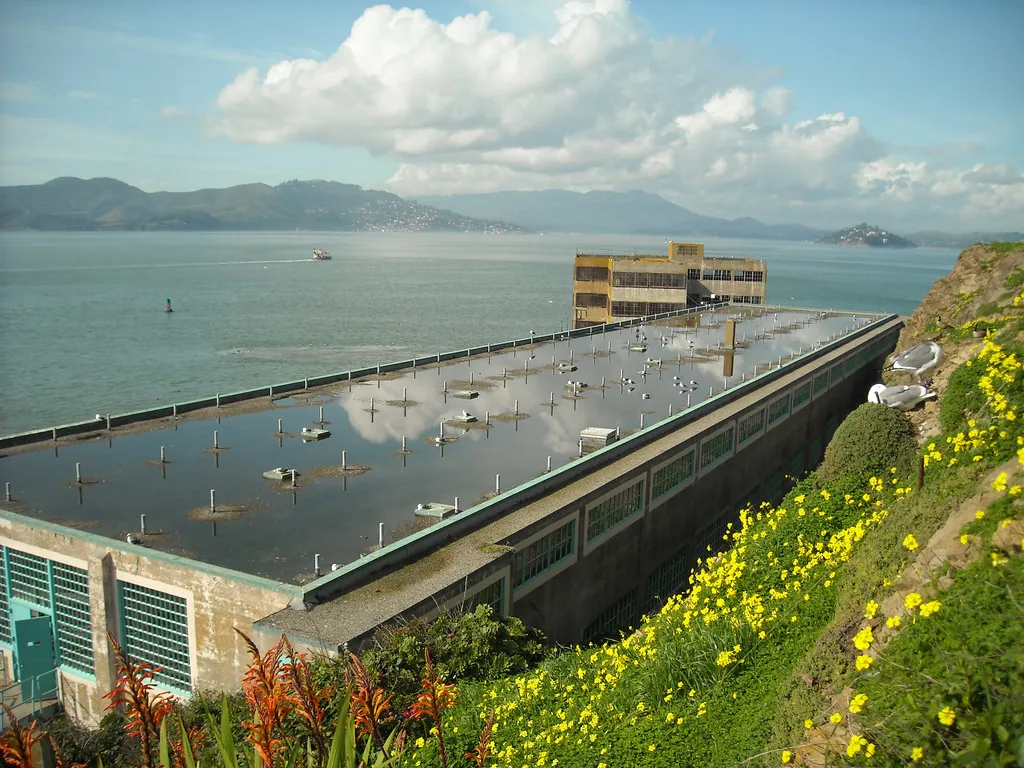
A blocked roof outlet and a restricted downstream pipe can produce similar standing water. They require different work. We identify accessible drain bowls, strainers, sumps, scuppers and overflow paths. Debris removal belongs on the sheet with its location and disposal task. Broken clamping components, damaged flashing or a pipe concern need a separate correction. Water should have a defined route away from the roof, including the point where roofing responsibility ends.
For drain and scupper corrections, we record the surrounding surface condition and any measured fall available from the examination. A low area caused by displaced insulation cannot be resolved by enlarging an opening without design review. Roof cutting, additional outlets and piping changes may require qualified design and separate trades. Keep those dependencies visible. Do not authorize a broad coating scope to conceal an unresolved water path. Cleaning restores an accessible outlet; it does not certify the capacity of the full drainage system.
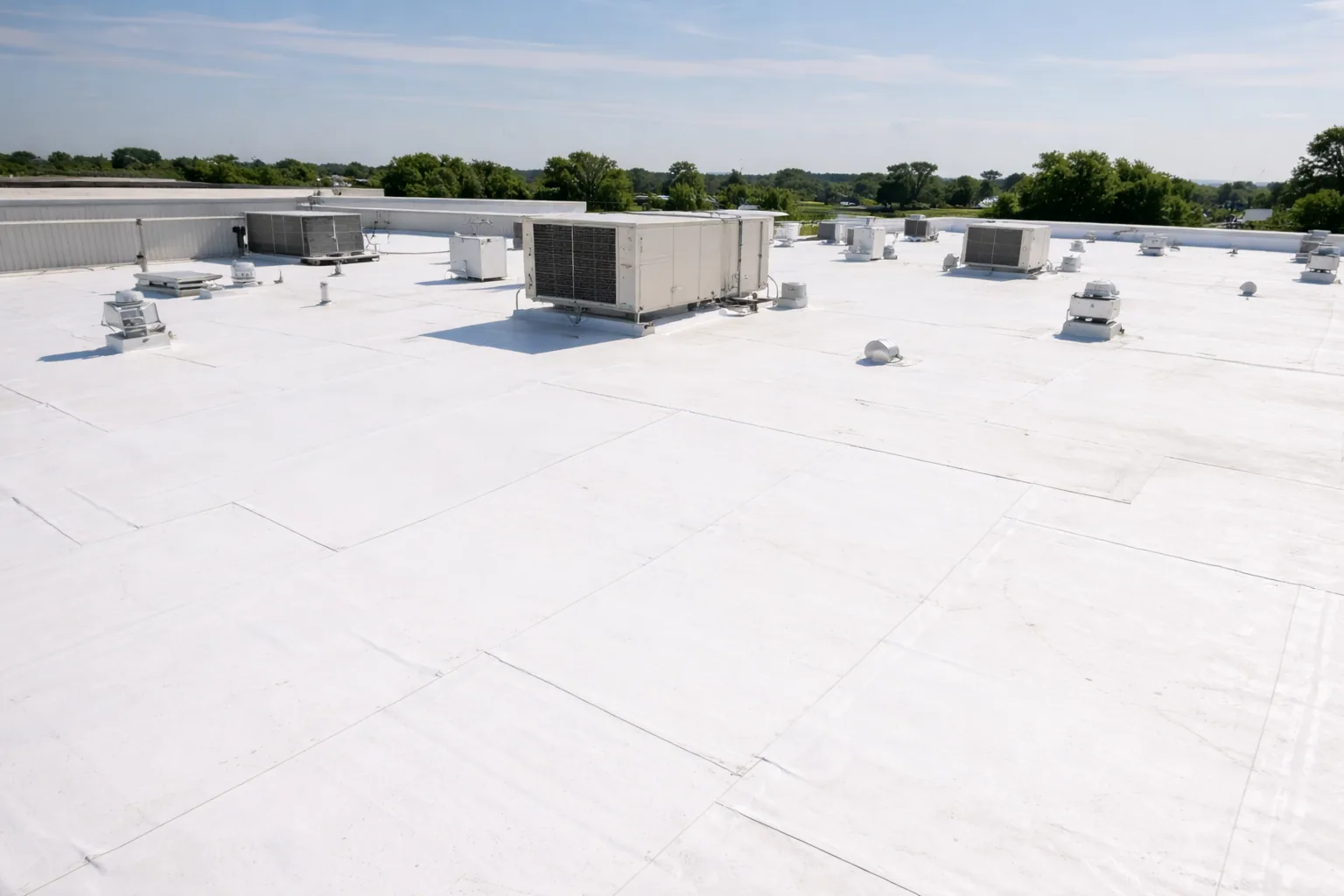
A raised curb introduces several interfaces: the roof covering, vertical flashing, corner treatment, termination and equipment attachment. A defect at one interface does not establish failure at all of them. We photograph the connection, test only where safe and permitted, and describe the correction by component. Equipment service belongs with the responsible trade. Roofing work near a unit does not authorize shutting it down or moving its connections.
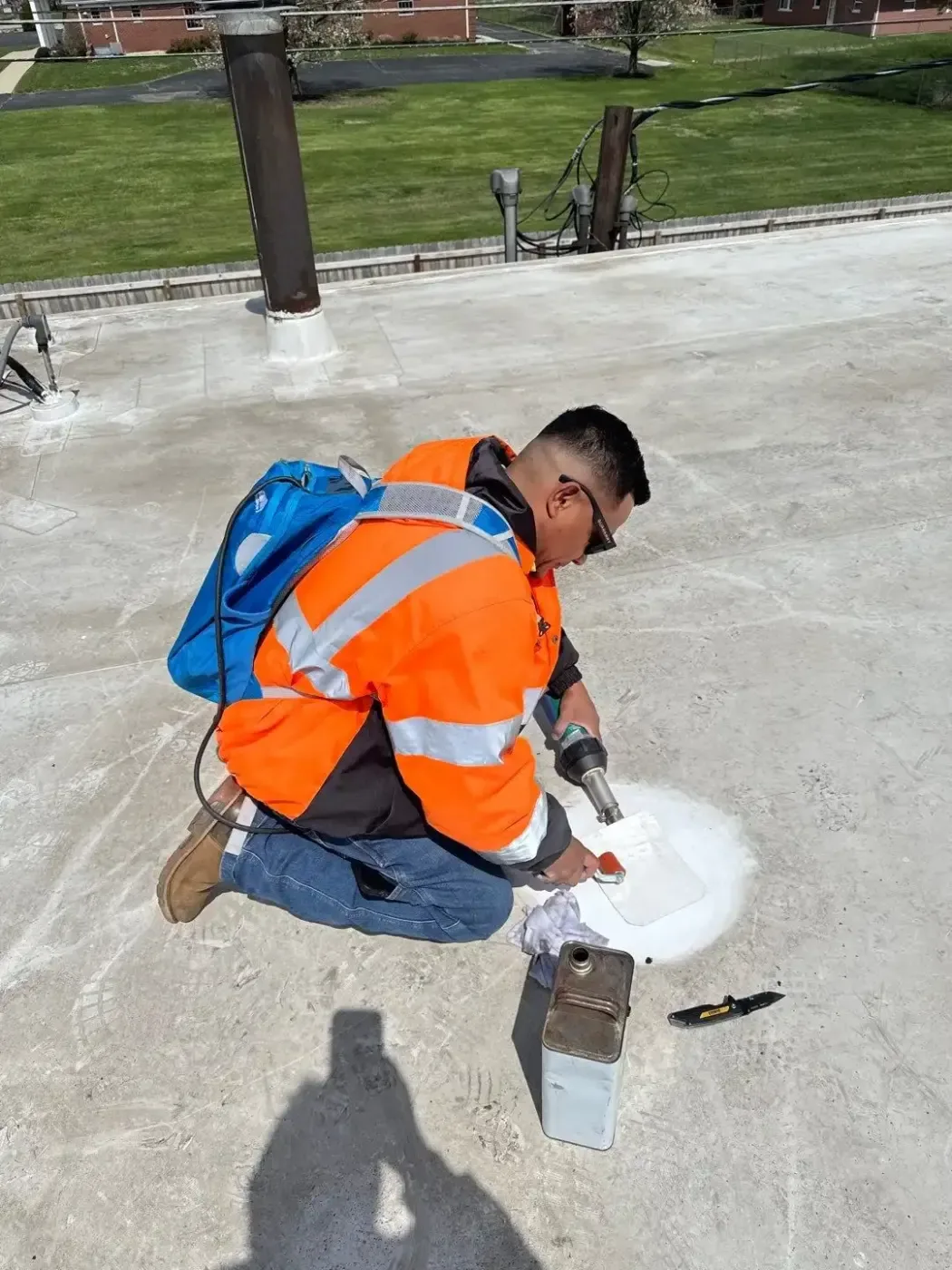
Membrane repairs need the existing material identified first. A compatible patch relies on proper cleaning, sound substrate and the correct joining method. A surface that cannot accept a durable bond needs a preparation or removal task specified on the estimate. For metal transitions, distinguish weatherproofing from loose or corroded attachment. An overlay of sealant may hide a mechanical problem. We also examine nearby flashing defects when the condition supports it. A repair boundary should end at sound construction, with enough space to complete the detail properly. That boundary is a measured scope, not a standard allowance assigned to every airport-area building.
Planning and Completing the Work
Restricted hours can affect setup, lifting, protection and daily cleanup. Put the authorized hours beside the method before comparing bids. A contractor given unrestricted access and one required to demobilize each morning are pricing different tasks. Confirm who provides escorts if needed, who controls the ground exclusion zone and how deliveries receive clearance. Show special access costs separately so ownership can compare the roof work on equal terms.
The roof assembly determines whether repair, restoration, recover or replacement is credible. Moisture findings may require selective openings and laboratory or field confirmation appropriate to the material. Saturated components require a removal scope; a dry surface is not proof of dry insulation. For reroofing beside occupied operations, specify daily closure of exposed areas and the weather postponement rule. Managers with another building in downtown San Jose can use the same approval discipline while keeping quantities separate. Each proposal should state what inspection established, what remains concealed and how additional work would be authorized.
A delivery reservation should specify the receiving contact and unloading limit. Confirm material packaging can pass through the approved route before mobilization. If access changes, revise the method and associated cost openly. Do not ask the field crew to improvise a lifting arrangement merely to preserve the original appointment.
Before rain season, complete the approved repairs and reconcile them against the photographs. Mark repaired areas on a plan that a manager can retrieve during a tenant complaint. Record material used, preparation and completed detail. Where a manufacturer warranty applies, document the required notice and inspection steps without promising that a particular alteration will receive approval. The file should distinguish finished work from recommended work still awaiting ownership.
For reported water entry, confirm the affected area and who can authorize access. The roofing scope should distinguish any immediate protective measure from permanent correction. Facility staff handle interior contents and refer water near electrical equipment to qualified personnel. Record the follow-up needed and remaining interior or downstream trade tasks before closing the work item.
Corridor assignment: confirm the parcel and operating contact. North First Street functions as a broad commercial and transit corridor in San José planning, but an assignment still begins with the specific property and party authorizing access. Confirm the site address privately in the work order, identify the building and roof zone, and verify which entrance, escort or safety instructions apply. Corridor proximity does not prove a shared owner or roof system across adjacent parcels. Record the inspected detail and any transit, street or staging constraint actually confirmed for that job. This keeps a geographically useful service description separate from an assumption about a particular business or facility.
Schedule the airport-area season check
Arrange the authorized roof visit before seasonal rain. We will prepare a plain bid sheet with access conditions and repair quantities for ownership.
Frequently Asked Questions
Only its operator can settle that. Airport credentials do not replace a private owner's authorization or roof safety assessment.
Equipment isolation belongs with the authorized service trade. We identify the roofing interface and coordinate the required sequence.
Persistent water needs a cause review. Outlet condition, drainage routing and roof geometry can require different corrections.
State who supplies it, permitted hours and the cost basis. Keep the access task distinct from roof quantities.
A temporary closure needs a permanent disposition. Keep that follow-up open until the manager accepts the documented work.


Roof Assessments
Santa Clara & the South Bay
Membrane, flashing, drainage and edge details checked and written up before any work is priced.
Request a Roof Assessment