- Home
- Property Types We Roof
- Commercial Hotel Roofing
Commercial Hotel Roofing in Santa Clara, CA
The regional heat event in September 2022 included voluntary Flex Alerts. A hotel property manager in Santa Clara, CA, has a specific roofing question to resolve before work: which guest areas and building services require protection during the proposed phase? Regional heat can prompt planning. It cannot establish equipment runtime, guest complaints or damage on this hotel's roof. We confirm operating requirements with the actual representative.
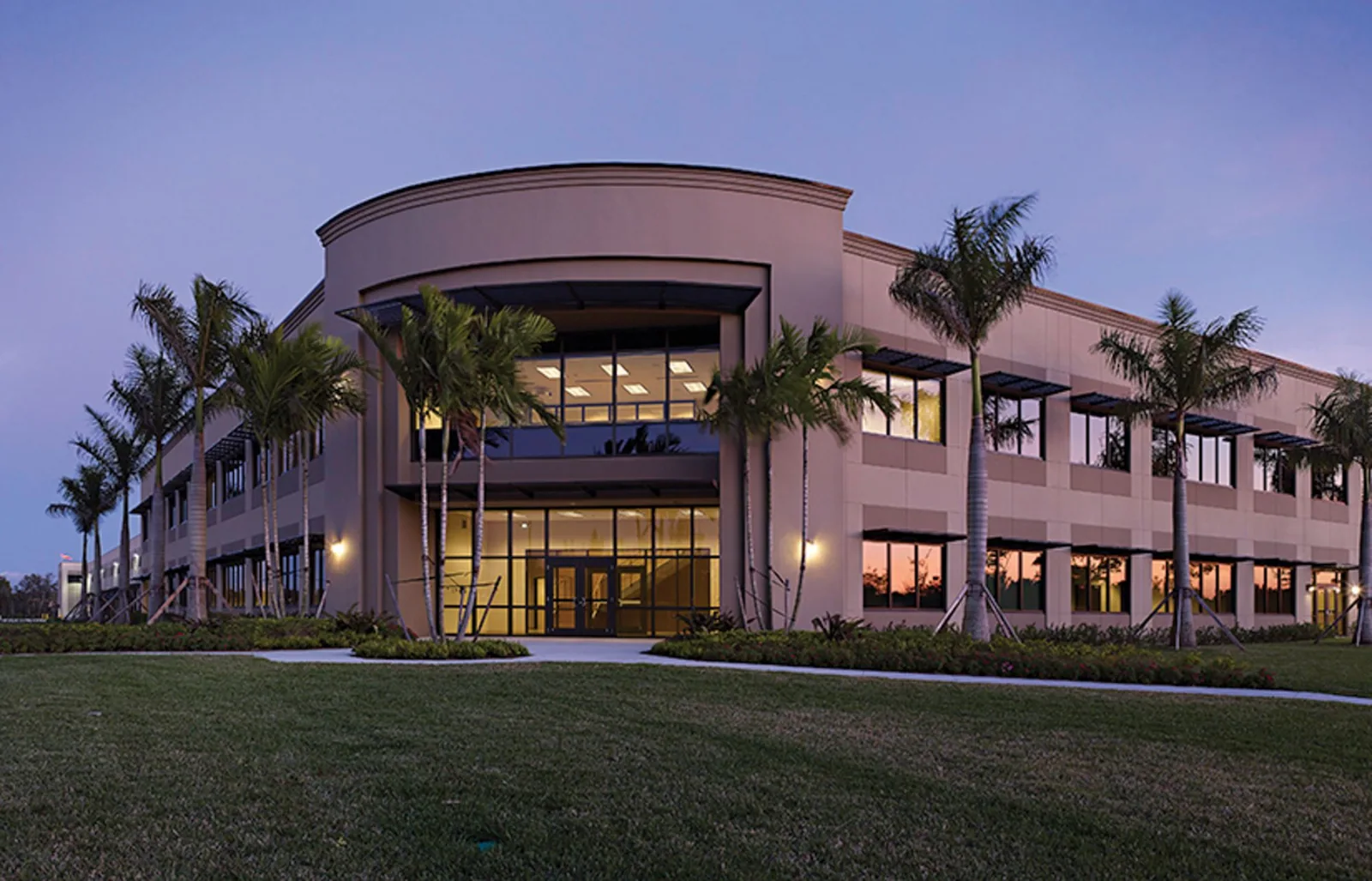
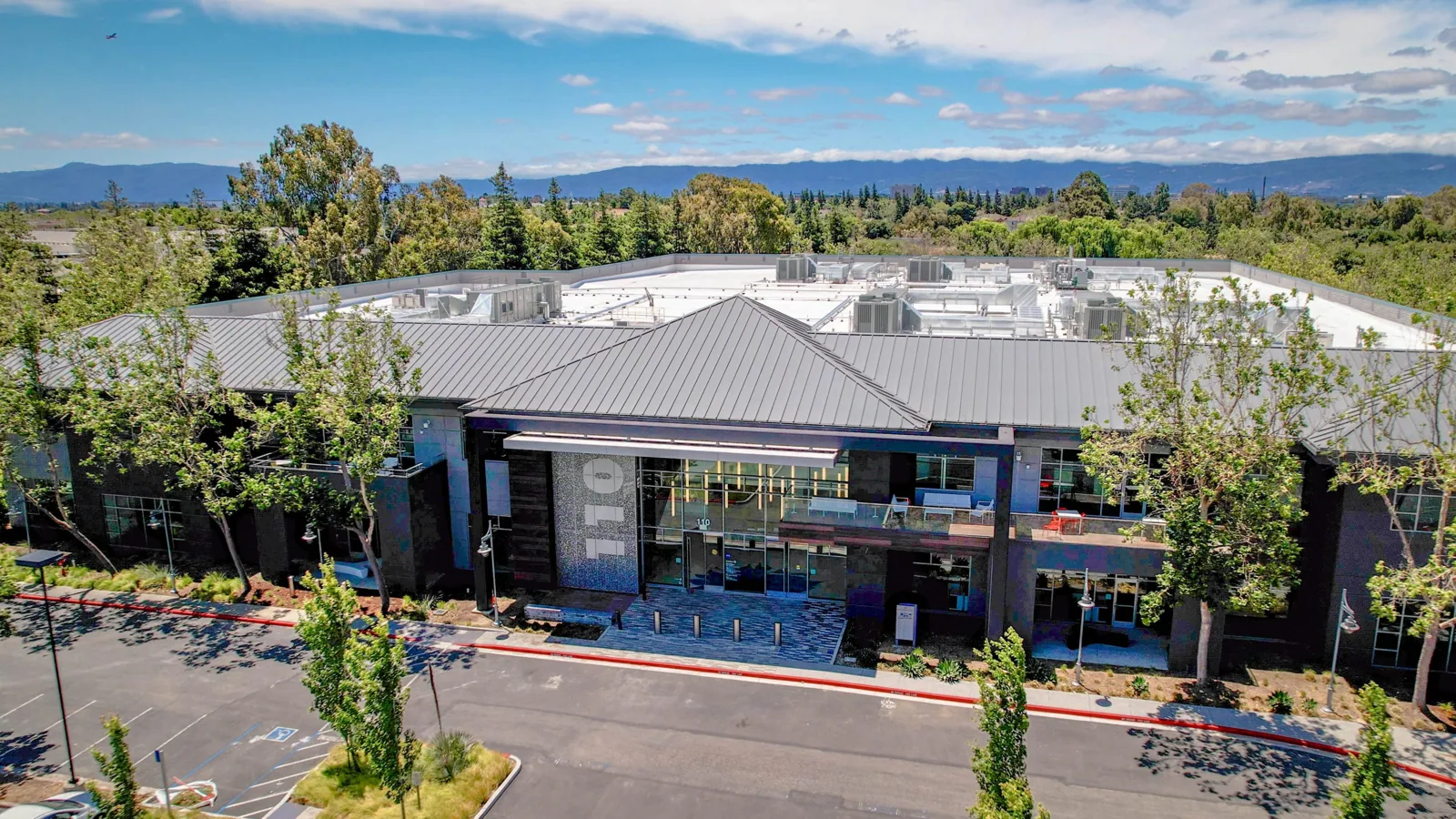
An occupied hospitality property needs its roof condition examined alongside access constraints. We inspect the installed construction, details and drainage before recommending repairs or broader work. Scott Boulevard is locally identified by historical office and R&D development. That commercial context does not describe this hotel's roof inventory. Ownership receives a plain scope for the subject building, including preparation, daily protection and any related trade tasks, so the manager can assess the work as a practical construction decision.
Commercial Hotel Roofing: What the Work Covers
A roofing phase can involve noise, odor or access restrictions that need coordination with hotel operations. We establish the actual guest and service areas beneath or beside the task. The operator identifies protected routes and sensitive activities. A universal work period should not be assumed from the hotel's use. Material movement, lifting and pedestrian protection need agreed boundaries, with a contact route for operational concerns as the work proceeds.
Roofing above residential occupants presents related protection questions but has its own approval and communication requirements. Roof work above restaurant operations also needs operator-specific coordination where that use actually exists. We do not assume amenities from a hotel label. The scope addresses confirmed activities and states necessary restrictions. That allows the manager to coordinate occupancy decisions before roofing starts instead of discovering a required access change after material is removed.
A roof surface can look intact while concealed insulation or attachment needs investigation. We identify the membrane and accessible layers, then explain selective examination where condition affects the option. Moisture indications need confirmation. Wet or deteriorated material requires appropriate correction before enclosure beneath new roofing. Available project records help, but later equipment work or patches can alter details. We reconcile those records with the actual roof rather than assume a uniform construction.
A survey guiding concealed moisture confirmation can assist under suitable conditions. A repair should reconnect stable receiving material. A recover needs acceptable retained construction, attachment and layer limits. Replacement may require deck corrections and changed transitions. We present those preparation tasks beside each option. Ownership should see what remains, what is removed and how concealed findings will be approved. A reflective finish cannot answer those receiving-layer questions or substitute for a complete assembly comparison.
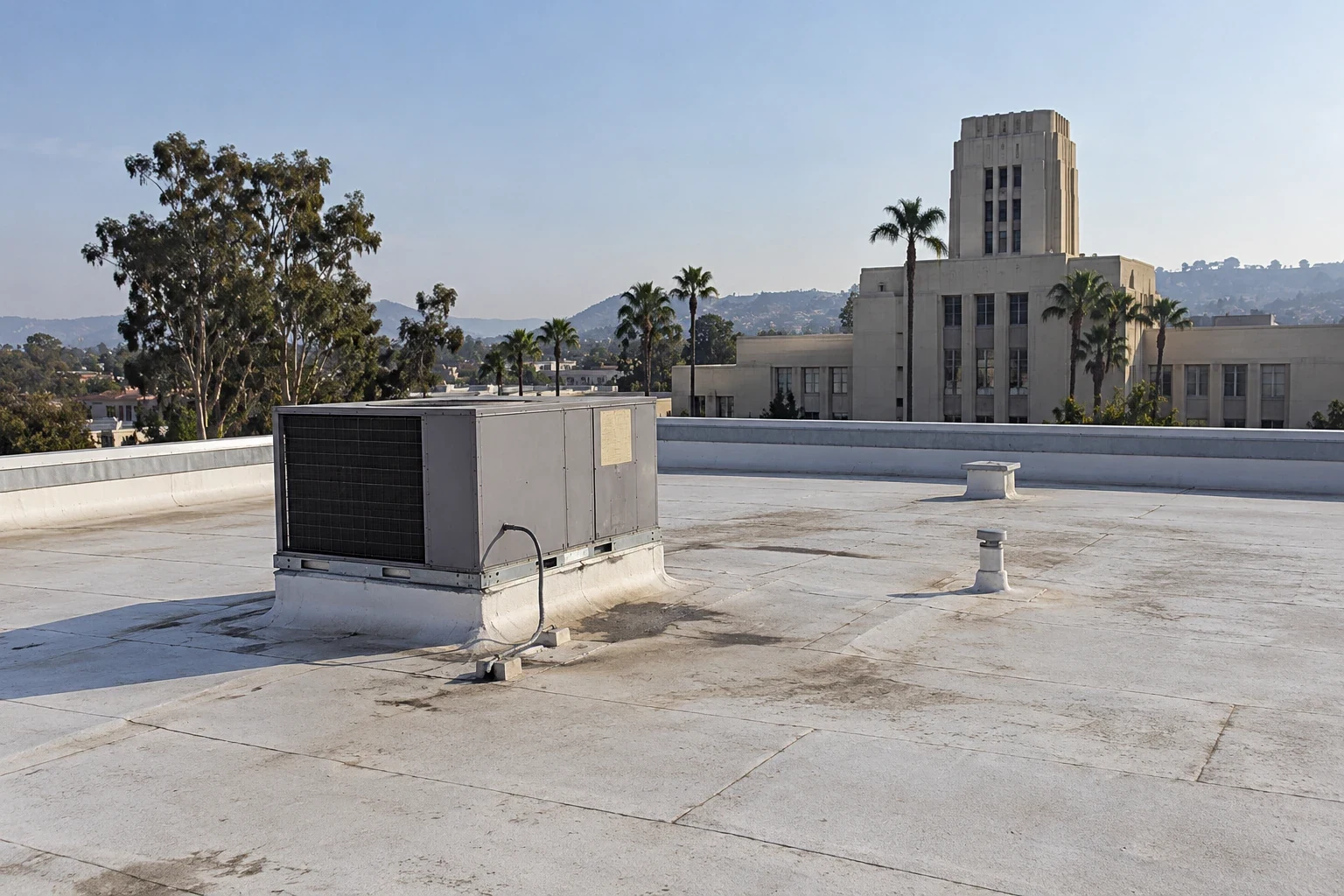
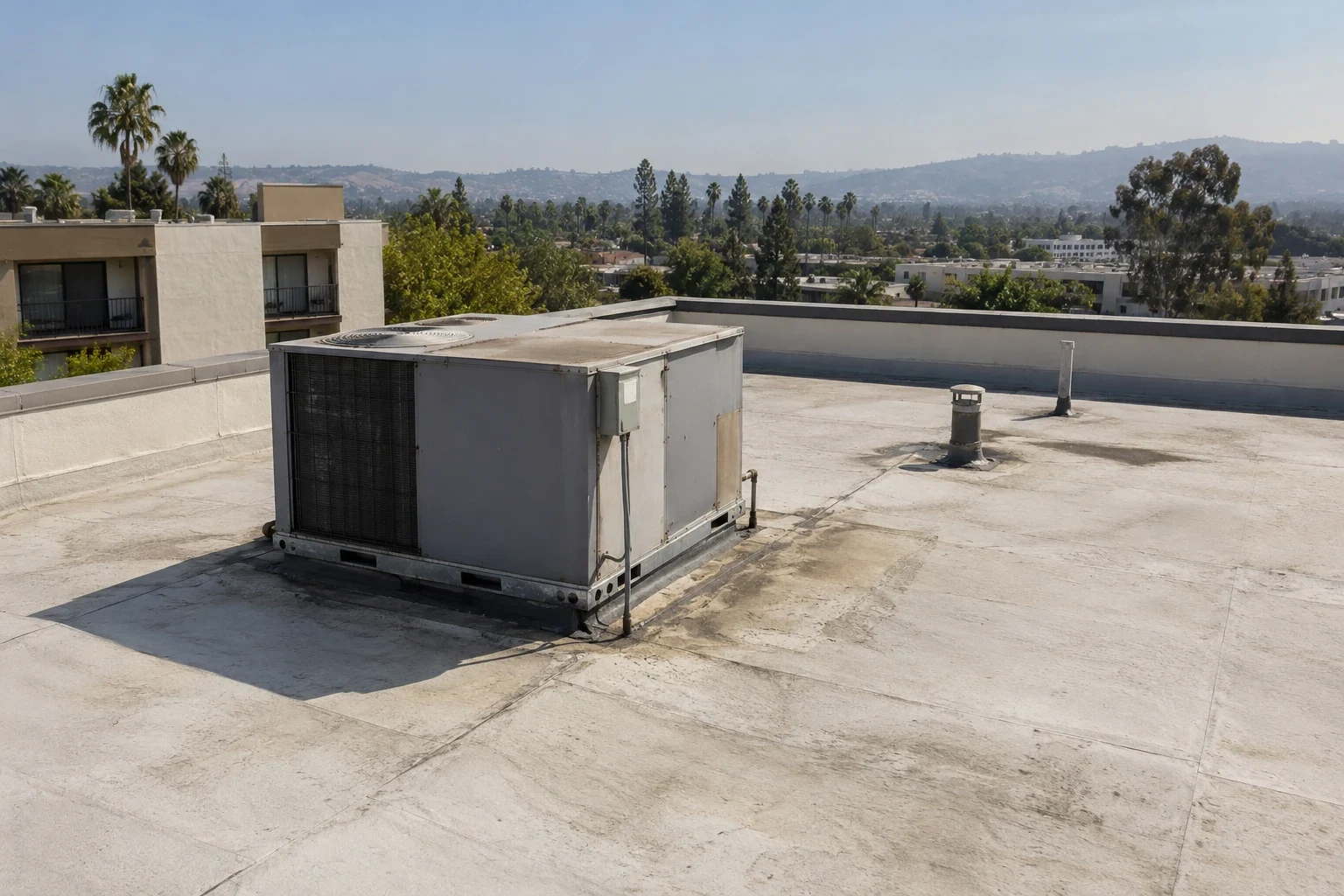
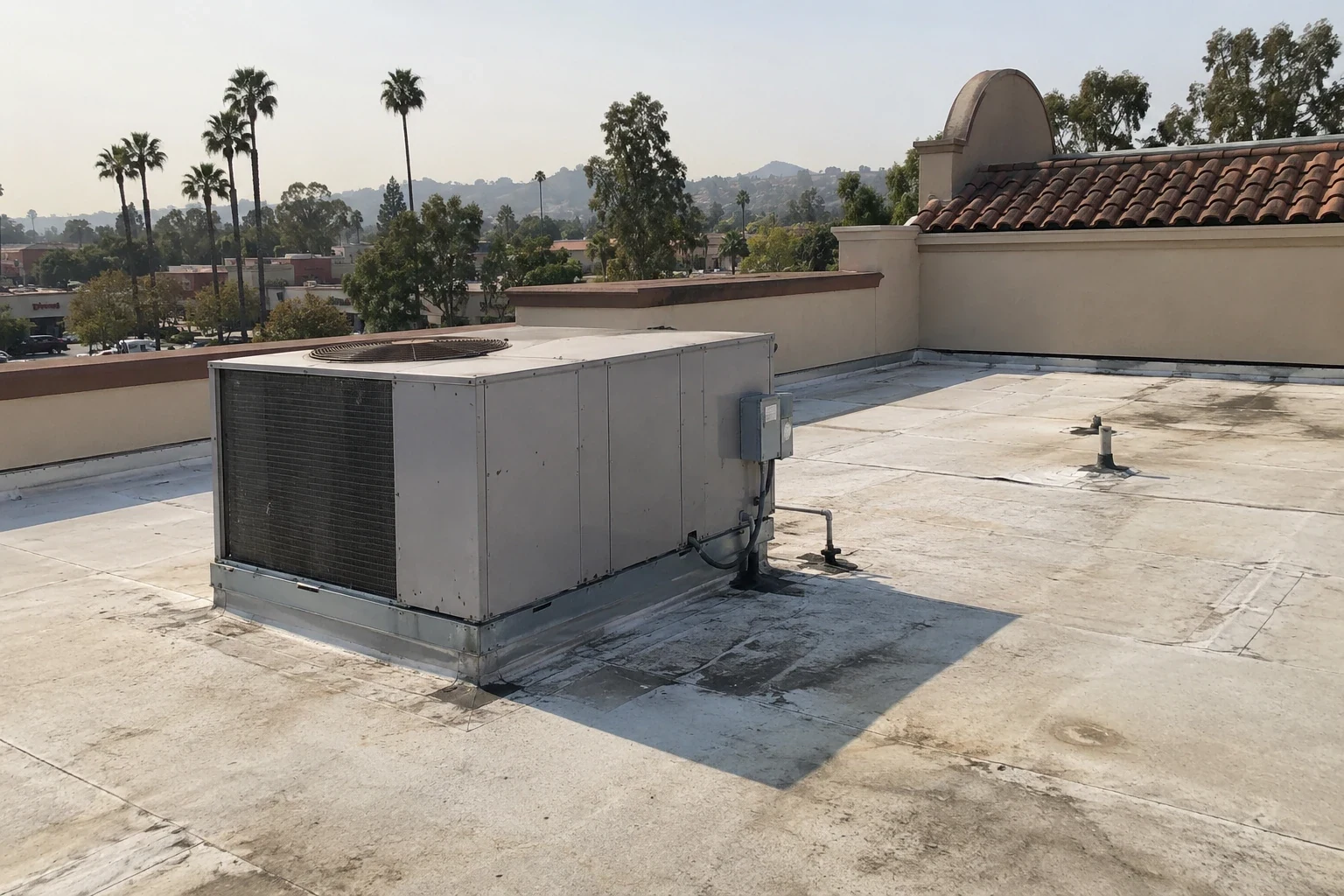
An equipment curb needs a suitable receiver, compatible flashing and a secure termination. We inspect those components before proposing a patch. Observed corrosion or damaged backing can change whether the curb remains. New membrane cannot restore required support or restraint. Where equipment prevents access, we identify the operator authorization and qualified trade work needed. Shutdown and reconnection decisions should be made by the responsible participants, not independently by roof personnel.
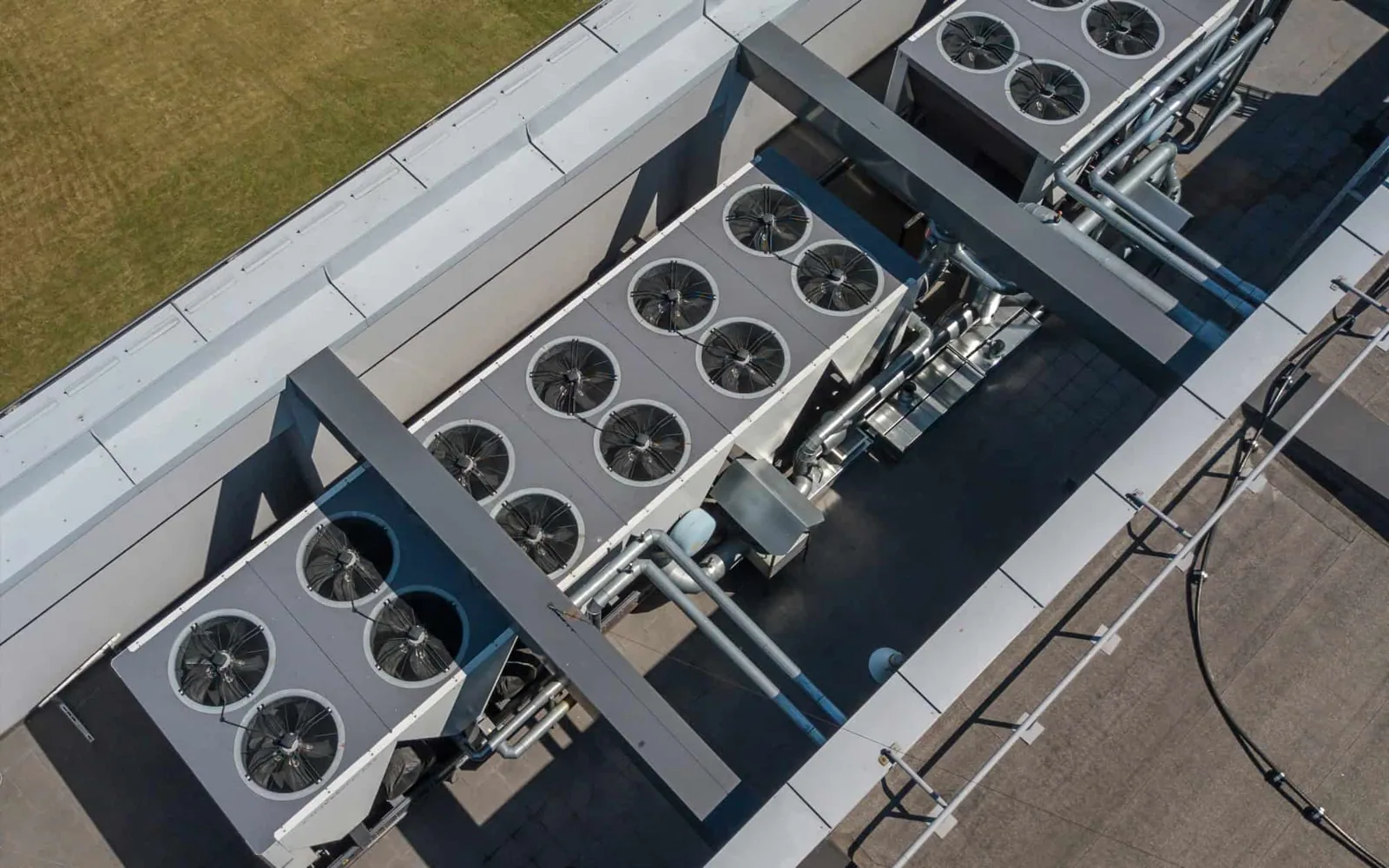
Roofing connections at hotel equipment curbs should separate component work from membrane installation. The manager needs to know which building-service decisions precede the roofing phase. Later maintenance access also deserves a plan. Traffic protection and material staging must suit the installed roof and preserve drainage. A repaired detail can be damaged by an uncoordinated equipment task, so the closeout instructions identify compatible repairs and the route for arranging rooftop alterations.
Planning and Completing the Work
A ceiling complaint needs investigation of the actual entry route. We examine joints, walls, penetrations and drainage rather than assign the defect to the nearest outlet. A drain opening, receiver connection and surrounding slope can each require different work. Accessible debris may support cleaning, while a damaged component needs physical correction. Where a low area affects drainage, measurements or design review may be necessary before selecting the repair.
Added roof layers can change outlet relationships and available flashing height. We measure the receiving details and resolve those transitions as part of the proposal. A coating comparison needs a suitable surface and completed underlying repairs. Surface treatment cannot correct a raised outlet or restore deteriorated metal. The regional heat account establishes none of these conditions. Observed construction and the applicable product requirements determine the work, with unresolved investigation clearly stated for ownership rather than hidden in a broad maintenance allowance.
Santa Clara's adopted building standards include California requirements and local modifications. We identify the authority for the hotel property and confirm the application basis accepted for the proposed work. Its repair, recover or replacement scope sets the relevant review questions. Applicable energy pathways and exceptions require project-specific consideration. A white surface alone cannot settle the approval path. The proposal should identify design, permit and qualified trade tasks necessary for the actual alteration.
Tasman East's adopted planning framework gives area identity around Lafayette Street and Tasman Drive. At a property in the Santa Clara corridor joining Scott Boulevard and Tasman Drive, that context does not establish current hotel operators, completed roofs or assembly age. Records and roof examination provide the basis. Capital planning for the hotel's examined assembly can separate immediate repairs from a defined broader decision. Keep operational protection and preparation beside installation in the ownership comparison.
Relevant photographs can explain preparation after it has been concealed. We locate completed work and identify the installed materials, retained limitations and maintenance obligations. Warranty responsibility needs a clear issuing party, included scope and exclusions. The manager can then coordinate later equipment projects with the finished assembly instead of relying only on a roof photograph. Any proposed alteration affecting coverage should receive the appropriate review before work proceeds.
A pre-season examination can check accessible outlets, surfaces and transitions, with tasks tied to actual observations. For hotel roofing, define the work boundary. Temporary measures follow the defect found and are described separately from permanent correction. Guest and service-area communication follows the plan agreed with the operator. Ownership receives the defined repair and any necessary investigation, so the next decision reflects the roof condition and operational requirements of this property.
Hotel phasing: coordinate guest areas and back-of-house access. A hotel roof plan should relate each work phase to guest rooms, event areas, entrances and service routes beneath or beside the roof. The hotel manager establishes guest communication, access and operating restrictions; the contractor identifies daily work boundaries, noise-producing tasks, material staging and temporary weather protection. Do not infer that an unoccupied roof area means the interior below can be entered. Identify equipment curbs and roof drains that require coordination with facilities staff. Bid comparisons should use equivalent guest-protection and phasing assumptions. At handover, list completed zones and any outstanding room or equipment follow-up separately from roof completion.
Pre-season hotel review: Put guest protection beside the scope
Arrange a hotel roof check and a plain ownership bid sheet. We will define assembly repairs, service coordination and guest-area protection.
Frequently Asked Questions
The actual task and protection plan establish operating restrictions. We coordinate affected areas with the operator before the work sequence is accepted.
Their access and protection needs may differ. The proposal identifies actual boundaries rather than assumes one arrangement fits the entire building.
Curb access or reconstruction can depend on authorized shutdown and trade work. Those dependencies need resolution before the roofing phase opens construction.
It should locate completed work, identify materials and explain maintenance duties and retained limitations. That supports later service coordination.


Roof Assessments
Santa Clara & the South Bay
Membrane, flashing, drainage and edge details checked and written up before any work is priced.
Request a Roof Assessment