
- Home
- Service Areas
- Downtown Santa Clara
Downtown Santa Clara Roof Access and Repair Planning
Rain periods such as the regional storm sequence of late December 2022 through mid-January 2023 make a downtown manager's question practical: can the proposed roof opening be closed within the access period you can actually authorize? Work duration alone does not answer it. We inspect and repair commercial roofs in Santa Clara, CA, with staging, receiving conditions and daily closure stated before ownership chooses the scope.
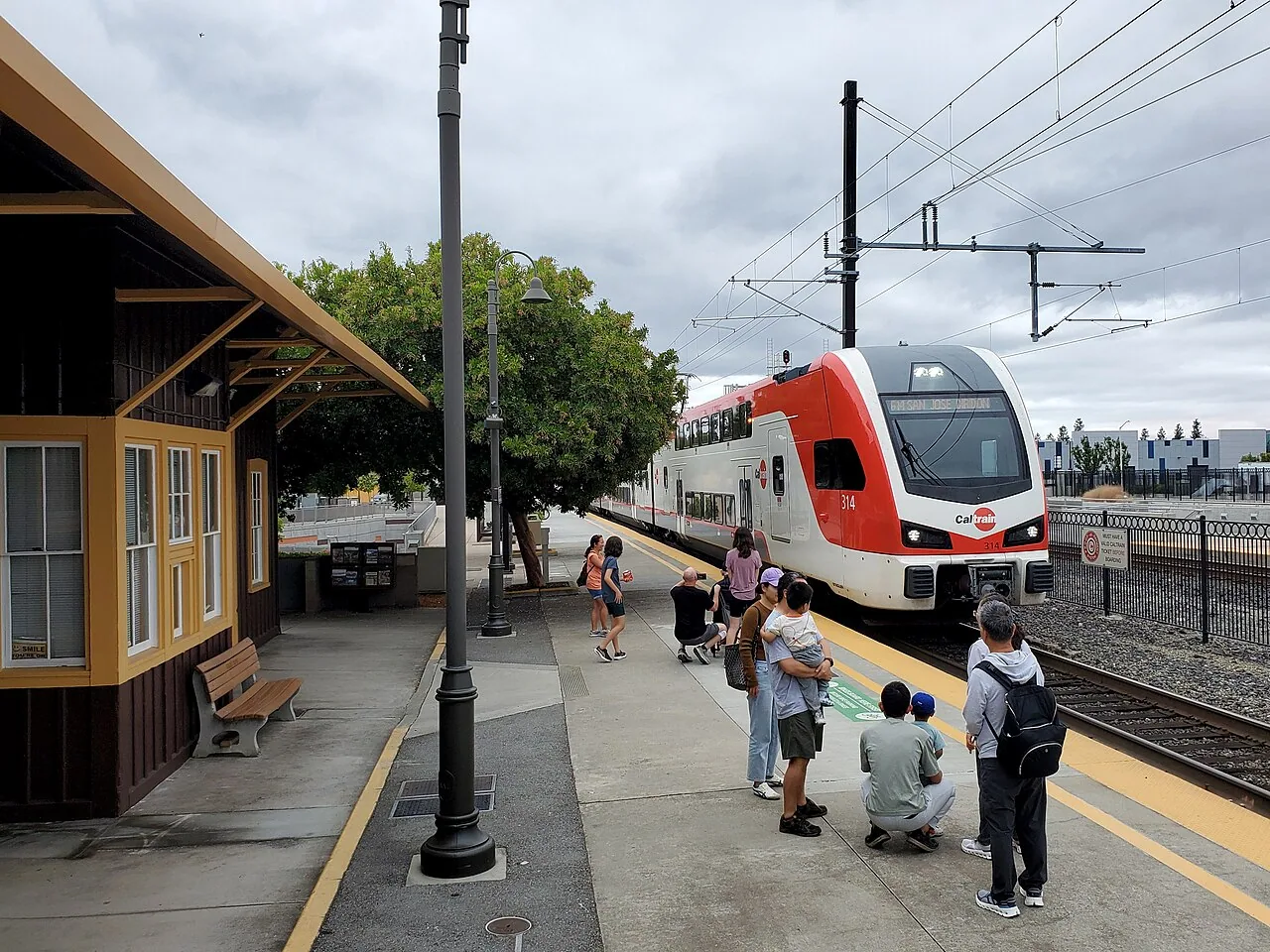
Santa Clara Caltrain Station is a local reference in Downtown Santa Clara And Transit Center. Its connection listing includes VTA, ACE and Capitol Corridor services. This identifies a transit location, not permission to use station property for roofing work. A commercial building near the Transit Center needs its own access arrangement. Establish the affected property, allowed routes and responsibility for public protection before comparing a roof price that assumes unrestricted delivery or equipment placement.
Downtown Santa Clara: What the Work Covers
A material delivery may compete with a building entrance or customer route if those features share the proposed staging area. We examine the actual access and ask the operator to identify the paths that must stay available. Lifting equipment, waste containers and temporary protection need locations that are allowed for the task. A nearby parking space does not automatically become part of the construction site.
For occupied roof replacement, the bid needs the access equipment and approved staging arrangement. If public property or another operator's land is involved, establish the permission and applicable requirements before relying on it. Station adjacency is not railway work authorization. We define the roofing activity within its released boundary and identify any unresolved outside approval. That gives the manager a realistic mobilization cost instead of a low price that depends on space nobody has released.
A stain near an exterior wall can justify examining the roof-to-wall junction, parapet and openings above it. The water path still needs evidence. We inspect the relevant roof details and accessible interior conditions before recommending a repair. Where the path remains uncertain, define the investigation rather than apply patches to every nearby surface. A controlled test, if appropriate, needs operator permission and protection for the receiving room.
Our leak investigation and correction identifies the located opening and compatible tie-in. Separate roof work from wall or glazing repair when those responsibilities differ. An old sealant bead is not automatically the cause of a reported leak. Establish its actual failure and receiving condition. The manager should receive the reason for the proposed task, not a broad allowance justified only by proximity to the complaint. This makes competing repair bids easier to assess.
The named facility is a local reference in Downtown Santa Clara And Transit Center. The university's published directions locate Santa Clara University at 500 El Camino Real. These are distinct institutions with their own operational contacts. For roofing work near either, we identify the building owner, authorized operator and roof boundary before planning an examination. Published directions help locate a visit but do not supply a contractor access procedure.
A manager coordinating properties near Old Quad neighborhood and along San Tomas Expressway employment corridor needs separate location marks and quantities. Combining inspection dates can be convenient when operators approve it. Combining unexamined assumptions is different. Keep each building's finding, assembly and limitation visible in its own work item. Ownership can then authorize a repair at one address without unintentionally releasing an unrelated scope at another.
Planning and Completing the Work
A roof outlet can be clear yet leave water at a nearby low point. We examine the roof surface, outlet connection and route toward it. Accessible cleaning may be appropriate; slope correction or damaged flashing needs a different task. Where an internal pipe is implicated, assign the required plumbing investigation. A roofing inspection does not establish the condition of concealed piping throughout the building.
For drain and scupper repairs, specify the affected opening and surrounding preparation. Identify whether retained insulation can support a suitable connection. Proposed changes to outlet placement or roof slope require examination of the supporting assembly and drainage design. Put those dependencies into the price. A storm history gives reason to prepare, but it does not prove an undersized downtown drain. The actual condition and appropriate design review determine whether alteration is justified.
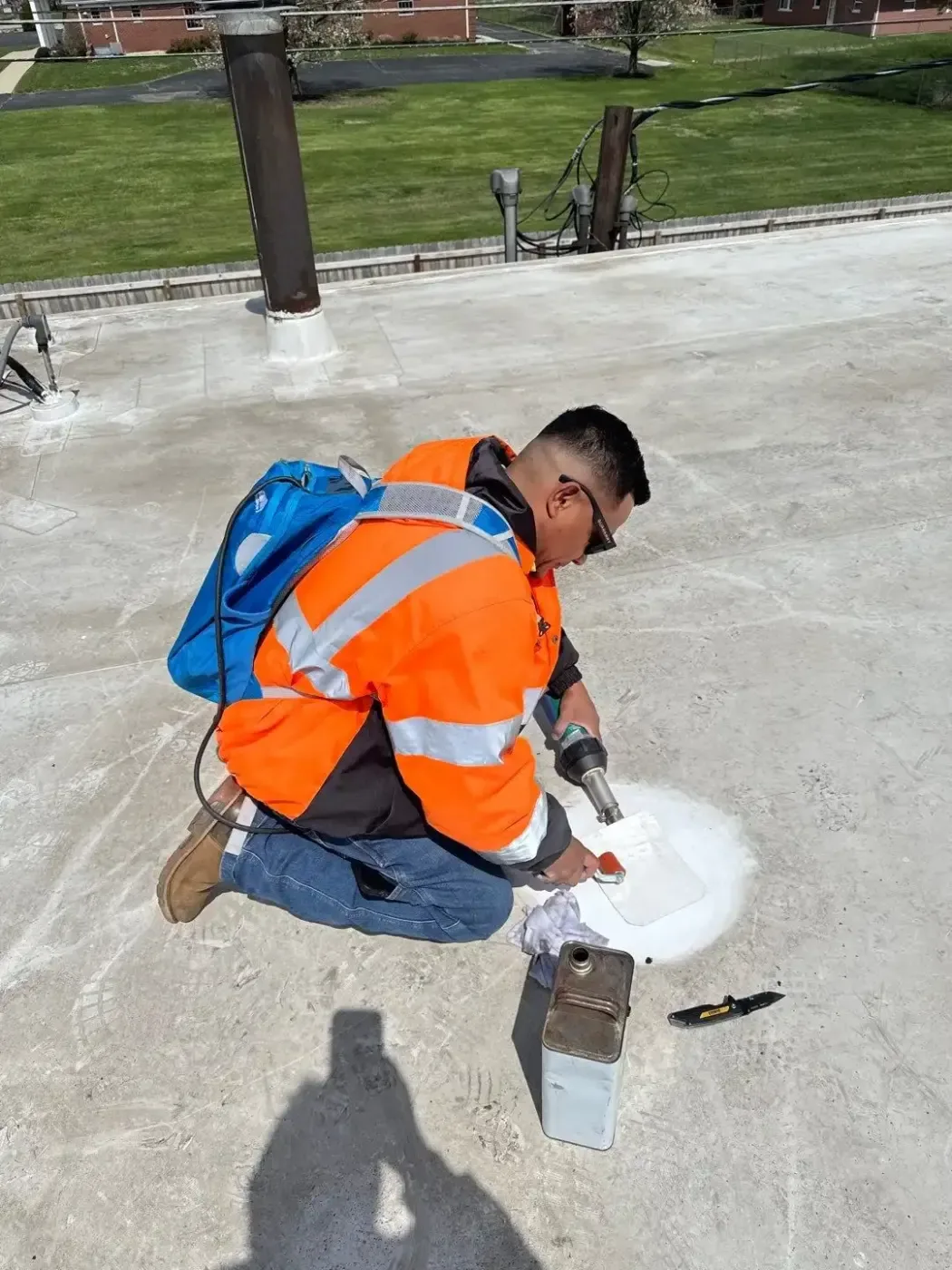
A repair may meet a deteriorated membrane, weak substrate or unsuitable previous patch. We check the exposed receiving material and determine the preparation needed for a sound tie-in. Material identification matters. A weldable membrane and an adhesive-bonded system require different methods, and an incompatible previous repair may need removal. Do not accept a proposal that names only the finished patch while leaving its connection undefined.
Where an opening is necessary, agree on its location, protection and closure. A hands-on roof inspection can establish visible defects and examination limits. Additional confirmation may be needed for concealed moisture or layer condition. Record that distinction. The manager receives a fixed visible repair quantity and a stated process for unresolved concealed work. Evidence should support the affected layers and extent rather than turn one sample into an assumption about the whole roof.
A restricted delivery period or narrow equipment route can change the work sequence. Those conditions should appear beside the roofing quantity. Compare bids using equivalent mobilization, removal handling, daily closure and occupant protection. The cheaper bid may have a different access assumption rather than a different material cost. We identify that difference before the manager takes the totals to ownership.
A written condition assessment should tie each proposed item to a marked location. List allowances for concealed conditions with their measurement and approval process. Keep optional improvements separate from the work required to finish the repair. Warranty notice, permits and public-area use requirements depend on the actual building and scope. Establish the responsible authority instead of applying one institutional or municipal process to every property near the Transit Center.
The opening limit must fit the area that can be protected and closed before the crew leaves. We establish removal stops, compatible temporary tie-ins and the inspection required to accept that day's condition. An interruption for weather or access should have a defined response. The operator should know whom to contact and which roof areas remain under active work. That is especially useful where occupants enter beneath a proposed work zone. A downtown santa clara roof access and repair planning report does not establish a repair quantity. Document the downtown santa clara and transit center finding and the next approval. Immediate protection follows safe access and the operator's release; it does not automatically complete the permanent repair. At final review, connect repaired details to their initial location marks and inspect affected outlets and transitions. Document remaining restrictions and future investigation. The next seasonal visit can then start from the completed work and the outstanding short list, instead of reconstructing the job from an invoice.
Downtown check: settle access and repair together
Set the downtown pre-season inspection date with the authorized building contact. We will prepare a plain ownership bid sheet with the allowed routes, occupant protection and complete repair tasks.
Frequently Asked Questions
Obtain permission for the specific staging use. Station proximity does not release parking or transit property for construction.
Show each responsibility and its evidence. Separate tasks help the manager authorize the correct trade and boundary.
Cleaning addresses accessible obstruction. A low area needs its own condition and drainage assessment before a correction is priced.
Identify the removal stop, closing detail and operator inspection. The allowance must fit the permitted working period.



Roof Assessments
Santa Clara & the South Bay
Membrane, flashing, drainage and edge details checked and written up before any work is priced.
Request a Roof Assessment