- Home
- Property Types We Roof
- Grocery Store Roofing
Grocery Store Roofing in Santa Clara, CA
Store ventilation planning ahead of a roof opening needs an operator release. The region's September 2022 heat event and voluntary Flex Alerts give a grocery manager a practical reason to identify which equipment task requires authorization. For a grocery property manager in Santa Clara, CA, that belongs beside membrane and insulation work. Regional conditions do not establish refrigeration runtime or roof damage. We confirm the actual store's requirements rather than assume them from its use.
The installed roof, details and water routes need examination before repairs or a broader project are selected. Historical office and R&D development identifies Scott Boulevard as a local commercial setting. It does not establish a grocery roof type or current occupant. We prepare a plain scope for the subject building, with receiving-layer condition, protected areas and related trade work made clear. Ownership can then compare practical construction rather than only a finished membrane price.
Grocery Store Roofing: What the Work Covers
Roof removal above product areas needs coordination with the operator. We discuss which areas require protection, what access is available and who approves temporary restrictions. Actual storage and sales activities set those requirements. The proposal should identify debris controls, work boundaries and the route for concerns inside the building. Daily removal limits must fit the temporary closure plan rather than assume that a local opening has no effect below.
Roofing above large retail operations raises similar access questions but cannot establish this store's schedule. A cold-storage roof assembly requires its own assessment of the building and interior conditions. We do not infer that assembly from a grocery label. Where vapor control or condensation needs evaluation, the actual construction and operating conditions require appropriate design consideration. Roofing work should be phased only after those relevant constraints have been identified.
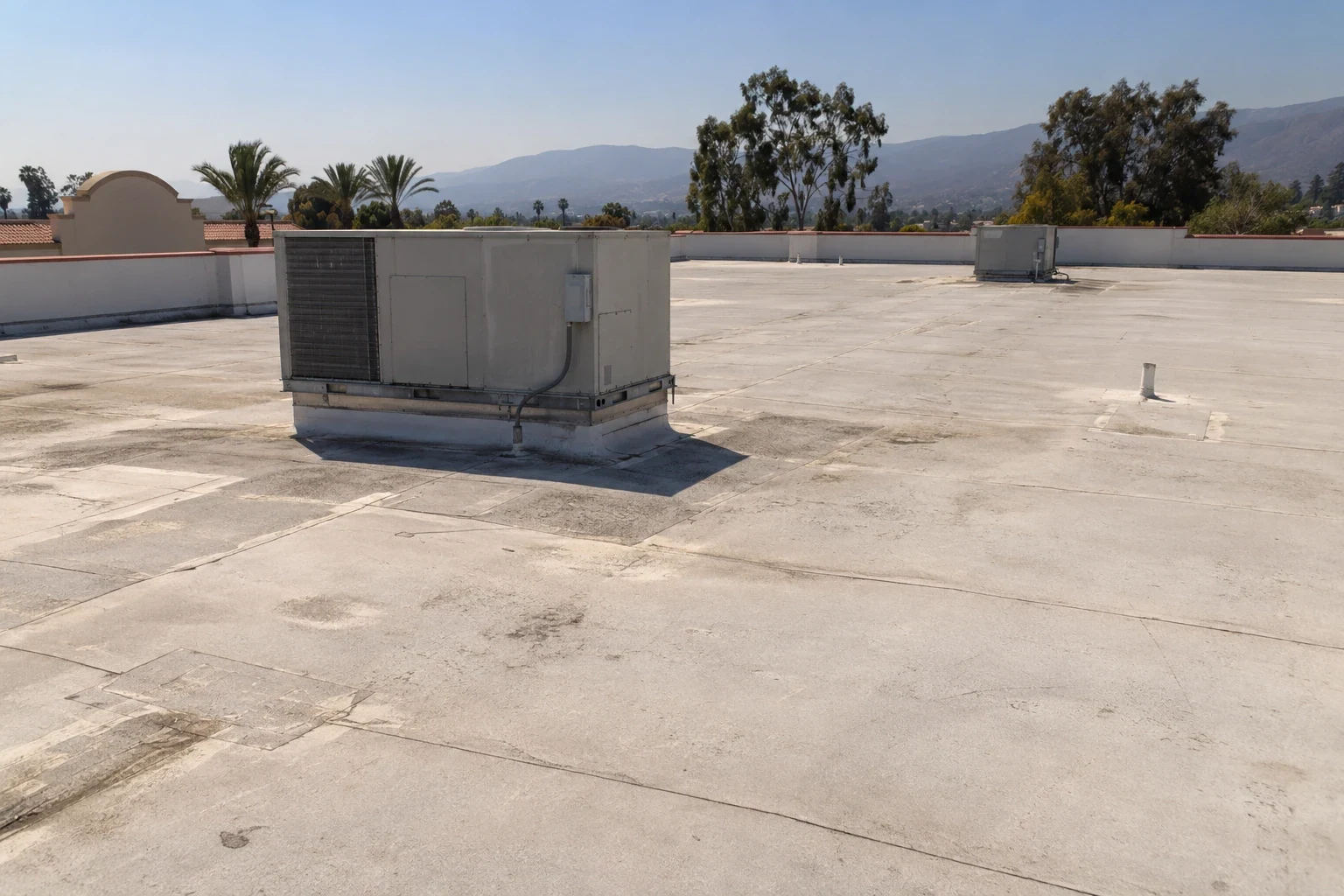
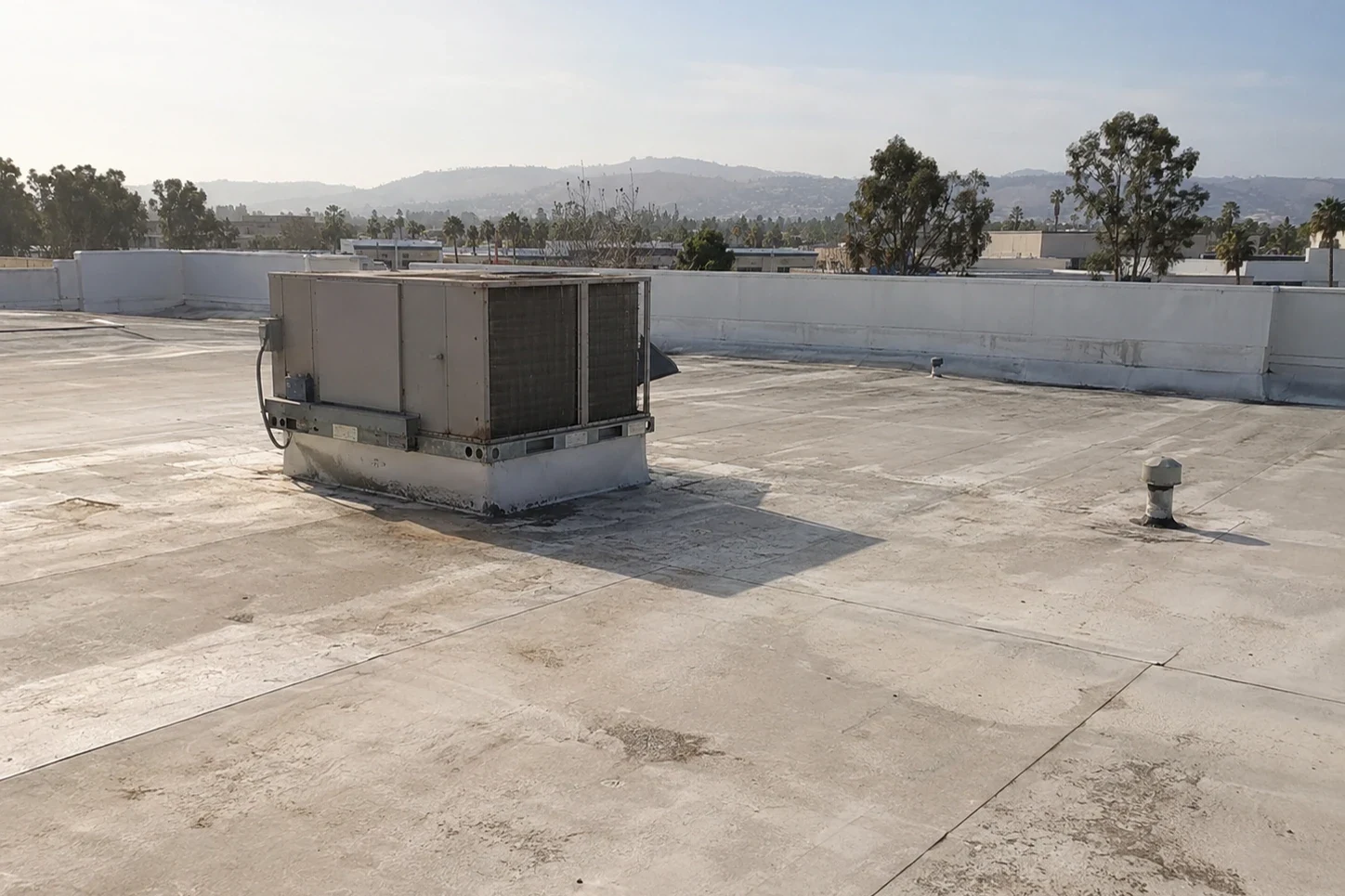
A roof penetration or curb can need access that intersects equipment service. We identify the receiving component, membrane transition and any qualified trade task. Shutdown, relocation and reconnection require operator approval. Roofing personnel should not make those decisions independently. The manager needs a clear dependency list before accepting a schedule. It should distinguish roofing work that can proceed from tasks awaiting authorized equipment arrangements.
Roofing work at examined equipment supports may include receiver corrections as well as new flashing. We examine secure terminations, compatible materials and available flashing height. Observed corrosion requires an extent check before a metal component is retained. Sealant cannot replace required restraint or restore weakened material. We explain the physical correction and trade involvement so ownership does not approve a membrane patch that leaves the receiving component unresolved beneath it.
An interior complaint needs investigation of the actual water route. We inspect nearby joints, details and outlets without assuming the closest rooftop component is the entry location. Concealed materials can need selective examination where condition affects the proposal. Thermal screening can assist under suitable conditions, but indications require interpretation and confirmation. The manager should receive findings tied to locations and the limits of what was examined.
Moisture screening with selected roof openings can help define removal areas. Confirmed wet or deteriorated material needs appropriate correction before the roof is closed. Deck condition may require examination once exposed. We include temporary protection and conditional work procedures in the scope. A new membrane over unsuitable material does not resolve the reason for the opening. Ownership should compare those receiver tasks consistently across repair, recover and replacement alternatives.
Planning and Completing the Work
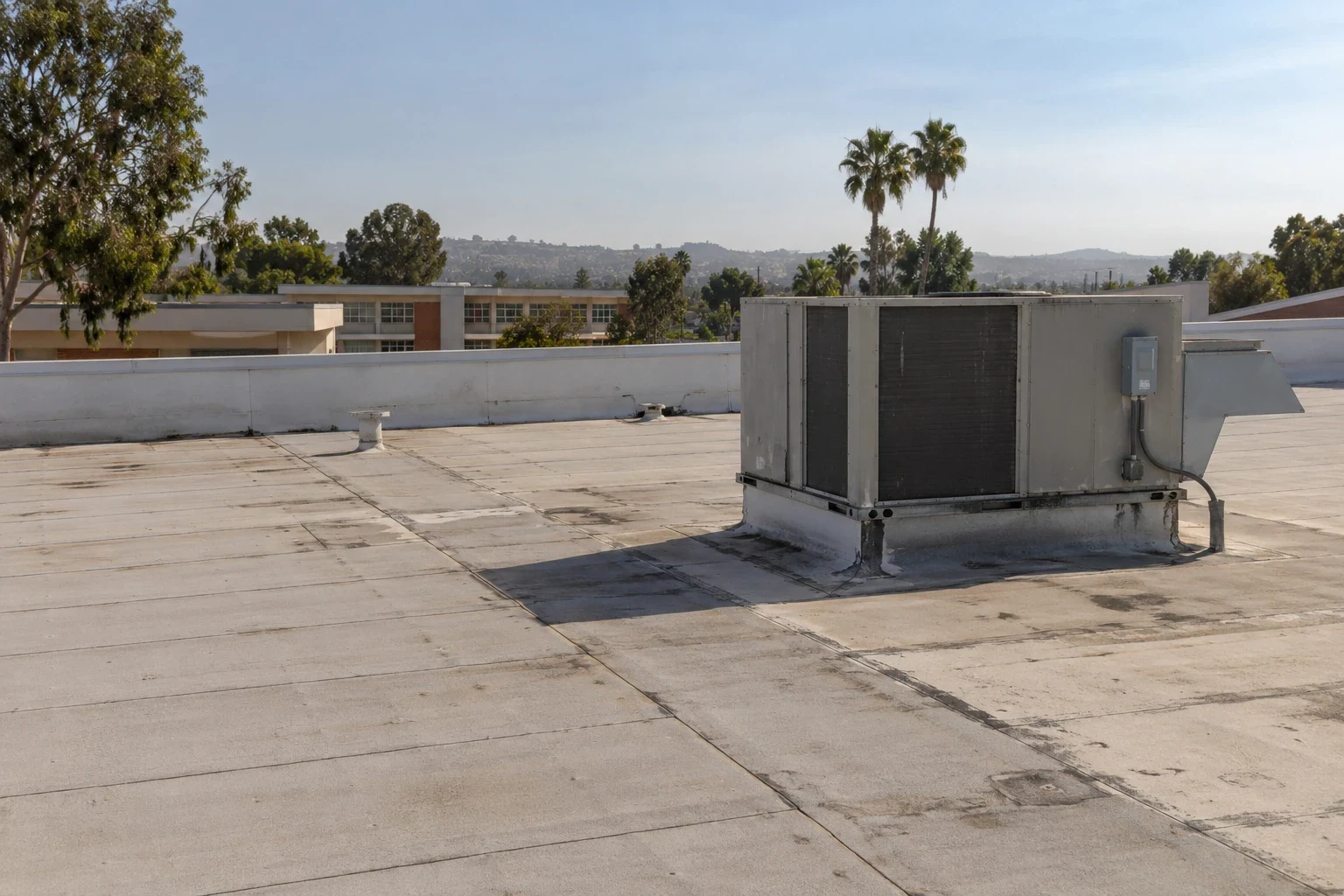
A clear drain opening can still sit above the surrounding roof surface. We inspect the receiver, adjacent slope and connection before recommending a correction. Debris removal, component repair and drainage redesign are different tasks. A low area can require measurements or design review to establish its mechanism. Regional heat history does not establish any of those defects. The examination supplies the physical basis for the work.
New insulation or added covering can change curb heights and outlet relationships. We resolve those details before installation rather than leave them outside the field-roof price. A coating comparison needs a suitable surface, completed repairs and material limitations matched to actual exposure. It cannot lower a raised outlet or repair a loose curb. Ownership should understand retained construction and maintenance obligations beside each alternative, so a surface restoration is not mistaken for renewed roofing layers or a complete drainage correction.
Santa Clara's adopted California standards incorporate local modifications. For the grocery project, we establish the responsible authority and confirm its accepted application basis. The precise roofing repair or alteration scope must be reviewed, including any applicable energy compliance pathway and exceptions. A white surface does not establish compliance by itself. Assembly characteristics, retained construction and proposed changes are considered through the relevant project review.
Tasman East gives adopted planning identity near Lafayette Street and Tasman Drive. Roof work in the Scott and Tasman area of Santa Clara still needs records and a building-specific examination. Planning does not establish current roof inventory or tenant equipment. Capital planning for the examined store roof can separate immediate corrections from a defined broader option. Permit, design and related trade tasks should appear alongside installation so the manager can take a complete approval package to ownership.
Later equipment service can affect a finished roof unless access and alteration work are coordinated. We identify compatible repair requirements and appropriate protection for service routes. The closeout record locates roofing work and names installed materials. Photographs of relevant concealed preparation explain the receiver beneath the surface. Warranty duties should identify the issuing party, included work and maintenance obligations, especially where other trades will return to the roof.
A pre-season check examines accessible details, outlets and observed surface damage. Its task list reflects actual condition rather than a universal grocery roof schedule. For grocery store roofing, define the work boundary. Temporary measures follow the defect found. Permanent work then addresses the examined membrane, receiving components and confirmed layer damage, with operator coordination maintained for any affected equipment or protected product areas.
The project record should locate equipment-related roofing work precisely. That helps subsequent service personnel preserve the repaired receiver and arrange compatible roofing corrections if another alteration is needed.
Grocery operations: protect receiving and food-service areas. A grocery roof plan should identify the receiving dock, refrigeration equipment, food-preparation areas and any interior zone requiring protection beneath an opening. The store's facilities representative sets sanitation, access and operating requirements; the roofing scope documents material handling, debris control and closure for each phase. Roof work around refrigeration curbs does not include service or commissioning of the equipment unless a separate qualified trade is assigned. Compare proposals for matching protection and phasing assumptions, not only roof area. At completion, record repaired details and deferred equipment or interior questions so store operations can assign the remaining work accurately.
Season check: Clarify grocery roof and equipment tasks
Arrange a grocery roof evaluation. We will prepare a plain ownership bid sheet covering assembly corrections, operator coordination and product protection.
Frequently Asked Questions
The operator and qualified trades handle shutdown authorization and execution. We identify the roofing dependencies so those arrangements can be made before work.
The actual assembly and interior conditions need evaluation. We do not assign condensation or vapor-control requirements solely from the store label.
Confirmed wet or unsuitable layers need correction. Their condition affects the receiver and the comparison among repair, recover and replacement.
Protected areas, temporary restrictions, equipment coordination and the contact route for interior concerns should be established in the work plan.


Roof Assessments
Santa Clara & the South Bay
Membrane, flashing, drainage and edge details checked and written up before any work is priced.
Request a Roof Assessment