- Home
- Industries We Serve
- Hospitality Group Roofing
Hospitality Group Roofing in Santa Clara, CA
A regional heat wave such as September 2022 raises a practical hotel planning question: which roof tasks require operator approval before ventilation is interrupted? In Santa Clara, CA, we examine the actual equipment arrangement and roof condition. Flex Alerts provide historical grid context. They do not establish how a particular hotel system operated or whether its roof suffered damage.
A hospitality roof project must connect the roof scope with the spaces below it. A guest room, service area, and meeting room may have different release rules. We ask the operator to identify those requirements before defining removal stages. The owner needs the repair evidence and the business restrictions in the same bid sheet. That allows a local flashing correction to be compared with replacement on a complete basis. Room release, equipment coordination, and temporary protection should not become unresolved obligations after a roofing price has been accepted.
Hospitality Group Roofing: What the Work Covers
A reroof above guestrooms can require restrictions that a repair above an unoccupied service space does not. We review the proposed work area with the operator and identify which interior spaces need protection or temporary release. The operator makes occupancy decisions. Roofing staff provide the work sequence and exposure information needed to make them. We do not assume quieter hours permit every construction task.
Scott Boulevard office and R&D development and the Tasman East planning framework near Tasman Drive and Lafayette Street form part of Santa Clara commercial geography. A lodging property in that broader setting still needs its own roof layout, permissions, and access plan. Within the Tasman Drive and Scott Boulevard service corridor, we define the affected spaces at the actual work address. Coordination with restaurant operators sharing the property can add exhaust and delivery restrictions. Each restriction belongs beside the roof stage it affects.
Removal equipment, fastening, adhesives, and material lifts can affect occupied interiors in different ways. We explain the proposed methods rather than describing the job only by membrane type. The operator needs enough detail to approve shifts and ventilation precautions. A mechanically attached assembly and an adhered assembly can have different installation constraints. Neither should be selected solely because one sounds quieter in a short description.
For roof repairs and replacement over hotel space, we identify approved access routes, temporary exclusions, and cleanup requirements. Any air-intake protection or equipment isolation needs the appropriate operator and qualified trade. Material handling must also fit the roof loading and ground arrangement. The cost comparison includes these controls. A cheaper bid that leaves room protection or intake coordination unanswered has not priced the same work. We make those differences visible while the owner still has time to choose the method and sequence.
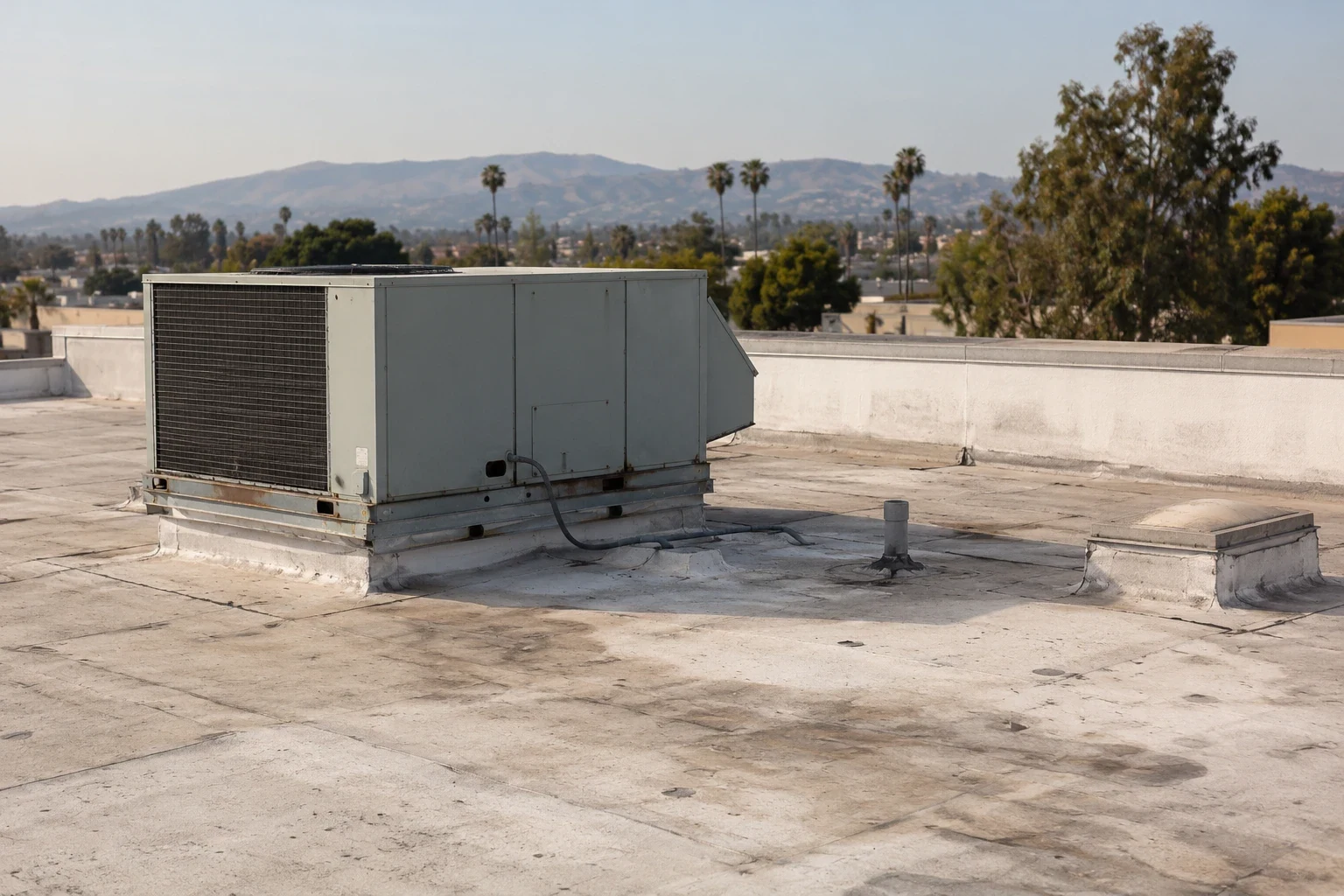
A leak beside a rooftop unit may involve a curb joint, nearby seam, or another accessible detail. We examine the surrounding assembly before prescribing a repair. Wet insulation changes the removal boundary. A deteriorated support or unsuitable curb height can require a different trade or design decision. Covering the visible joint without that examination can leave the original problem unresolved.
Our targeted investigation and leak corrections distinguish immediate protection from permanent work. We identify the proposed preparation, compatible materials, and follow-up needed to confirm completion. Where moisture examination is justified, we explain its coverage and confirmation steps. The regional late 2022 and early 2023 storm sequence supports scheduling a pre-rain review; the hotel's condition determines the repair. Each affected area gets a clear boundary, so ownership can compare a detail repair with wider removal without treating a ceiling complaint as proof that the whole assembly is exhausted.
Planning and Completing the Work
A new roof height can leave an equipment curb or door threshold without enough clearance for the required flashing. We measure these interfaces before proposing added insulation or recover work. The roof scope identifies the detail; the project team determines any structural or mechanical change. Raising equipment cannot be treated as a routine roofing adjustment where qualified trade work and operator consent are required.
Hotel managers may need coordination with the company managing the building and the actual owner. We assign each approval and trade prerequisite. Correcting equipment curbs and roof supports must preserve a workable drainage path and approved service access. A maintenance route should not repeatedly direct technicians across vulnerable joints. At completion, the operator receives the access restrictions and the roof maintenance requirements associated with those details. That keeps later equipment service from erasing the protection paid for in the roof contract.
Replacement pricing needs removal, deck preparation, insulation, attachment, flashing, outlets, and perimeter work stated clearly. We show any uncertain deck quantity through an agreed allowance or change procedure. Operational restrictions receive their own description. Repeated mobilization, restricted storage, and limited daily work stages can affect the project independently from material selection. The owner can compare these drivers without relying on a single unexplained total.
Applicable permits and energy requirements follow the actual property authority, accepted application basis, proposed scope, and available exceptions. We resolve those with the project team. A reflective membrane does not by itself settle the insulation decision. At handover, we photograph completed details and distinguish any remaining work assigned to others. The owner's file should make it possible to identify the installed assembly and the repaired areas during the next inspection.
For a hospitality group, consistent records help compare sites without forcing identical repair decisions. We keep actual roof condition beside the operating restrictions for each property. A local patch, coating proposal, and replacement need different evidence. Ownership can approve the supported option and reserve a construction period on that basis. The manager then has a clear task to coordinate with guest services, maintenance, and the equipment operator.
Guest services should receive the approved construction periods and affected routes before each stage starts. A change in the work area needs a corresponding operating update. We identify that coordination requirement in the roof sequence.
Hotel property group: standardize reporting while preserving site needs. A hospitality group can use the same closeout fields across properties: affected roof area, observed condition, work completed, evidence, access limitation and remaining task. Keep guest-room impacts, event calendars, rooftop equipment and service routes specific to each hotel. The local operator sets notice and access expectations; the contractor documents construction phasing and temporary protection. Avoid representing one property inspection as a property group condition assessment. If a repair is deferred, preserve the reason, exposure location and next review point so regional asset leaders can prioritize follow-up without confusing an operational constraint with a confirmed roof defect.
Season check: protect guests and the budget
Arrange a pre-season hospitality roof check. We will prepare a plain bid sheet with room release needs, equipment prerequisites, and the repair decision for ownership.
Frequently Asked Questions
The work boundary and protection plan determine the affected spaces. The operator approves room release. We provide the removal sequence and exposure details needed for that decision.
Noise is only one restriction. Material handling, odors, air intakes, and overhead exposure also need review. We identify the actual methods so the operator can approve a workable period.
Added height may affect flashing clearance. We measure the interfaces and identify any required trade or design changes before finalizing the roof assembly.
For hospitality groups, define the work boundary. Safe access and operator instructions control the immediate work. We separate temporary protection from the proposed permanent correction.
Roof Assessments
Santa Clara & the South Bay
Membrane, flashing, drainage and edge details checked and written up before any work is priced.
Request a Roof Assessment