
- Home
- Roof Systems
- Spray Polyurethane Foam Roofing
Spray Polyurethane Foam Roofing in Santa Clara, CA
September 2022's regional heat and voluntary Flex Alerts make surface protection a useful planning topic. For a manager considering foam roofing in Santa Clara, CA, what protects the installed foam after application? The coating and its maintenance belong in the initial scope. Regional heat context supports reviewing that choice. It does not prove that the subject roof has degraded foam or cooling equipment under stress.
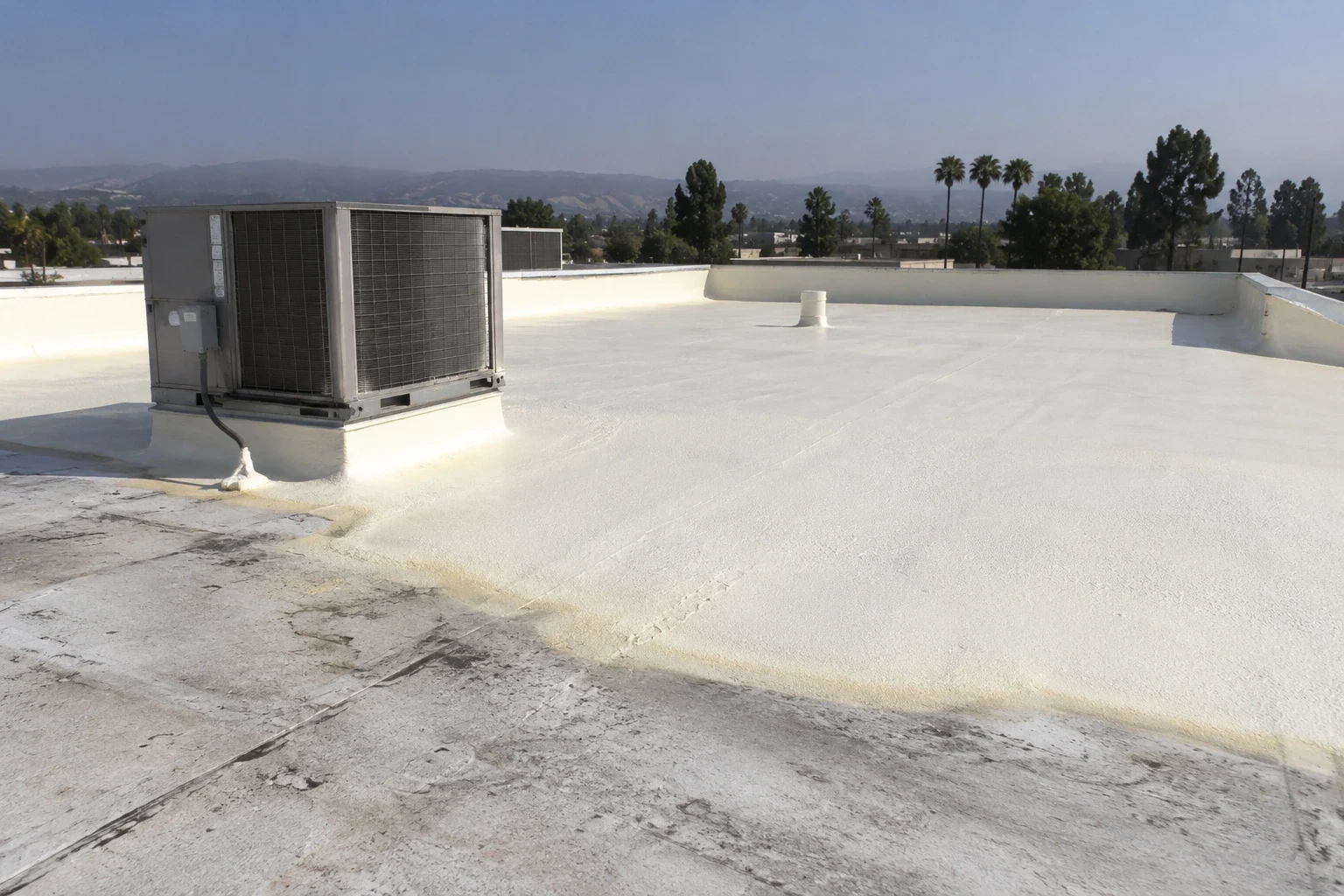
Spray polyurethane foam forms an adhered insulating roof layer when applied to a suitable receiver. Its protective coating is a functional part of the system. Preparation, application controls and detail work must suit the existing construction. Scott Boulevard's historical office and R&D development gives the corridor its commercial context. The roof's receiver and installed layers still need examination. We make those findings clear before a foam proposal reaches ownership.
Spray Polyurethane Foam Roofing: What the Work Covers
Foam needs an acceptable surface for the selected assembly. We identify the existing material, its attachment and any unsuitable or wet areas. Loose construction should not be encapsulated as if it were a sound receiver. Selective openings can establish concealed layer condition where it affects the recommendation. Surface cleaning and preparation need their own defined tasks. The bid should not reduce all of that work to a general statement that the roof will be prepared.
An Infrared survey used with confirmation can help direct moisture investigation under suitable conditions. It does not establish every hidden defect. We explain limitations and identify areas needing physical examination. A reinforced asphalt roof alternative may offer a different replacement approach if retained construction is unsuitable for foam. Ownership should compare receiver removals and deck work on the same basis before comparing the final surface materials.
Foam application depends on appropriate material handling and application conditions. We review the selected system's limits for substrate condition, temperature, wind and moisture. Those conditions govern the decision to proceed. Adjacent vehicles, façades and equipment need overspray protection. Wind direction and nearby activity can alter the practical work sequence. A schedule should include the controls and interruptions needed to meet the system requirements, rather than promise application on a fixed day regardless of conditions.
We coordinate access and protected areas with the building representative. Intake protection or equipment shutdown requires operator authorization and qualified trade participation where necessary. Foam work above an occupied office needs tenant communication for restricted areas and potential odor concerns. The proposed plan should explain the work limits and daily stopping points. Safe application depends on the actual property setting, not a general claim that foam can be sprayed anywhere without interruption.
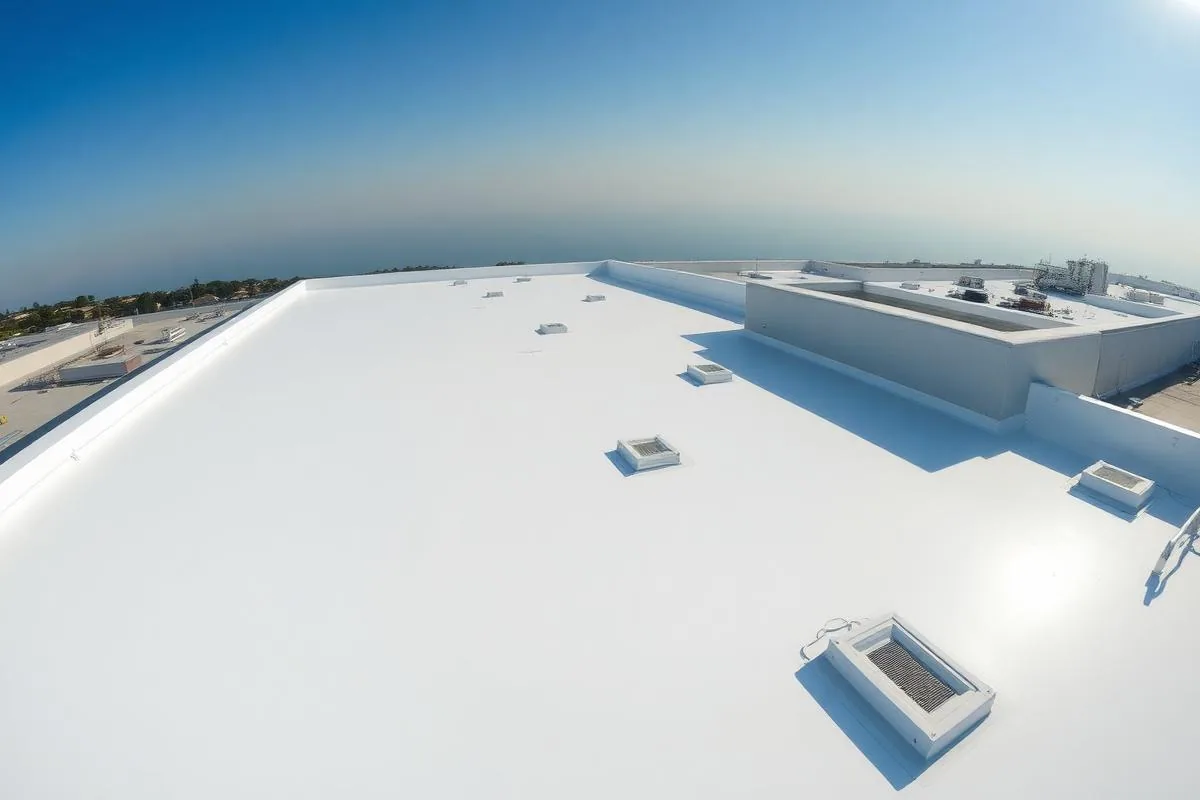
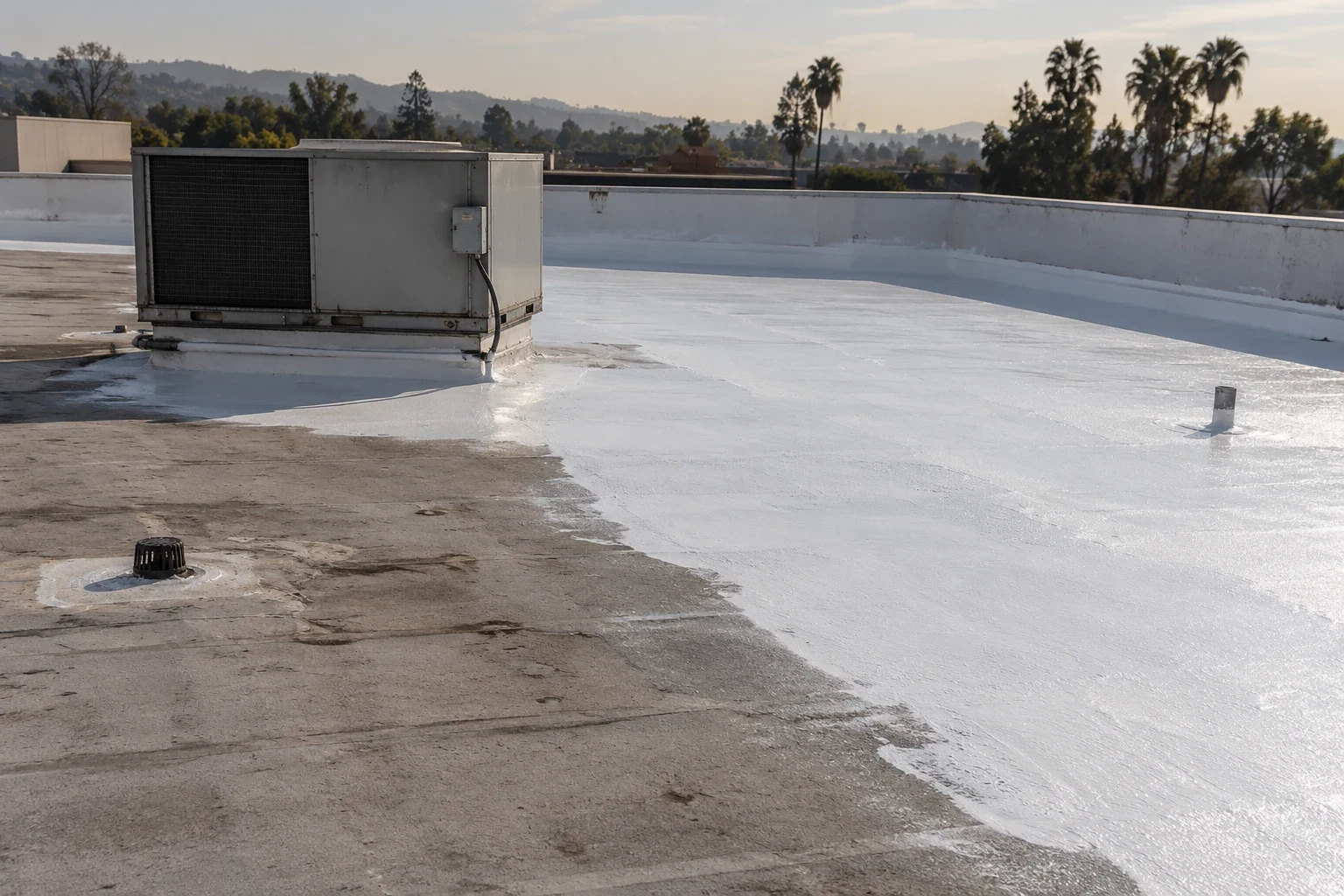
Exposed foam requires prompt protection with the specified coating assembly. We review compatibility, application rate, curing requirements and detail reinforcement. A finish color is only part of that choice. The coating needs the intended installed coverage over the surface and transitions. Thin areas, damage or unsuitable preparation can reduce that protection. We inspect completed work and address deficiencies through the selected system's requirements rather than judge coverage by appearance alone.
Silicone protection over suitable foam and acrylic options have different application and maintenance considerations. The selected product's water exposure limitations matter. Drainage should be evaluated independently of coating choice. Foot traffic and equipment service also need protection suited to the assembly. We discuss access paths and repair materials with the manager so later work does not leave cut or exposed foam unaddressed. A puncture needs compatible correction, not just an unrelated sealant smear.
Planning and Completing the Work
Foam can be shaped during installation, but creating a drainage correction requires an actual plan. We inspect the existing slope, outlet elevations and contributing areas. A depression caused by deflection or concealed construction needs attention to its mechanism. Adding material without addressing that mechanism can leave the problem unresolved. The scope should state the intended water route and any necessary design review before application begins.
Outlet repairs and drainage adjustments must fit the finished foam surface. We examine drain receivers, scupper openings and perimeter transitions. Curb heights and access clearances also need measurement where added material affects them. The proposal distinguishes surface shaping from component replacement or structural work. That distinction matters to ownership because the tasks may involve different trades and approvals. Seasonal planning can justify timely review, but the inspected roof supplies the correction basis.
Santa Clara's adopted California standards include local modifications. Foam work needs confirmation of the actual reviewing authority, accepted application basis and repair or alteration scope. The relevant energy compliance path and exceptions deserve project-specific evaluation. Insulation value, surface properties and retained construction are considered within that review. A promise of energy savings does not substitute for determining the requirements that apply to the proposed work.
Tasman East's adopted framework gives local planning identity near Tasman Drive and Lafayette Street. At a property in the Scott and Tasman corridor, we establish the roof from records and examination. The plan does not supply an installed roof inventory. Capital planning for the roof assembly can then separate initial installation from later coating renewal and detail maintenance. Ownership should understand those future obligations before choosing the system.
A service cut through coating and foam needs an appropriate repair. We inspect its extent, moisture involvement and surrounding bond. Damaged foam may need removal before rebuilding the area and restoring coating protection. Waiting can allow the exposed material to deteriorate or admit water. The maintenance scope should identify observed defects and their correction, with photographs that help the manager track completion and later service activity.
A pre-season check also examines coating condition, outlets and transitions. Recoating decisions depend on measured condition and the selected system, not a universal calendar interval. We help define preparation and repair before renewal. For spray polyurethane foam roofing, define the work boundary. Temporary actions follow safe access and the condition encountered. We then explain how permanent work will restore the foam and its protective assembly, so ownership can approve a complete correction.
The closeout description should locate repaired foam and identify the coating used there. Future maintenance can then use compatible materials without guessing at the construction concealed beneath the finish.
Foam roof evaluation: inspect the coating and foam together. When evaluating a spray polyurethane foam roof, document both the protective coating and the foam condition beneath visible defects. Blisters, splits, exposed foam or impact damage may require investigation beyond a surface touch-up. Define how the contractor will distinguish isolated repair from broader renewal, and state what confirmation is needed if moisture or adhesion is uncertain. Bid quantities should account for preparation, compatible materials, edge transitions and protection of adjacent equipment. Because coatings and foam products have specific application requirements, use the applicable manufacturer instructions and project conditions to set the scope. Retain repair locations and materials in the closeout record.
Before seasonal work: Include foam protection in the budget
Book a pre-season foam roof evaluation. We will provide a plain ownership bid sheet covering preparation, coating protection and tenant coordination.
Frequently Asked Questions
Damp or unsuitable material must be investigated and addressed first. Enclosing it under foam is not a substitute for establishing a sound receiver.
Overspray exposure needs a specific protection and access plan. We coordinate protected zones and application limits with the property representative.
The cause and intended water route need evaluation. Surface shaping cannot replace a required structural or outlet correction.
We examine the cut, remove unsuitable material and restore the compatible foam and coating detail. Leaving exposed foam is not a complete repair.


Roof Assessments
Santa Clara & the South Bay
Membrane, flashing, drainage and edge details checked and written up before any work is priced.
Request a Roof Assessment